
Image: BBC World
Discover how France's Socialists retained power in major cities during local elections, signaling a potential shift for mainstream parties ahead of 2024 presidential elections.
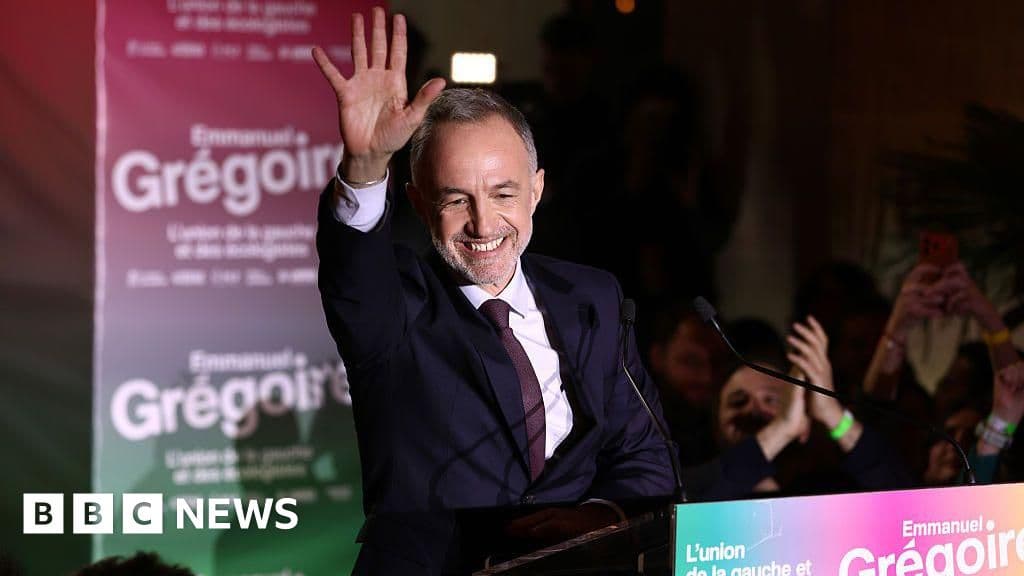
GlipzoIn a significant boost for mainstream political parties, France's Socialist Party (PS) and its allies successfully maintained control over the country's four largest cities: Paris, Marseille, Lyon, and Lille. This local election, which took place on June 28, 2023, showcased a resilient performance by established parties, signaling potential optimism for upcoming presidential elections in 2024.
Despite the successes of the Socialists, there were notable gains for far-left and far-right candidates. An ally of Marine Le Pen made strides in Nice, while the France Unbowed (LFI) party claimed victories in Roubaix. However, the overall trend indicated a shift away from the far-left, particularly in traditional Socialist strongholds like Clermont-Ferrand and Brest, where voters leaned towards center and right-leaning options.
The election results underlined a critical lesson: alliances between mainstream left parties and the far-left LFI did not resonate well with voters. In cities such as Paris, Marseille, and Lille, incumbent Socialist administrations thrived by distancing themselves from the far-left faction, which has faced allegations of sectarian anti-Semitism. In contrast, Lyon's ecologist mayor, Grégory Doucet, managed to ally with LFI and still secure victory against a poorly performing right-wing challenger, Jean-Michel Aulas.
Pierre Jouvet, the PS secretary-general, remarked, "My conclusion from tonight is that the LFI wins nothing – and what is worse, it is the LFI that brings about defeat." This sentiment reflects the growing discontent with the far-left's influence on mainstream politics, particularly in light of recent controversies involving LFI.
The LFI's recent electoral challenges are compounded by controversies, including calls for a boycott after a parliamentary aide faced charges related to inciting violence against a far-right student. Additionally, LFI leader Jean-Luc Mélenchon drew ire for remarks that seemed to trivialize sensitive issues related to anti-Semitism. These incidents have undoubtedly contributed to the party's struggles in recent elections.
In the aftermath of the first round of voting, some Socialist and Green candidates initially set aside differences with LFI, forming alliances deemed "alliances of shame" by critics. However, this tactic failed to yield the desired outcomes, as demonstrated by poor performances in cities like Toulouse, Strasbourg, and Tulle, a stronghold of former PS president François Hollande.
While mainstream parties celebrated victories, the far-right National Rally (RN), which has emerged as a prominent force in pre-election polls, faced setbacks in Marseille and Toulon. The RN's opponents banded together to counter its influence, resulting in split votes that hindered their progress. Yet, in Nice, the RN's Éric Ciotti achieved a notable victory over incumbent Christian Estrosi, marking a significant shift towards a more unified right that is willing to collaborate with Le Pen's party.
The RN's influence was further evident in smaller towns, where it secured wins in places like Montargis, Carcassonne, and La Seyne-sur-Mer. However, it failed to capture the mayoralty of Villers-Cotterets north of Paris, highlighting inconsistencies in its electoral strategy.
Overall, the local elections revealed a favorable landscape for mainstream political parties across the spectrum. The pro-Macron party Renaissance celebrated a significant victory in Bordeaux, with former minister Thomas Caz leading the charge. Such outcomes underscore a potential revival for centrist politics in France, which had faced challenges in the wake of rising extremism on both ends of the political spectrum.
The election results may serve as a crucial indicator for the upcoming presidential elections. With mainstream parties demonstrating resilience and adaptability, the dynamics of French politics could shift dramatically in the coming months.
As France heads towards its presidential election, the implications of these local election results could be profound. Will the mainstream parties continue to consolidate their power, or will far-left and far-right factions regroup and challenge their dominance? The 2024 presidential elections will be critical in determining France's political landscape for years to come.
Voter sentiment and mobilization efforts will play pivotal roles as political parties prepare their strategies. The Socialists and their allies will likely seek to capitalize on their recent electoral gains, while the far-left LFI and the far-right RN will need to address internal controversies and reframe their narratives to regain voter trust and support.
The future of French politics remains uncertain, but one thing is clear: the stakes are high, and all eyes will be on the evolving alliances and rivalries as the country approaches the crucial electoral showdown.

Tensions soar as the US and Iran engage in air strikes near the Strait of Hormuz, raising concerns over global oil supply and regional stability.
BBC World
Trump's international interventions face serious stalemates. What will this mean for U.S. foreign policy? Explore the critical challenges ahead.
Indian Express
Tehran denies resignation of President Masoud Pezeshkian amid claims of IRGC influence. What does this mean for Iran's political stability? Click to learn more!
Indian Express