Glipzo
WorldTechnologyBusinessSportsEntertainmentScienceHealthPolitics
Glipzo
WorldTechnologyBusinessSportsEntertainmentScienceHealthPolitics
  1. Home
  2. /
  3. World
  4. /
  5. Fragile Ceasefire in Iran: Can a US Deal Be Achieved?
Fragile Ceasefire in Iran: Can a US Deal Be Achieved?

Image: BBC World

World
Thursday, April 16, 20264 min read

Fragile Ceasefire in Iran: Can a US Deal Be Achieved?

Explore the fragile ceasefire in Iran and the looming U.S. threat. Can a lasting deal be achieved as tensions rise? Click to find out more!

Glipzo News Desk|Source: BBC World
Share
Glipzo

Key Highlights

  • Iran grapples with a fragile ceasefire as tensions rise.
  • Trump warns of potential military strikes on Iran's infrastructure.
  • Civilian life is deeply affected by military operations in Iran.
  • Women in Iran resist traditional norms amid ongoing protests.
  • The fate of the STRAIT OF HORMUZ remains a critical issue.

In this article

  • Fragile Peace Amidst Turmoil in Iran In northwestern Iran, the landscape is beginning to awaken as **spring** nudges almond trees into their vibrant bloom. However, this beauty contrasts sharply with the underlying anxieties of the Iranian populace as they navigate a precarious ceasefire. **Since the onset of conflict**, many citizens are returning to their homeland, but the uncertainty looms large over what lies ahead.
  • The Uncertain Future of the Ceasefire As the border crossing leads into the Islamic Republic, discussions about the ceasefire's sustainability arise. A young woman clad in a bright red puffer jacket confidently asserted, "Of course, the ceasefire won't hold. Iran will never give up its control of the **Strait of Hormuz**." This sentiment resonates with many who feel that the region's geopolitics are far from stable.
  • The Impact of Targeted Strikes on Civilian Life The journey to Tehran is complicated by the collapse of crucial infrastructure; the main bridge connecting **Tabriz** and Tehran fell victim to missile attacks just last week. This destruction has sparked a wave of criticism from legal scholars who highlight the potential breaches of **international humanitarian law** and warnings of war crimes. Despite the U.S. and Israel's claims of targeting only military sites, the consequences of their actions are felt deeply in civilian life.
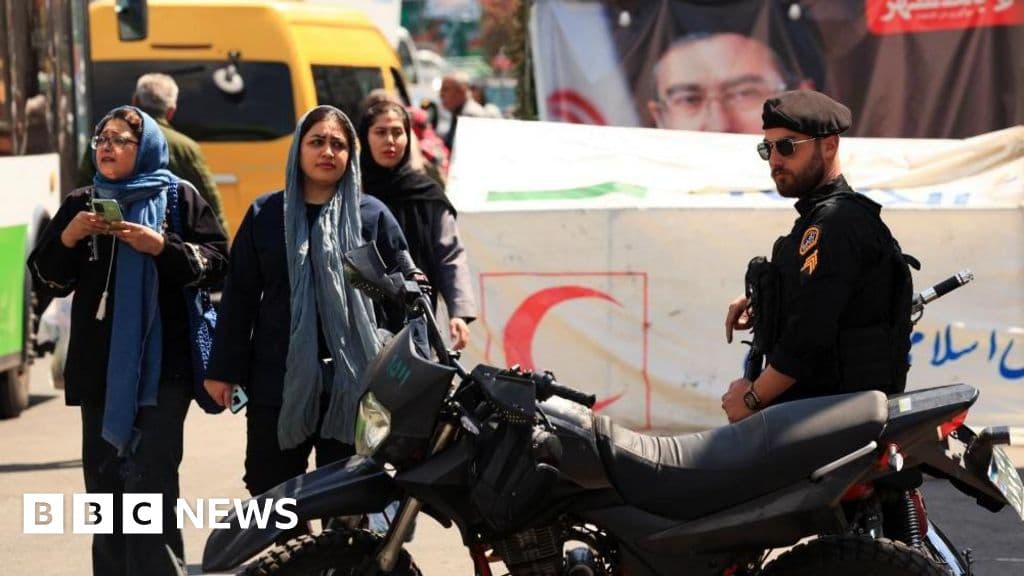
  • A Glimpse of Iran's Resilience During a stop at a historic **caravanserai**—a traditional inn showcasing Iran’s rich heritage—one can observe the resilience of the Iranian people. The cultural tapestry is visible in the varied attire of women, some adhering to traditional veiling while others choose to go bare-headed, a reflection of the recent **Women Life Freedom protests**. The push for change is palpable as women refuse to revert to past restrictions, even as strict laws remain enforced.
  • Why It Matters: Geopolitical Implications for Iran and Beyond The delicate ceasefire in Iran isn't just a matter of national concern; it has significant implications for regional and global stability. As the deadline for the truce approaches, the potential for renewed conflict is accentuated by external pressures, particularly from the U.S. The fate of the ceasefire could influence diplomatic strategies and military decisions in the region, with Iran's control over the **Strait of Hormuz** remaining a critical point of contention.

Fragile Peace Amidst Turmoil in Iran In northwestern Iran, the landscape is beginning to awaken as **spring** nudges almond trees into their vibrant bloom. However, this beauty contrasts sharply with the underlying anxieties of the Iranian populace as they navigate a precarious ceasefire. **Since the onset of conflict**, many citizens are returning to their homeland, but the uncertainty looms large over what lies ahead.

An elderly banker shared his recent experience, stating, "I stayed with my son in Turkey for a month," at a border crossing where the chill of late winter was still felt. He reflected on the Israeli and American airstrikes that primarily targeted military installations rather than civilian areas. Nonetheless, the looming expiration of the two-week truce in just a few days added a sense of dread. "I'm a bit scared," confessed a woman in a headscarf, expressing her concern for the youth affected by the violence and threats from Iran's Basij paramilitary forces.

The Uncertain Future of the Ceasefire As the border crossing leads into the Islamic Republic, discussions about the ceasefire's sustainability arise. A young woman clad in a bright red puffer jacket confidently asserted, "Of course, the ceasefire won't hold. Iran will never give up its control of the **Strait of Hormuz**." This sentiment resonates with many who feel that the region's geopolitics are far from stable.

The specter of U.S. President Donald Trump looms large in these conversations. On a long drive to Tehran, the only available route due to closed airports, reflections on Trump's aggressive rhetoric were unavoidable. Recently, he reiterated his capacity to obliterate Iran's infrastructure, stating on Fox Business News, "We could take out every one of their bridges in one hour"—a stark reminder of the ongoing tension.

The Impact of Targeted Strikes on Civilian Life The journey to Tehran is complicated by the collapse of crucial infrastructure; the main bridge connecting **Tabriz** and Tehran fell victim to missile attacks just last week. This destruction has sparked a wave of criticism from legal scholars who highlight the potential breaches of **international humanitarian law** and warnings of war crimes. Despite the U.S. and Israel's claims of targeting only military sites, the consequences of their actions are felt deeply in civilian life.

Along the route, signs of military engagements become evident: flattened barracks of the Islamic Revolutionary Guard Corps (IRGC) dot the landscape, their remnants draped with large flags. Other military and police facilities have also faced similar fates. In a chilling reminder of the conflict's stakes, Trump’s ominous words from April 7, predicting the loss of a civilization, echo in the minds of those affected.

A Glimpse of Iran's Resilience During a stop at a historic **caravanserai**—a traditional inn showcasing Iran’s rich heritage—one can observe the resilience of the Iranian people. The cultural tapestry is visible in the varied attire of women, some adhering to traditional veiling while others choose to go bare-headed, a reflection of the recent **Women Life Freedom protests**. The push for change is palpable as women refuse to revert to past restrictions, even as strict laws remain enforced.

Amidst these societal shifts, the Iranian government faces pressing challenges. Banners featuring the portraits of the three supreme leaders since the 1979 revolution hang prominently along highways. Ayatollah Ruhollah Khomeini, Ayatollah Ali Khamenei, and his successor, Mojtaba Khamenei, who has reportedly been missing since he was seriously injured in the conflict, symbolize the changing tides of Iranian leadership. His absence raises questions about the future of Iran’s political landscape.

Why It Matters: Geopolitical Implications for Iran and Beyond The delicate ceasefire in Iran isn't just a matter of national concern; it has significant implications for regional and global stability. As the deadline for the truce approaches, the potential for renewed conflict is accentuated by external pressures, particularly from the U.S. The fate of the ceasefire could influence diplomatic strategies and military decisions in the region, with Iran's control over the **Strait of Hormuz** remaining a critical point of contention.

Looking ahead, the international community will be closely monitoring the situation. Will the ceasefire hold, or will tensions escalate once more? The dynamics within Iran, especially concerning its leadership and the public's response to ongoing conflicts, are crucial to watch. The question remains: can a viable deal with the United States be negotiated amidst such fragile circumstances?

As the situation develops, observers should be vigilant for signs of escalating violence, shifts in public sentiment, and any diplomatic overtures that may emerge in the coming weeks. The fate of not only Iran but also the broader Middle East hangs in the balance as this fragile peace continues to evolve.
Did you find this article useful? Share it!

Share

Related Articles

Thousands Evacuated in Paris as WWII Bomb Detonated Safely
World
Apr 20, 2026

Thousands Evacuated in Paris as WWII Bomb Detonated Safely

Thousands were evacuated in Colombes, Paris, as authorities safely detonated a WWII bomb. Learn about the operation and its implications.

BBC World
Tragic Shooting Claims Lives of Eight Children in Louisiana
World
Apr 20, 2026

Tragic Shooting Claims Lives of Eight Children in Louisiana

Tragedy strikes Shreveport as eight children are killed in a shooting. Understand the implications and community response to this heartbreaking event.

BBC World
Shocking Twist: Pan Parlour Owner's Abduction Unveils Dark Conspiracy
World
Apr 19, 2026

Shocking Twist: Pan Parlour Owner's Abduction Unveils Dark Conspiracy

Discover the shocking conspiracy behind a Vadodara pan parlour owner's kidnapping, involving his wife and a former lover. What led to this sinister plot?

Indian Express

Categories

  • World
  • Technology
  • Business
  • Sports

More

  • Entertainment
  • Science
  • Health
  • Politics

Explore

  • Web Stories
  • About Us
  • Contact

Legal

  • Privacy Policy
  • Terms of Service

© 2026 Glipzo. All rights reserved.