
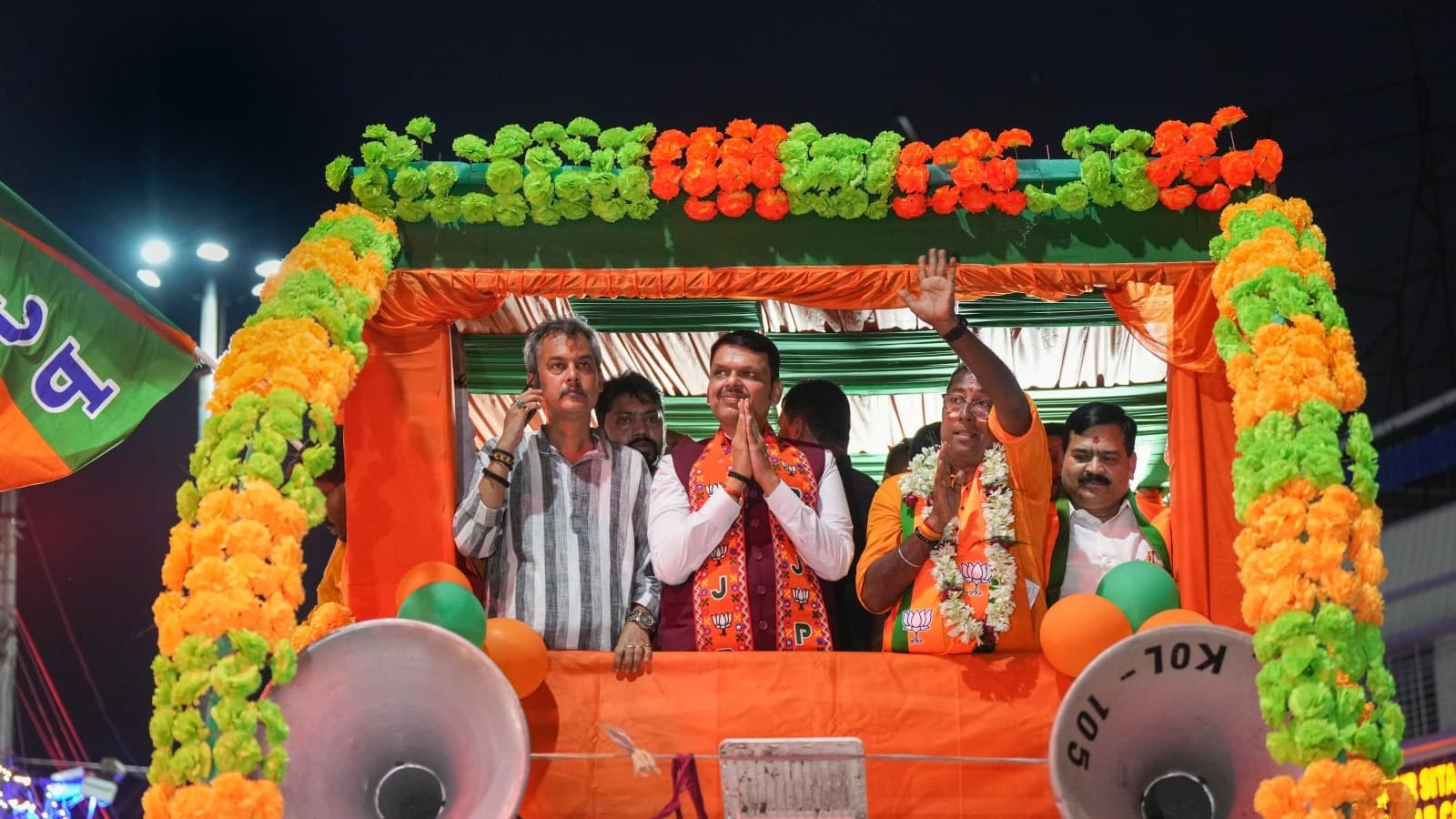
Image: Indian Express
Maharashtra CM Devendra Fadnavis criticizes Mamata Banerjee over migration and infiltration issues, promising change if BJP gains power in West Bengal.
GlipzoMaharashtra’s Chief Minister Devendra Fadnavis didn’t hold back on Friday, taking aim at Mamata Banerjee, the Chief Minister of West Bengal, during a press conference in Kolkata. His remarks centered on the alarming trend of residents leaving West Bengal in search of better opportunities, which he attributes to the failures of the current state government. Fadnavis stated, "The West Bengal government should be ashamed. Why are so many people leaving the state? It is a failure of the government."
Fadnavis highlighted the positive atmosphere for the Bengali community in Maharashtra, contrasting it with the situation in West Bengal. He suggested that inefficient policies from the Bengal government have facilitated the illegal entry of Bangladeshi nationals into India. He pledged that if the BJP were to gain power in West Bengal, they would take decisive action to repatriate these infiltrators back to Bangladesh. His statements underscore the BJP's focus on national security and immigration issues, which have become central themes in their political strategy.
Fadnavis went on to assert that the infiltration of illegal immigrants poses a significant threat to national security, claiming that it has led to demographic shifts in border regions of Bengal. He emphasized, "We are not against any Indian, irrespective of caste, creed, and religion. But we have to evict the infiltrators. If BJP comes to power in West Bengal, anti-national forces will be thrown out of the country."
His comments came in response to accusations from the Trinamool Congress (TMC), which has labeled BJP leaders as "bahiragoto" or outsiders. Fadnavis defended the BJP’s roots in Bengal, pointing out that the Bharatiya Jana Sangh, the predecessor of the BJP, was founded in Bengal by Syama Prasad Mookerjee in 1951. He firmly stated, "We are very much part of Bengal. Our leaders in Bengal are all sons and daughters of the soil. You can’t call us outsiders."
Taking a critical stance on the economic performance of West Bengal, Fadnavis remarked on the state's decline from being one of the top financial performers to its current state. He attributed this downturn to the governance of both the Communist Party of India (Marxist) and the TMC, asserting, "Bengal has all the natural resources yet has fallen behind in attracting foreign direct investment."
Fadnavis claimed that under TMC's administration, approximately 6,000 industries and over 100 listed companies have exited the state, a clear indicator of the business environment's deterioration. He expressed confidence that under a BJP-led government, West Bengal could reclaim its status as a premier investment destination, stating, "The entire ecosystem is not industry-friendly in Bengal under TMC… BJP will bring ease of doing business here."
Fadnavis's vision for West Bengal includes transforming the state into a powerhouse of economic activity. He noted the state's rich natural resources and mining potential but questioned why these assets have not translated into fiscal benefits for the local government, citing rampant corruption as a major issue. "There has been so much corruption. That is the biggest achievement of her government. It is time to end the TMC misgovernance," he asserted.
Highlighting the importance of strong governance, he stated, "Bengal is an enterprising state. If it gets good governance, then it will be in the top five states again. We will make Bengal a powerhouse and stop infiltration from the borders."
In addition to his critique of West Bengal, Fadnavis addressed serious incidents occurring in Maharashtra, particularly at a Tata Consultancy Services (TCS) unit in Nashik. Reports of sexual harassment and religious conversion cases have raised concerns, prompting Fadnavis to declare, "It is a serious issue. We will bust the module… no one will be spared."
Currently, Fadnavis is campaigning vigorously in West Bengal ahead of the upcoming elections, scheduled for April 23. His remarks signal the BJP's intent to not only challenge the TMC's governance but also to reshape the narrative around migration, security, and economic revitalization.
Fadnavis's comments highlight the ongoing political tussle between the BJP and TMC, focusing on issues of migration, economic stability, and governance. As the election approaches, these conversations will likely shape voter sentiment and influence the political landscape in West Bengal. The BJP’s strategy revolves around portraying itself as a solution to the challenges faced by the state, especially in the context of security and economic decline.
As the election date nears, all eyes will be on West Bengal to see if Fadnavis's remarks resonate with the electorate or if they provoke a fierce backlash from the ruling TMC.

Tensions soar as the US and Iran engage in air strikes near the Strait of Hormuz, raising concerns over global oil supply and regional stability.
BBC World
Trump's international interventions face serious stalemates. What will this mean for U.S. foreign policy? Explore the critical challenges ahead.
Indian Express
Tehran denies resignation of President Masoud Pezeshkian amid claims of IRGC influence. What does this mean for Iran's political stability? Click to learn more!
Indian Express