Glipzo
WorldTechnologyBusinessSportsEntertainmentScienceHealthPolitics
Glipzo
WorldTechnologyBusinessSportsEntertainmentScienceHealthPolitics
  1. Home
  2. /
  3. Business
  4. /
  5. Experts Warn: $150 Oil Could Spark Global Recession
Experts Warn: $150 Oil Could Spark Global Recession

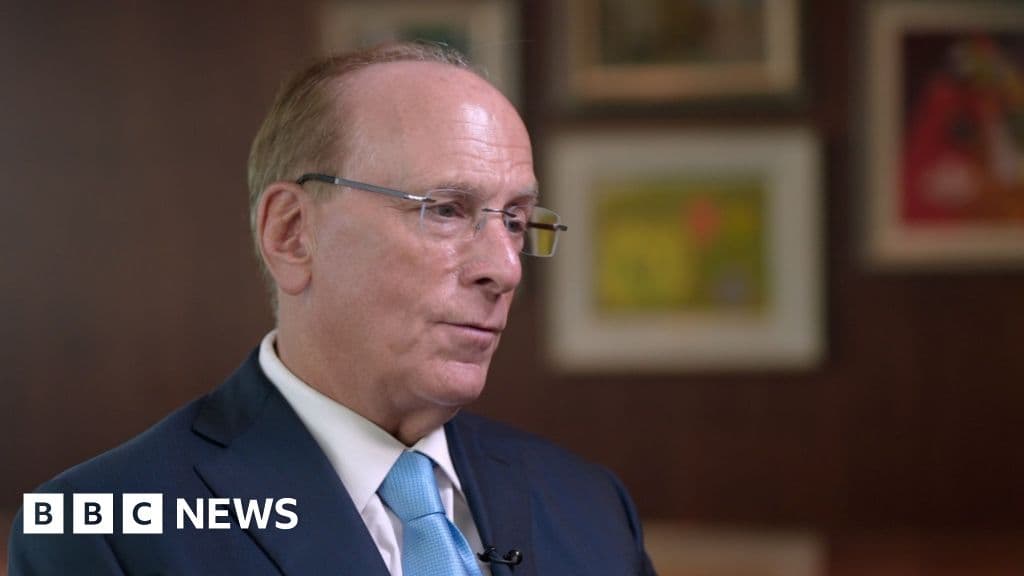
Image: BBC World

Business
Wednesday, March 25, 20264 min read

Experts Warn: $150 Oil Could Spark Global Recession

Could $150 oil prices trigger a global recession? BlackRock's CEO Larry Fink weighs in on this potential economic crisis and its implications.

Glipzo News Desk|Source: BBC World
Share
Glipzo

Key Highlights

  • Larry Fink warns $150 oil could trigger global recession.
  • Rising energy costs hit low-income individuals hardest.
  • BlackRock's assets: $14 trillion, shaping global markets.
  • Investing in AI is crucial for technology dominance over China.

In this article

  • Oil Price Surge: A Looming Economic Threat In a stark warning to global markets, **Larry Fink**, the CEO of **BlackRock**, the world's leading asset management firm, has indicated that if oil prices reach **$150 per barrel**, it could precipitate a **global recession**. In an exclusive interview with the BBC, Fink elaborated on the potential economic fallout that could arise from escalating oil prices, particularly if tensions with **Iran** persist.
  • Understanding the Context of Rising Oil Prices The ongoing conflict in the Middle East has already led to volatile fluctuations in financial markets as investors assess the future of energy costs. As Fink points out, it remains uncertain how this conflict will ultimately resolve. He outlined two possible scenarios: - **Optimistic Outcome**: If the conflict resolves favorably and Iran re-establishes itself as a cooperative member of the international community, oil prices might drop back below pre-war levels. - **Pessimistic Outcome**: Conversely, if tensions continue, oil could remain priced at **$100 or more**, potentially reaching **$150**, leading to a deep and steep recession globally.
  • The Need for Energy Self-Sufficiency In light of these challenges, some industry experts in the UK are advocating for a renewed focus on domestic oil and gas production. On Tuesday, **Offshore Energies UK**, an industry body, warned that without increasing homegrown production, the UK risks becoming overly dependent on imports amid rising global instability.
  • Analyzing Market Conditions Amidst Energy Fluctuations Current market conditions have drawn parallels to the lead-up to the **2007-08 financial crisis**, with some analysts noting signs of potential instability. As energy prices rise, concerns about financial vulnerabilities have emerged, prompting firms like BlackRock to limit withdrawals from private credit funds as investors react to market uncertainty.
  • The AI Investment Landscape In addition to discussing oil prices, Fink addressed the recent surge in investment in **artificial intelligence (AI)**. He dismissed the notion of an AI bubble, asserting that the current investment activity, which has seen billions poured into technology, is justified. He did concede that there may be occasional failures within the AI sector but maintained that the overall trajectory is healthy.
  • Energy Costs: The Key to Technological Expansion Fink pointed to energy costs as a critical barrier to the expansion of AI in the United States and Europe. The implication is clear: without addressing energy affordability and reliability, the West risks falling behind in the global technology race.
  • What’s Next for the Global Economy? Looking ahead, the trajectory of oil prices and their implications for the global economy will be pivotal. Investors, policymakers, and consumers must remain vigilant as they adapt to the evolving landscape.

Oil Price Surge: A Looming Economic Threat In a stark warning to global markets, **Larry Fink**, the CEO of **BlackRock**, the world's leading asset management firm, has indicated that if oil prices reach **$150 per barrel**, it could precipitate a **global recession**. In an exclusive interview with the BBC, Fink elaborated on the potential economic fallout that could arise from escalating oil prices, particularly if tensions with **Iran** persist.

Fink emphasized that sustained high oil prices would have significant consequences for the global economy, suggesting that such a scenario would lead to profound implications, especially as countries grapple with rising energy costs. Given BlackRock's commanding presence in the financial sector—managing $14 trillion in assets—Fink's insights are critical for understanding the broader economic climate.

Understanding the Context of Rising Oil Prices The ongoing conflict in the Middle East has already led to volatile fluctuations in financial markets as investors assess the future of energy costs. As Fink points out, it remains uncertain how this conflict will ultimately resolve. He outlined two possible scenarios: - **Optimistic Outcome**: If the conflict resolves favorably and Iran re-establishes itself as a cooperative member of the international community, oil prices might drop back below pre-war levels. - **Pessimistic Outcome**: Conversely, if tensions continue, oil could remain priced at **$100 or more**, potentially reaching **$150**, leading to a deep and steep recession globally.

Fink's perspective underscores the urgency for countries to reevaluate their energy strategies. He noted that the surge in energy prices disproportionately impacts lower-income individuals, likening it to a regressive tax. As energy costs climb, poorer populations are often left more vulnerable than wealthier citizens.

The Need for Energy Self-Sufficiency In light of these challenges, some industry experts in the UK are advocating for a renewed focus on domestic oil and gas production. On Tuesday, **Offshore Energies UK**, an industry body, warned that without increasing homegrown production, the UK risks becoming overly dependent on imports amid rising global instability.

Fink acknowledged the importance of a balanced energy mix. He stated, "Countries should utilize all available resources but must prioritize providing affordable energy to foster economic growth and improve living standards." He also highlighted the potential for a greater shift toward renewable energy sources like solar and wind power if oil prices were to remain high for an extended period.

Analyzing Market Conditions Amidst Energy Fluctuations Current market conditions have drawn parallels to the lead-up to the **2007-08 financial crisis**, with some analysts noting signs of potential instability. As energy prices rise, concerns about financial vulnerabilities have emerged, prompting firms like BlackRock to limit withdrawals from private credit funds as investors react to market uncertainty.

However, Fink is confident that the financial landscape has evolved since the last major crisis. He firmly stated, "I don't see any similarities at all. Zero." He reassured stakeholders that the issues faced by certain funds are minimal relative to the overall market, emphasizing robust institutional investment.

The AI Investment Landscape In addition to discussing oil prices, Fink addressed the recent surge in investment in **artificial intelligence (AI)**. He dismissed the notion of an AI bubble, asserting that the current investment activity, which has seen billions poured into technology, is justified. He did concede that there may be occasional failures within the AI sector but maintained that the overall trajectory is healthy.

Last year, BlackRock participated in a significant $40 billion acquisition of Aligned Data Centres, a leading data center provider, marking the firm's commitment to technological advancement. Fink articulated a sense of urgency regarding technological competition with China, stating, "If we do not invest more, China wins. We must aggressively build out our AI capabilities."

Energy Costs: The Key to Technological Expansion Fink pointed to energy costs as a critical barrier to the expansion of AI in the United States and Europe. The implication is clear: without addressing energy affordability and reliability, the West risks falling behind in the global technology race.

As countries navigate the uncertain waters of geopolitical tensions and energy prices, the messages from Fink and other industry leaders will be essential for shaping policy and investment decisions moving forward.

What’s Next for the Global Economy? Looking ahead, the trajectory of oil prices and their implications for the global economy will be pivotal. Investors, policymakers, and consumers must remain vigilant as they adapt to the evolving landscape.

With potential scenarios ranging from economic recovery to recession, the stakes could not be higher. Observers will need to closely monitor geopolitical developments, energy production strategies, and investment trends in both traditional and emerging technologies. The choices made today will undoubtedly shape the economic realities of tomorrow.
Did you find this article useful? Share it!

Share

Related Articles

Rolls-Royce Unveils Exclusive Two-Seater Electric Convertible
Business
Apr 15, 2026

Rolls-Royce Unveils Exclusive Two-Seater Electric Convertible

Discover Rolls-Royce's stunning new Project Nightingale electric convertible, set for a 2028 release. Only 100 units will be handcrafted.

BBC Business
Morrisons to Cut 200 Jobs in Major Restructuring Effort
Business
Apr 15, 2026

Morrisons to Cut 200 Jobs in Major Restructuring Effort

Morrisons confirms 200 job cuts at its Bradford HQ as part of a major restructuring move focused on integrating AI and automation. What’s next?

BBC Business
Fuel Prices Finally Stabilize After 43 Days of Increases
Business
Apr 15, 2026

Fuel Prices Finally Stabilize After 43 Days of Increases

Fuel prices in the UK have stabilized after 43 days of increases, but remain significantly higher than pre-war levels. What does this mean for drivers?

BBC Business

Categories

  • World
  • Technology
  • Business
  • Sports

More

  • Entertainment
  • Science
  • Health
  • Politics

Explore

  • Web Stories
  • About Us
  • Contact

Legal

  • Privacy Policy
  • Terms of Service

© 2026 Glipzo. All rights reserved.