

Image: Mint (Business)
Tensions escalate as Israel warns Iran's missiles could threaten Europe. Discover the latest updates on the US-Iran conflict and its global implications.
GlipzoTensions in the ongoing conflict between the United States, Israel, and Iran reached a critical juncture on March 22. Following a series of alarming developments, Israel has issued stark warnings regarding the capabilities of Iranian long-range missiles, which could potentially reach major European cities such as London, Paris, and Berlin. This escalation highlights the increasing stakes in the region, particularly amid ongoing military operations and geopolitical maneuvering.
On Sunday, Israeli army chief, Gen. Eyal Zamir, made it clear that the conflict was far from over, stating, "The war is not close to ending." As the situation intensifies, the International Atomic Energy Agency (IAEA) noted that there were no reports of damage to Israeli nuclear facilities or unusual levels of radiation, despite ongoing fears surrounding missile strikes.
Amidst these concerns, Israeli rescue services responded to a missile strike in the southern city of Arad, close to Israel's primary nuclear research center. The attack resulted in injuries to nearly 70 individuals, with 10 in critical condition and significant damage to at least 10 apartment buildings. This incident underscores the immediate human cost of the escalating conflict.
In light of the rising tensions, Britain has reassured Cyprus that the U.K. air base on the island will not facilitate U.S. attacks against Iran. However, the U.S. continues to leverage bases in England and Diego Garcia for operations targeting Iran's missile capabilities. Such strategic decisions reflect the complex interplay of international alliances and military readiness in this fraught situation.
Military spokesperson Brig. Gen. Effie Defrin confirmed that although Israel's air defense systems were activated, they failed to intercept the missile that struck Arad. An investigation is underway to determine the specifics of the missile's origin and capabilities. According to the Israel Defense Forces (IDF), Iran's recent missile developments represent a significant threat not just regionally but globally, with capabilities to reach cities across Europe.
"The Iranian terrorist regime launched a long-range missile for the first time since the beginning of Operation Roaring Lion that could reach a distance of approximately 4,000 km. This is a global threat that cannot be ignored," the IDF stated, emphasizing the seriousness of the situation.
As the conflict enters its third week, which has already claimed hundreds of lives and strained global relations, the Trump administration has been tight-lipped regarding its strategies concerning Iran's uranium stockpile. When questioned, Trump stated, "We have hit them harder than virtually any country in history has been hit, and we’re not finished yet."
The Natanz nuclear facility, located about 220 kilometers southeast of Tehran, has been a focal point of military actions. Despite Iran claiming a halt in enrichment activities, satellite imagery has shown renewed activity at sites previously targeted, suggesting efforts to recover materials and possibly resume operations.
With the conflict still very much alive, Lt. Gen. Eyal Zamir indicated that Israel is only halfway through its military objectives against Iran. He addressed the nation, saying, "We are at the midway point, but the direction is clear. In about a week, around Passover, we will continue to fight for our freedom and our future."
In a crucial update, the IAEA confirmed via social media that no abnormal levels of radiation have been detected following Iran's claims of targeting Israeli nuclear assets. This finding may provide some reassurance, but the potential for escalation remains high.
Beyond the immediate military confrontations, the implications of this conflict extend to global economies and international relations. As nations reassess their alliances and strategies in the face of such threats, the potential for wider regional instability looms large.
The ongoing conflict between the U.S., Israel, and Iran is not just a regional issue; it has significant global ramifications. The potential for Iranian missiles to reach major European cities poses a direct threat to international security and stability. As military actions continue, the world watches closely to see how this situation develops and what it means for diplomatic efforts in the region.
As the war progresses, key indicators to watch include: - Further missile tests by Iran and their implications. - Responses from European and Middle Eastern allies regarding military support and diplomatic interventions. - Developments in the U.S. administration's strategy regarding Iran's nuclear program.
The coming weeks are crucial as Israel prepares for further military operations and the international community grapples with the fallout from this volatile situation. The world watches with bated breath to see if diplomatic solutions can emerge from the ashes of conflict.

Survivors of the Laos cave rescue are aiding efforts to find the last two missing men trapped inside, sharing crucial insights for the search operation.
BBC World
A year after the tragic Air India crash, the Ali family reflects on grief, unanswered questions, and the enduring bonds of love in the face of loss.
BBC Business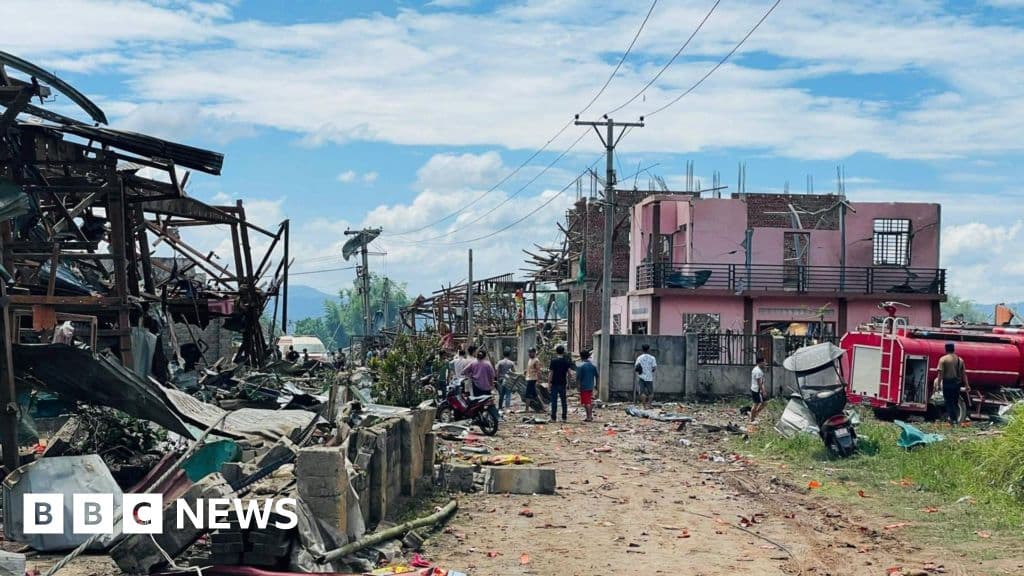
A devastating explosion in Myanmar's Kaung Tat village has killed at least 55 people, raising serious safety concerns and questions about civilian protection in conflict zones.
BBC World