
Image: BBC World
After a tight election, Denmark's Social Democrats lead but lack a majority. Coalition talks loom as key issues take center stage. What’s next?
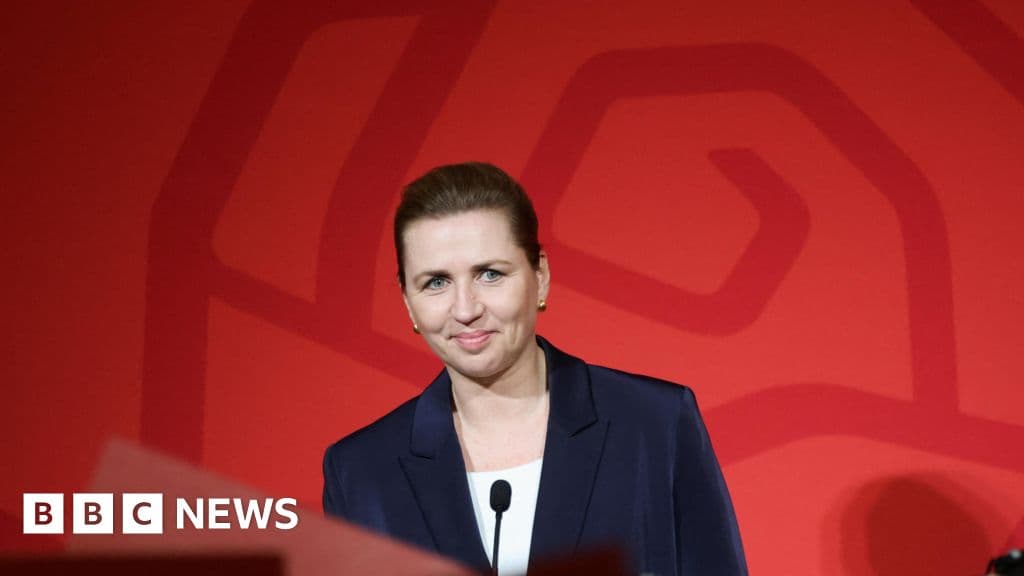
GlipzoIn a closely watched election held on Tuesday, Denmark's Social Democrats, led by Prime Minister Mette Frederiksen, emerged as the leading party but failed to secure an outright majority. With 21.9% of the vote and 38 parliamentary seats, the results mark the party's weakest performance in over a century, raising questions about the future of governance in Denmark.
Frederiksen addressed her supporters at Christiansborg, the seat of the Danish Parliament, expressing her disappointment: “I’m sorry that we did not get more votes. I had also hoped for a better result.” However, she remained optimistic, stating, “But there is nothing today that can make me sad that the Social Democrats have once again become the Danes' absolute favourite political party.”
Despite leading the polls, the Social Democrats' inability to achieve a majority has forced the party into a challenging position. In Denmark, coalition governments are the norm, and extended negotiations are expected to commence as various parties vie for influence. The recent election saw a total of twelve political parties contesting, culminating in a narrow race that has left both the red bloc and the blue bloc without a clear path to a governing majority.
The red bloc, which comprises left-wing parties, has secured 84 seats, while the blue bloc, representing right-leaning factions, has amassed 77 seats. Neither bloc has reached the 90 seats required to form a government, making the upcoming coalition talks crucial to determining Denmark's political direction.
The Moderates, a centrist party holding 14 seats, have found themselves in a pivotal position as potential kingmakers in the negotiations. Their leader, former Prime Minister Lars Løkke Rasmussen, has emphasized a desire to form a coalition that spans the center. In his address to supporters, he declared, “We’re standing in the middle. We’re ready.”
However, the prospect of a coalition with the Social Democrats has been met with skepticism from leaders of the blue bloc. Troels Lund Poulsen, head of the Liberal Party, has dismissed the idea of partnering with Frederiksen’s party again, urging Rasmussen to consider aligning with the right instead. “It is possible to get a new direction in Denmark,” he said, signaling a potential divide in coalition preferences.
The election results reflect a shift in voter sentiment, influenced by various socio-economic issues rather than foreign policy. While Frederiksen previously capitalized on her handling of international affairs, including former U.S. President Donald Trump's controversial interest in acquiring Greenland, domestic issues took center stage during the campaign. Key voter concerns included: - Rising cost of living - Economic stability - Welfare policies - Environmental issues, particularly high pesticide levels in drinking water - Climate impacts from agriculture
Despite a strong record in crisis management, Frederiksen's popularity has diminished, and many Danes are now questioning her leadership amid pressing domestic challenges.
As the Social Democrats prepare for negotiations, the political landscape in Denmark remains uncertain. Observers speculate that a coalition may ultimately form among the Social Democrats, the Red-Greens, the Moderates, and the Danish Social Liberal Party, potentially creating a center-left government. According to political correspondent Christine Cordsen, this configuration appears to be the most viable outcome given the current seat distribution.
Frederiksen’s leadership will be put to the test in the coming weeks as the intricate dance of coalition-building unfolds. With the Moderates holding significant sway, their decisions will be critical in determining who ultimately governs the nation.
In summary, Denmark faces a pivotal moment as coalition negotiations begin following a tightly contested election. The outcome will not only shape the political landscape for the next term but also reflect the evolving priorities of the Danish electorate. As parties navigate their alliances, the focus will remain on key domestic issues that resonate with voters. Observers and citizens alike will be watching closely to see if Frederiksen can maintain her position or if a new coalition will reshape Denmark's political future.

Tensions soar as the US and Iran engage in air strikes near the Strait of Hormuz, raising concerns over global oil supply and regional stability.
BBC World
Trump's international interventions face serious stalemates. What will this mean for U.S. foreign policy? Explore the critical challenges ahead.
Indian Express
Tehran denies resignation of President Masoud Pezeshkian amid claims of IRGC influence. What does this mean for Iran's political stability? Click to learn more!
Indian Express