
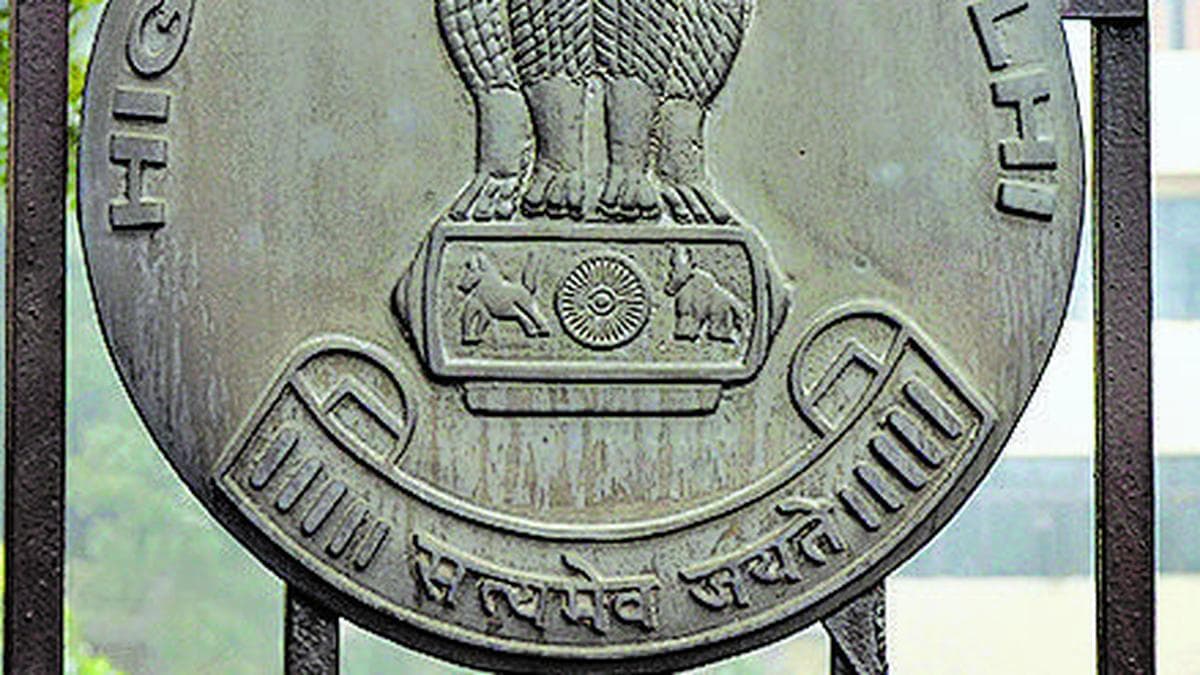
Image: The Hindu
The Delhi High Court has issued a notice regarding a plea to remove India's patent head, Prof. Unnat P. Pandit, amid allegations of irregularities.
GlipzoIn a significant legal development, the Delhi High Court has taken steps regarding the controversial appointment of Prof. Unnat P. Pandit as the Controller General of Patents, Designs and Trade Marks (CGPDTM). On March 19, 2026, the court issued a notice to the Central Government and Mr. Pandit himself, following a directive from the Supreme Court. The order mandates the High Court to swiftly address a plea that challenges the legality of Mr. Pandit’s appointment.
This case has garnered attention due to its implications for the administration of intellectual property rights in India. The All India Patent Officers’ Welfare Association (AIPOWA) filed the petition, asserting that Mr. Pandit's appointment was executed in a manner that was both “illegal and arbitrary.” The High Court has scheduled further hearings for May 2026, indicating that this issue will remain in the public and legal eye for some time.
The allegations presented by AIPOWA are quite serious. They argue that the appointment process did not adhere to the eligibility criteria set forth by the government. Advocate Gyanant Kumar Singh, representing the association, highlighted several key points in the petition: - Lack of Experience: The petition claims that Mr. Pandit does not meet the essential requirement of five years’ worth of Annual Confidential Reports (ACRs) or Annual Performance Appraisal Reports (APARs), a prerequisite for such a high-ranking position. - Deviation from Norms: The process allegedly strayed from established government protocols, including the necessity for an open advertisement in accordance with a memorandum from the Department of Personnel and Training (DoPT). - Irregular Search Committee Procedures: It is contended that there were irregularities in the formation of the Search Committee, with changes made after its initial meeting. This raises concerns about the transparency and fairness of the selection process. - Term Violations: The plea also points out that Mr. Pandit was appointed for a five-year term, which contradicts DoPT guidelines stipulating an initial tenure of three years, extendable by only two years.
The outcome of this legal challenge could have far-reaching consequences for the administration of intellectual property in India. The CGPDTM plays a vital role in overseeing patents, designs, and trademarks, impacting innovation and economic growth. If the court rules in favor of the petitioners, it could lead to a reassessment of the appointment process for such crucial positions within the government.
Furthermore, this case sheds light on the transparency and accountability of governmental appointments. As the High Court prepares for further hearings, stakeholders in the intellectual property sector are closely watching the developments. This situation raises critical questions about how appointments are made and whether they truly reflect the best candidates for the position.
In a broader context, the case could serve as a catalyst for reforming how such appointments are handled in India, potentially leading to more stringent guidelines and a more transparent selection process.
As the May hearing approaches, several factors will be critical in shaping the outcome of this case: - Legal Arguments: The strength of the arguments presented by both the petitioners and the defense will play a crucial role. The court will likely scrutinize the adherence to the established norms and protocols in appointments. - Public and Media Attention: The case has already attracted media coverage, and ongoing public interest could influence the proceedings. Advocacy from various groups may also press for more significant reforms in the selection processes. - Government Response: How the Central Government responds to the High Court's notice and the allegations made will be pivotal. Any changes or clarifications could significantly impact the legal landscape surrounding this case.
In conclusion, the Delhi High Court’s handling of this matter could lead to important discussions about governance, transparency, and accountability within the Indian bureaucracy. As the situation unfolds, all eyes will be on the judiciary to see how it navigates these complex issues and what precedents may be set for future appointments in the realm of intellectual property rights.
---

Tensions soar as the US and Iran engage in air strikes near the Strait of Hormuz, raising concerns over global oil supply and regional stability.
BBC World
Trump's international interventions face serious stalemates. What will this mean for U.S. foreign policy? Explore the critical challenges ahead.
Indian Express
Tehran denies resignation of President Masoud Pezeshkian amid claims of IRGC influence. What does this mean for Iran's political stability? Click to learn more!
Indian Express