
Image: BBC World
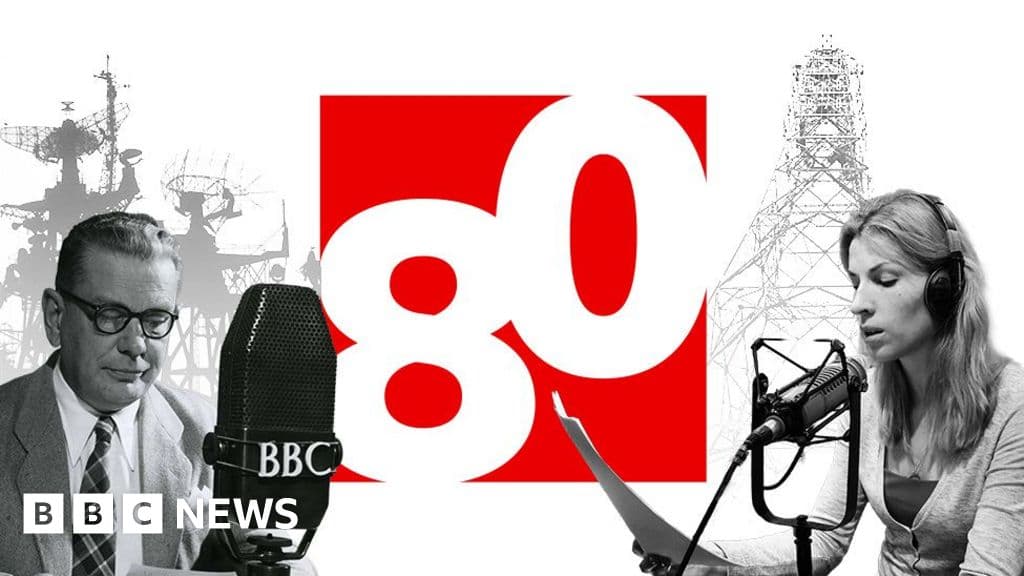
Explore BBC Russian's 80-year journey of resilience against censorship, from jamming broadcasts to current digital restrictions in Russia.
GlipzoFor 80 years, BBC Russian has been a beacon of hope for audiences behind the Iron Curtain, striving to deliver a truthful narrative amidst oppressive censorship in Russia. Since its inception on March 24, 1946, the service has faced a myriad of challenges, from the jamming of its broadcasts to recent attempts by the Kremlin to block its website entirely. As digital restrictions tighten, the story of BBC Russian is not just about survival; it’s a testament to the enduring quest for freedom of information.
The current landscape in Russia is starkly reminiscent of the past, where access to unbiased news has been hindered through both technological and regulatory means. The Kremlin has intensified its control over media narratives, currently implementing widespread mobile internet outages and planning to block popular platforms like Telegram. This creates a significant barrier for independent news outlets, including BBC Russian, which aims to provide a counter-narrative to state propaganda.
The struggle for information in Russia has deep roots, particularly during the Cold War era. BBC Russian initially aimed to offer Soviet citizens a glimpse into the world beyond the draconian confines of state-controlled media. However, by 1949, signal jamming became the norm, making it challenging for citizens to access unbiased news.
Natalia Rubinstein, an ex-presenter for BBC Russian and a former Leningrad resident, recalls the lengths to which people would go to catch a glimpse of foreign broadcasts. With short-wave radios in hand, enthusiasts often ventured into the countryside, where they could escape the reach of jamming signals. "I still see that image in my mind: a person skiing, leaning against a tree, with a radio nestled against their chest," she reminisces.
The practice of jamming foreign broadcasts began with Nazi Germany and was later adopted by the Soviet Union to suppress dissenting voices. Despite these obstacles, BBC Russian persisted, offering not only news but also a cultural exchange through Western rock music, excerpts from banned literature, and engaging quizzes.
Despite the heavy censorship, many Soviet citizens sought out the BBC’s broadcasts, often risking repercussions to stay informed. A post on a forum dedicated to foreign broadcasts captures the nostalgia: "My dad would sit on a three-legged stool, pressing his forehead against the radio, tuning in through the crackling noise. It felt like the sounds of outer space reaching us."
Interestingly, not every BBC broadcast was met with interference. A 1960 CIA memo indicated that certain stories about life in the West aired without disruption, while discussions on sensitive political topics were consistently jammed. Occasionally, BBC Russian outsmarted the jammers; for instance, when Soviet leader Leonid Brezhnev died in 1982, the station managed to broadcast a special program unexpectedly, catching the jamming teams off guard.
The strategic timing of BBC broadcasts allowed them to deliver news faster than state media. In 1964, the BBC reported on the ousting of Nikita Khrushchev, well ahead of any official announcement from Soviet outlets. This edge in timeliness built a loyal audience eager for truthful content, despite the risk involved in tuning in.
As the political climate shifted under Mikhail Gorbachev in the late 1980s, BBC Russian experienced a significant breakthrough. In 1987, Rubinstein was notified that jamming had ceased, allowing the team to broadcast without interference for the first time in decades. The reception was overwhelmingly positive; Rubinstein recalls receiving "sacks of wonderful letters" from listeners across Russia, eager to engage with the content.
Fast forward to the present day, and the battle for free speech in Russia remains critical. The Kremlin's latest moves to control digital spaces, coupled with the ongoing jamming of broadcasts, signify that the fight for independent journalism is far from over. BBC Russian continues to adapt, seeking innovative ways to reach its audience in a climate hostile to dissenting voices.
The tenacity displayed by BBC Russian over the past eight decades is emblematic of a broader struggle for freedom of expression. As we witness the resurgence of strict media regulations in Russia, it is crucial to recognize the importance of independent journalism in upholding democratic values.
Looking forward, the resilience of BBC Russian suggests a promising future, even in the face of adversity. As technology evolves, so too does the potential for innovative solutions to bypass censorship. The ongoing commitment to providing accurate and timely information will remain vital, not only for Russian citizens but for the global audience keen on understanding the complexities of Russian society.
In conclusion, as the Kremlin continues its clampdown on free speech, the legacy of BBC Russian serves as a reminder of the power of information and the relentless pursuit of truth. The world will be watching closely to see how BBC Russian navigates the challenges ahead and what strategies it will employ to maintain its vital role in the quest for an informed public.

Tensions soar as the US and Iran engage in air strikes near the Strait of Hormuz, raising concerns over global oil supply and regional stability.
BBC World
Trump's international interventions face serious stalemates. What will this mean for U.S. foreign policy? Explore the critical challenges ahead.
Indian Express
Tehran denies resignation of President Masoud Pezeshkian amid claims of IRGC influence. What does this mean for Iran's political stability? Click to learn more!
Indian Express