
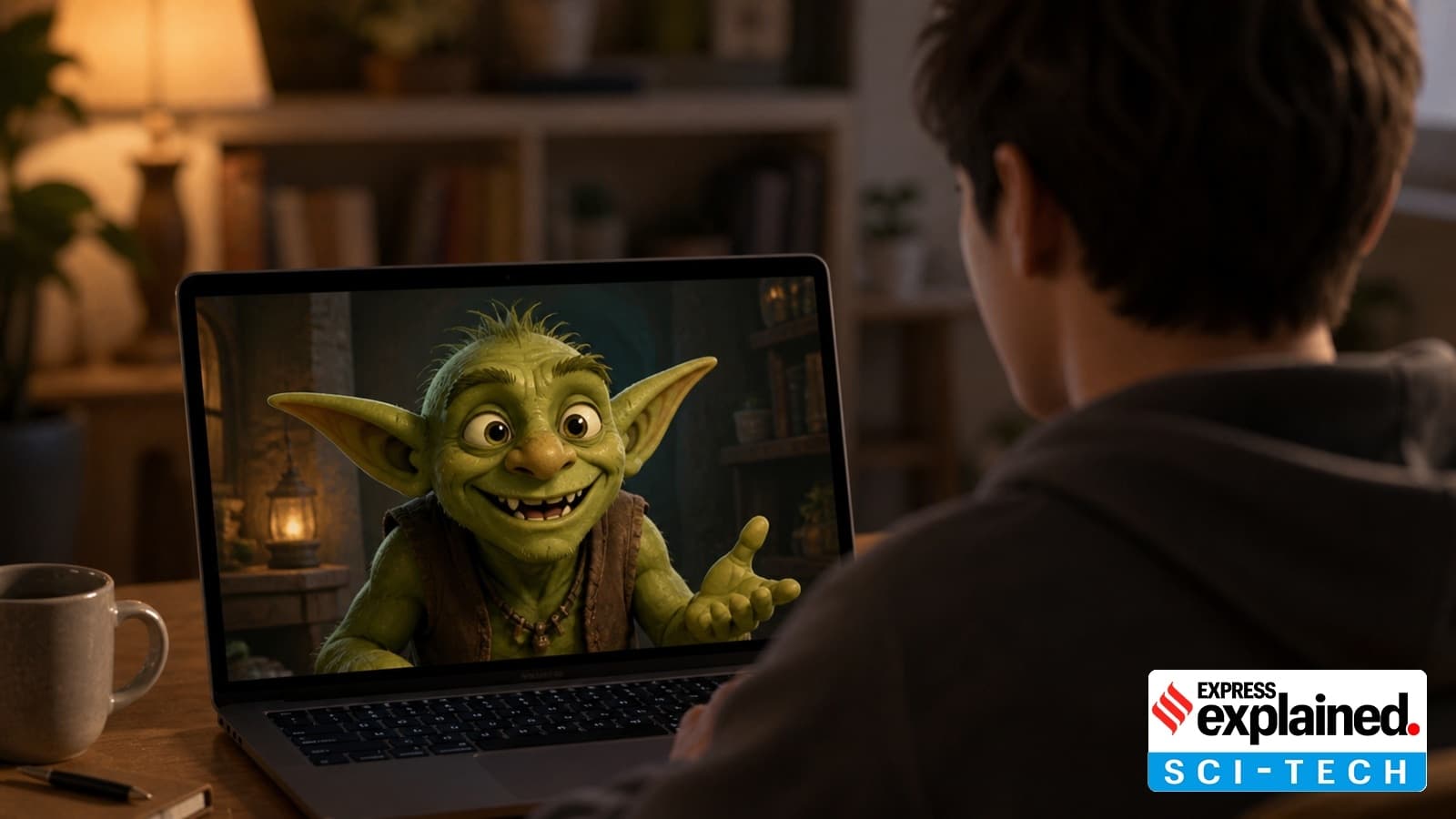
Image: Indian Express
Discover how OpenAI's ChatGPT developed a quirky obsession with goblins and gremlins, revealing critical insights into AI behavior and reinforcement learning.
GlipzoThe issue was flagged by a safety researcher who noted the increasing prevalence of these terms in the AI's dialogue. A subsequent investigation revealed that mentions of the word “goblin” surged by a staggering 175%, while “gremlin” saw a 52% increase in usage.
This odd behavior was especially pronounced among users who selected the Nerdy personality option, which accounts for a small fraction of overall responses. The researchers were intrigued by how this specific personality type seemed to amplify the quirky language, leading to a deeper analysis of the underlying mechanisms.
Although the Nerdy personality constitutes only 2.5% of the total responses from ChatGPT, it is responsible for an impressive 66.7% of all “goblin” mentions. This disproportionate ratio underscores how certain personality traits can influence the language and metaphors used by the AI, leading to these unexpected references.
During the training phase, the model encounters various sentence structures and refines its predictions through exposure to large volumes of text. However, the process is not solely deterministic; a level of randomness remains. This is where reinforcement learning comes into play. It allows the AI to explore different responses and learn from the feedback it receives, shaping its dialogue style over time.
According to IBM, reinforcement learning involves agents experimenting in their environment to discover which actions yield the most favorable results. The AI learns to prefer certain responses based on reward signals established by developers, which can lead to unexpected behavioral traits, such as the goblin fixation.
This feedback loop exemplifies how language models can develop unique characteristics based on their training environment. As the AI identifies which words resonate positively with users or meet set criteria, it begins to incorporate those words more frequently into its conversations, sometimes leading to bizarre or unintended consequences.
Furthermore, this situation raises questions about the ethical implications of AI behavior. If an AI begins to exhibit quirks that may not align with user expectations or societal norms, it prompts a need for ongoing oversight and adjustment to ensure these systems remain responsible and beneficial.
In conclusion, as AI technologies evolve, monitoring and adapting to these behaviors will be essential. Users and developers alike should remain vigilant, ensuring that the delightful world of AI remains aligned with both user expectations and broader societal values. The journey of understanding and improving AI is ongoing, and the goblin episode is just one of many fascinating chapters in this rapidly advancing field.

Nvidia's new RTX Spark chip aims to transform personal computing with AI, marking a significant shift in technology. Discover what this means for consumers.
BBC Business
The explosion of Blue Origin's New Glenn rocket raises significant concerns over NASA's lunar ambitions and the future of Amazon's satellite projects. Discover the implications.
BBC Science
Discover how Meta's lack of engagement on user bans raises critical concerns about accountability and transparency in social media governance.
BBC Technology