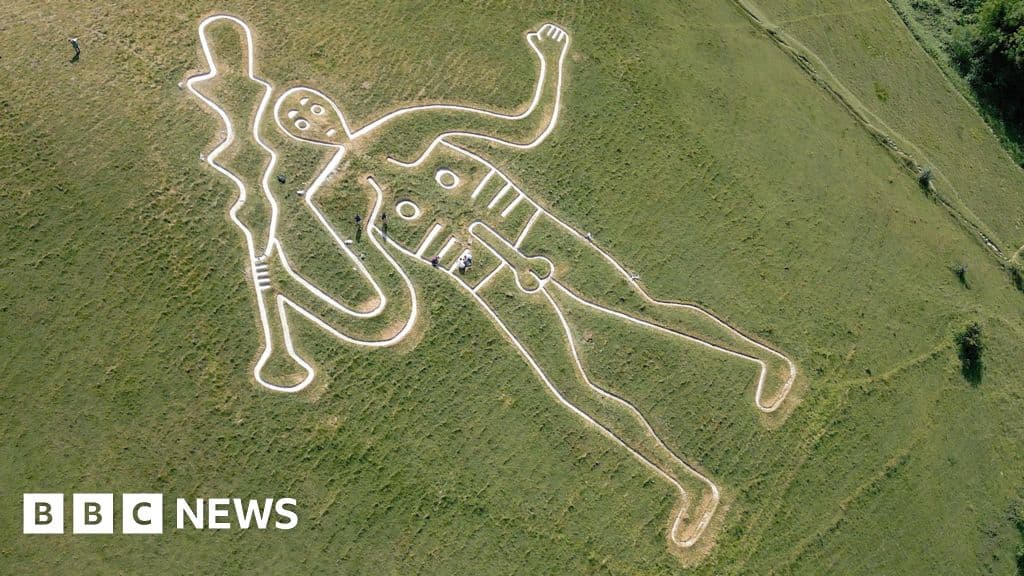
Explore how the iconic Cerne Abbas Giant is being restored amid climate change challenges. Discover efforts to preserve this historic landmark for future generations.
The Iconic Cerne Abbas Giant
Nestled in the rolling hills of Dorset, the **Cerne Abbas Giant** has long been a symbol of England’s rich history. This **55-meter chalk figure**, depicting a naked man wielding a club, is not just a local curiosity but one of the UK's most recognizable landmarks. However, recent **climatic changes** are posing a significant threat to its visibility and preservation.
A Struggle Against the Elements
The **National Trust**, which has been responsible for the Giant since **1920**, has noted that shifting weather patterns are complicating their efforts to maintain the figure's outline. **Luke Dawson**, a ranger with the Trust, pointed out that **increased winter rainfall** is washing away chalk from the hillside at an alarming rate. This trend, combined with mild, damp conditions promoting algae growth, is leading to a noticeable dulling of the Giant's once-vibrant outline.
> "It’s one of these things we cannot really prove, but it is a clear observation of what we are seeing up there," Dawson explains, highlighting the challenges posed by current weather trends.
The Process of Preserving History
In response to these environmental concerns, the Trust is mobilizing **around 300 staff and volunteers** this week to restore the Giant’s chalky brightness. The **rechalking process**, which can take up to **15 days**, will involve transporting approximately **17 tonnes of new chalk** up the steep hillside, which has a gradient of about **one in three** in some areas. This physical labor is compounded by the recent heatwave, making the task even more arduous.
- **Key Facts about the Restoration:**
Dawson noted that the restoration methods have remained largely unchanged for generations, emphasizing their commitment to traditional practices in maintaining this historic figure.
The Impact of Climate Change
The effects of climate change are becoming increasingly evident across the globe, with the **Met Office** reporting that the UK's climate has shifted significantly over the past few decades. The average global temperature has risen by about **1.4°C** since the late 19th century, primarily due to human activities such as fossil fuel combustion. According to the Met Office’s latest report, there is a **90% probability** that we could witness a new record high temperature within the next five years.
This evolving climate scenario is expected to continue creating wetter winters and hotter, drier summers, potentially necessitating more frequent maintenance of the Giant than the traditional decadal schedule.
Community Involvement and Support
The current restoration efforts are also a testament to community involvement and support. Earlier this year, public donations helped the **National Trust** raise **£330,000** to acquire an additional **138 hectares (341 acres)** of land surrounding the Giant. This newly protected area is not only crucial for the preservation of the Giant itself but also supports a rich biodiversity that includes habitats for rare species like the **endangered Duke of Burgundy butterfly**.
> "This purchase will allow us to care for the figure as well as the broader landscape, improving access and restoring habitats," a spokesperson from the Trust stated, underscoring the interconnectedness of land management and historical preservation.
A Look Ahead: The Future of the Cerne Abbas Giant
As the National Trust embarks on this urgent restoration project, it remains essential to consider the broader implications of climate change on historical landmarks. The ongoing efforts to maintain the **Cerne Abbas Giant** not only reflect a commitment to preserving a unique piece of British heritage but also serve as a reminder of the challenges faced by many cultural sites worldwide.
In the future, it will be crucial to monitor how ongoing climatic shifts affect not just the Giant but other historical figures and landscapes across the UK. With evolving weather patterns, the National Trust may need to adapt its strategies for preservation, ensuring these treasures remain visible for generations to come.
This restoration highlights the intersection of climate awareness and cultural preservation, prompting a broader conversation about our responsibility in maintaining historical landmarks in the face of environmental change. As we look ahead, the resilience of the Cerne Abbas Giant will not only depend on dedicated community efforts but also on our ability to address the pressing issues of climate change.