
Image: BBC World
Lebanon celebrates a fragile ceasefire amid ongoing crises. With over 2,100 dead and a million displaced, the path to lasting peace remains unclear.
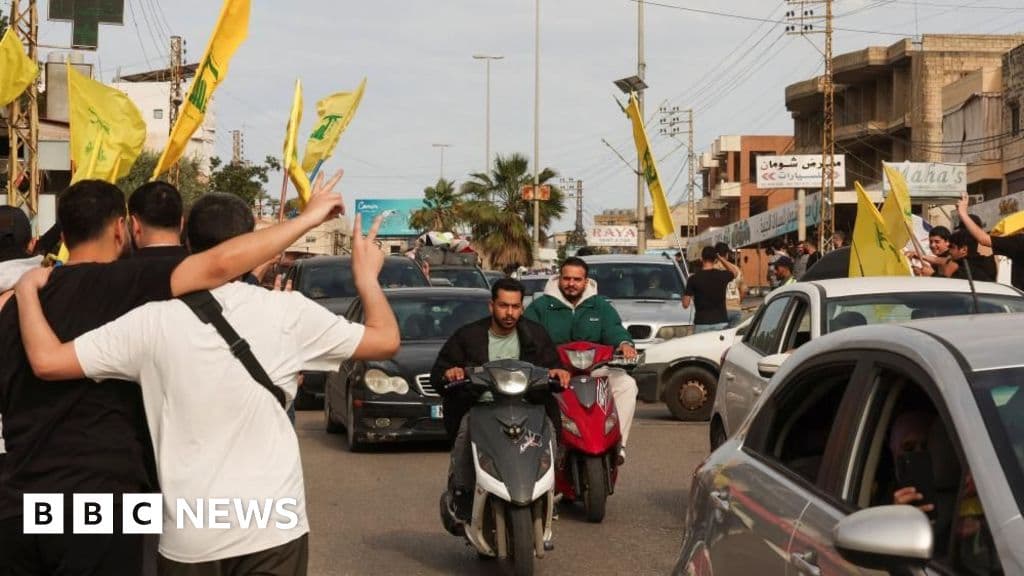
GlipzoAs the clock struck midnight, Beirut erupted in a mix of gunfire and fireworks, signaling the start of a temporary ceasefire that many hope will bring relief to a war-torn nation. Joyful crowds gathered in the streets, particularly in southern Lebanon, the stronghold of Hezbollah, as they celebrated the end of intense fighting that had lasted six weeks.
The ceasefire, announced by U.S. President Donald Trump, is initially set to last for 10 days. This fragile pause in hostilities comes after a devastating conflict that has claimed the lives of over 2,100 individuals and displaced more than a million people, roughly 20% of Lebanon's population. The humanitarian crisis in the region is dire, with families fleeing their homes and seeking shelter wherever they can.
Motorbikes filled with families and mattresses strapped atop cars flooded the roads as displaced individuals made their way back to southern Lebanon. However, many of these returning residents are not planning to stay, as the devastation in their towns and villages is overwhelming. Some areas remain under Israeli occupation, further complicating the situation and hindering any real sense of normalcy.
The Dahieh district of Beirut, a Hezbollah-controlled area, has seen significant destruction during the conflict. Many residential buildings have been reduced to rubble, leaving the streets relatively quiet as residents grapple with the aftermath of the violence. Meanwhile, along the city's waterfront, countless families are living in makeshift tents, expressing fear and uncertainty about returning to their homes.
Despite the celebratory atmosphere, the ceasefire agreement raises several critical questions. Notably, it does not address the withdrawal of Israeli troops from southern Lebanon, prompting concerns that parts of the country might remain occupied even after the fighting stops. Israeli officials have indicated their intention to establish a security buffer zone several miles deep, which could prevent many residents from returning home.
Another contentious issue is the status of Hezbollah's weapons. The disarmament of the group has long been a point of contention among various stakeholders, including the U.S., Israel, and many Lebanese citizens. Critics accuse Hezbollah of acting in the interests of Iran, thus dragging Lebanon into a series of unnecessary conflicts. Supporters argue that the group provides essential protection in a fragile state.
In a rare interview with the BBC, Wafiq Safa, a senior figure in Hezbollah, asserted that the group would "never, ever" disarm. He emphasized the inseparable bond between Hezbollah and Iran, stating, "There can be no Hezbollah without Iran, and no Iran without Hezbollah."
The Lebanese government appears to wield little power over Hezbollah, complicating any potential negotiations about disarmament. President Joseph Aoun has acknowledged that disarming the group cannot be achieved through force, warning that such an approach could lead to further violence. Instead, he advocates for discussions with Hezbollah, a prospect that may not yield results given Iran's significant influence.
Adding to the uncertainty, the ceasefire agreement allows for the possibility of continued Israeli attacks on Lebanon, purportedly for security reasons. This situation echoes a pre-war era when Israel conducted almost daily strikes on targets linked to Hezbollah, even during a prior ceasefire that ended in November 2024. Observers note that Hezbollah's silence in the face of these provocations could change if hostilities resume.
President Trump's vision seems to hinge on the hope that this ceasefire could be a stepping stone toward normalizing relations between Israel and Lebanon. However, the road to peace remains fraught with obstacles. The two nations have been in a state of war since 1948, lacking any formal diplomatic ties.
The ongoing occupation of parts of Lebanon and the unresolved question of Hezbollah's disarmament cast a long shadow over any potential progress. As the ceasefire unfolds, the international community will closely monitor developments, hoping for a lasting resolution but bracing for the possibility of renewed conflict.
The situation in Lebanon is a crucial barometer for regional stability. As the country grapples with the aftermath of violence, the humanitarian implications and the geopolitical landscape are intertwined. The ceasefire offers a moment of hope, yet the underlying issues remain unresolved, leaving the future uncertain.
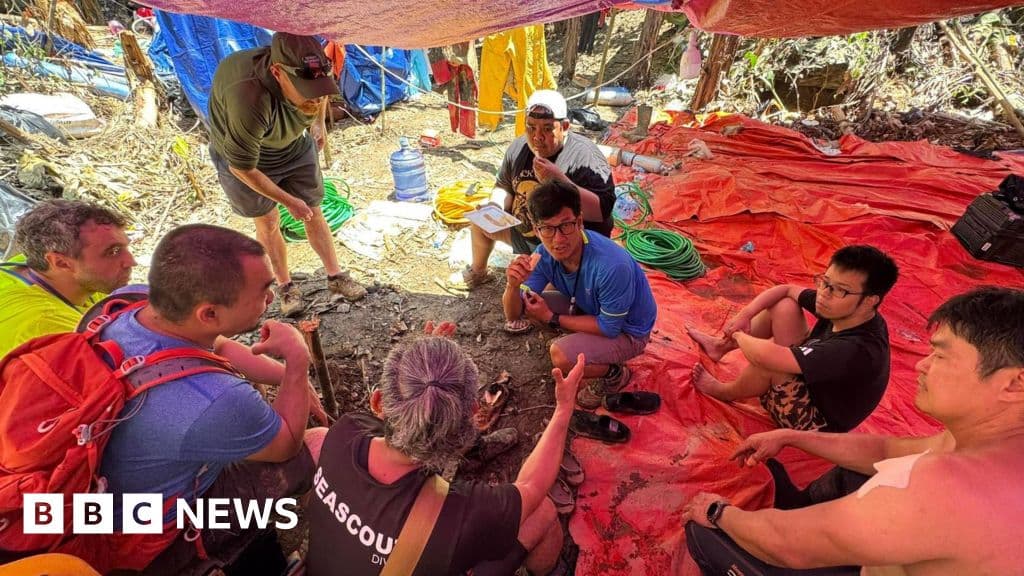
Survivors of the Laos cave rescue are aiding efforts to find the last two missing men trapped inside, sharing crucial insights for the search operation.
BBC World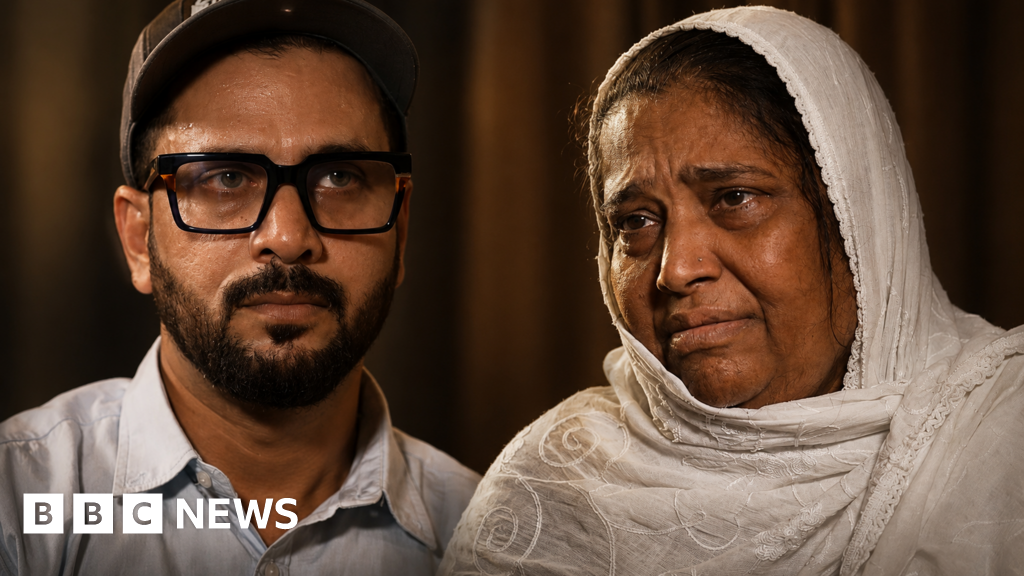
A year after the tragic Air India crash, the Ali family reflects on grief, unanswered questions, and the enduring bonds of love in the face of loss.
BBC Business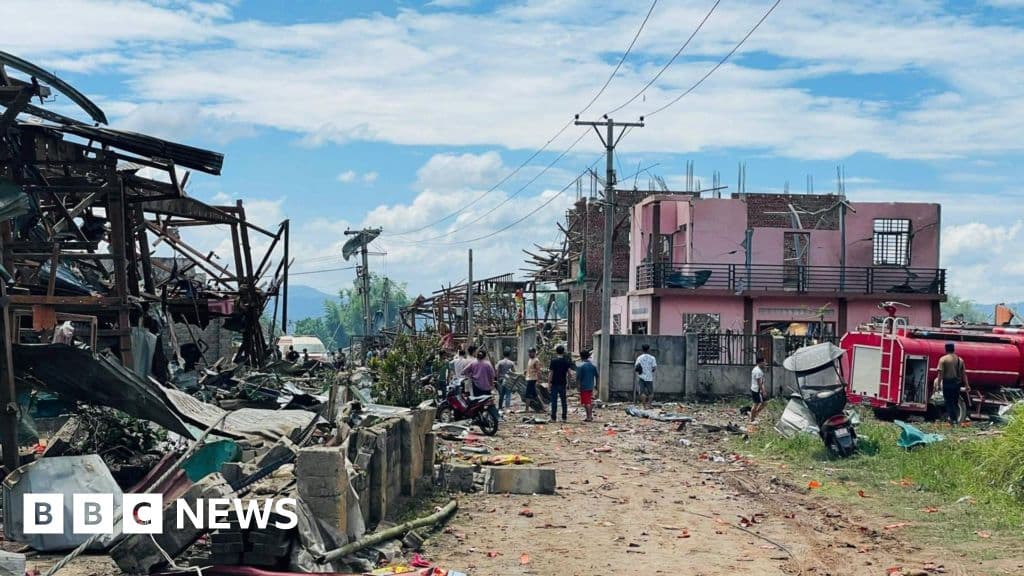
A devastating explosion in Myanmar's Kaung Tat village has killed at least 55 people, raising serious safety concerns and questions about civilian protection in conflict zones.
BBC World