
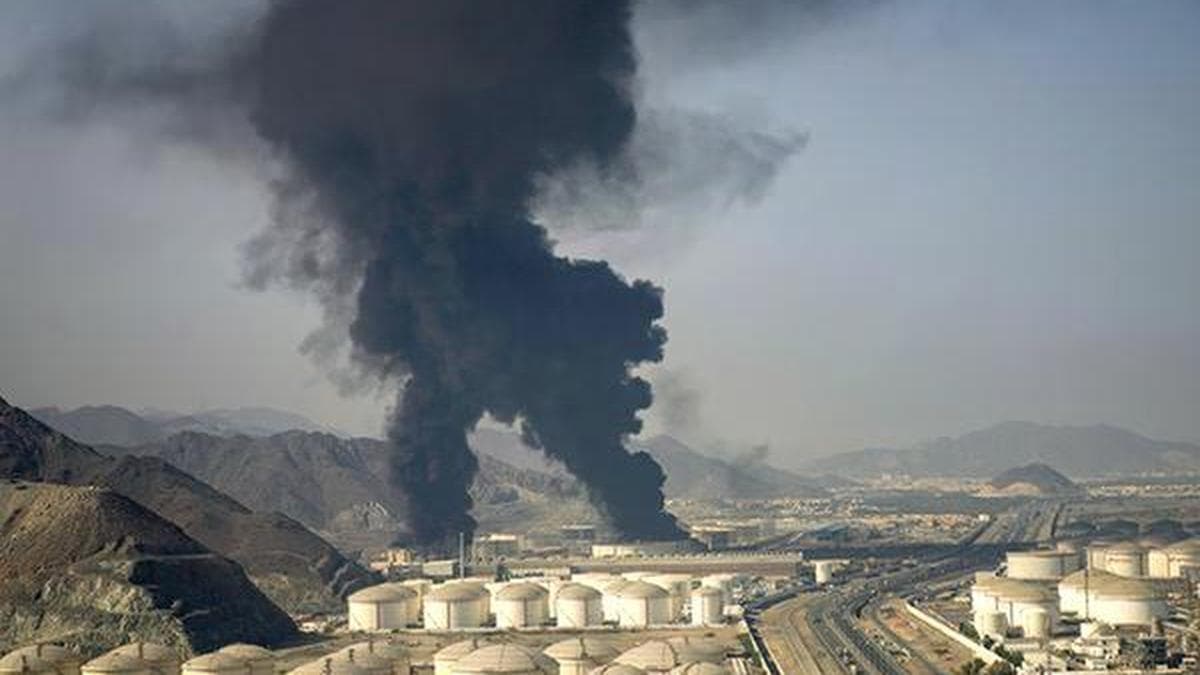
Image: The Hindu
A drone attack in UAE's Fujairah ignites conflict with Iran. Israel intensifies strikes on Tehran and Hezbollah, raising fears of a global energy crisis.
GlipzoA drone attack attributed to Iran has ignited a fire in the Fujairah Oil Industry Zone of the United Arab Emirates (UAE) on March 17, 2026. Authorities have confirmed that no injuries have been reported following the incident, which has raised alarms regarding safety in the region's critical oil infrastructure. The UAE's media office announced that while air traffic has returned to normal, airspace was temporarily closed as a precaution against potential further attacks. This incident highlights the ongoing and intensifying conflict in the Middle East, where drone and missile threats from Iran continue to loom over neighboring countries.
The attack on Fujairah comes amidst a larger backdrop of escalating tensions, with a series of drone and missile assaults targeting the U.S. Embassy in Baghdad reported on the same day. Iraqi security sources indicated that this was the most significant offensive against the embassy since the start of these hostilities, involving at least five drones. Such coordinated assaults reflect Iran's strategy to exert pressure across multiple fronts, showcasing its capabilities and willingness to strike at U.S. interests in the region.
As the conflict enters its third week, Israel has ramped up its military operations, launching extensive strikes on Iranian targets in Tehran and intensifying its bombardment of Hezbollah positions in Beirut. On March 16, Israeli officials revealed that they had devised plans for at least three more weeks of military action, indicating a commitment to pursuing their objectives despite potential international repercussions.
Reuven Azar, Israel's Ambassador to India, emphasized that while Israel does not desire a long-term conflict, it remains vigilant and prepared for continued military engagement until Iran changes its approach. Azar stated, “We are not looking for a perpetual war,” suggesting that Israel is open to diplomatic discussions if a shift in Iranian policy occurs. Nevertheless, he acknowledged that the timeline for concluding the war remains uncertain, as both Israel and the U.S. initially anticipated a swift resolution following the targeted killing of Iran’s Supreme Leader Ali Khamenei on February 28.
In the United States, Vice-President J.D. Vance voiced his support for the military strategy being implemented by President Donald Trump in response to the Iranian conflict. Vance, who has previously expressed anti-war sentiments, asserted his confidence in Trump’s handling of the situation, emphasizing the importance of avoiding past mistakes in U.S. foreign policy. His remarks mark a notable alignment with the administration's approach amid increasing calls for caution from various political circles.
This backing from the Vice President is crucial as it signals a unified front within the administration regarding the necessity of military intervention in the face of Iran’s aggression. However, questions remain about the long-term consequences of such actions and the potential for further destabilization in the region.
The ongoing hostilities have led to tragic loss of life, with a recent missile strike in Baghdad resulting in the deaths of two individuals identified as “Iranian advisers” to Iranian-supported groups. This incident underscores the complex web of alliances and enmities in the region, as Iran-backed factions continue to be targeted amid escalating military operations.
As the conflict continues to unfold, the humanitarian implications are becoming increasingly concerning. The potential for civilian casualties rises with each escalation, and the risk of a broader regional conflict remains ever-present. The situation necessitates close monitoring and urgent diplomatic efforts to mitigate the devastating effects on civilian populations.
As hostilities persist, fears of a global energy crisis loom large, particularly given the significance of the Strait of Hormuz, through which a substantial portion of the world’s oil supply is transported. Although a limited number of vessels have managed to navigate this vital waterway, the ongoing conflict could severely disrupt global oil markets and lead to price surges that impact economies worldwide.
The implications of these attacks extend beyond immediate regional concerns, affecting global oil prices and energy security. Stakeholders in the energy sector are advised to remain vigilant, as further escalations could lead to significant disruptions in supply chains and fuel availability.
As the situation develops, the international community is closely watching for any shifts in policy or military strategy from both Israel and Iran. The potential for diplomatic negotiations hangs in the balance, particularly as the conflict continues to escalate. Key developments to watch for include:
The ongoing conflict in West Asia is a stark reminder of the fragile nature of peace in the region and the intricate dynamics at play. As military actions unfold, the global community must remain alert, advocating for de-escalation and sustainable dialogue to prevent further deterioration of the situation.
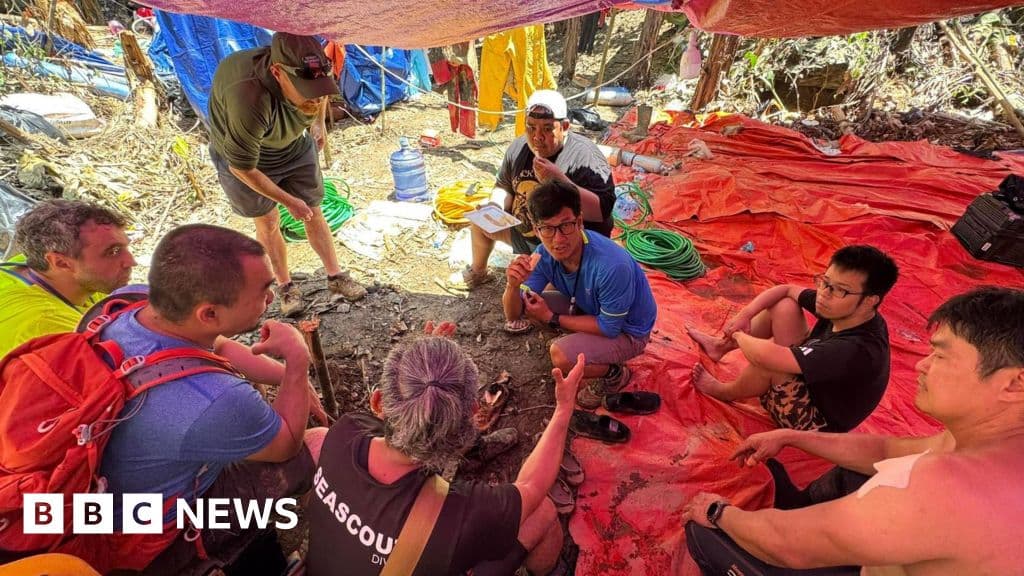
Survivors of the Laos cave rescue are aiding efforts to find the last two missing men trapped inside, sharing crucial insights for the search operation.
BBC World
A year after the tragic Air India crash, the Ali family reflects on grief, unanswered questions, and the enduring bonds of love in the face of loss.
BBC Business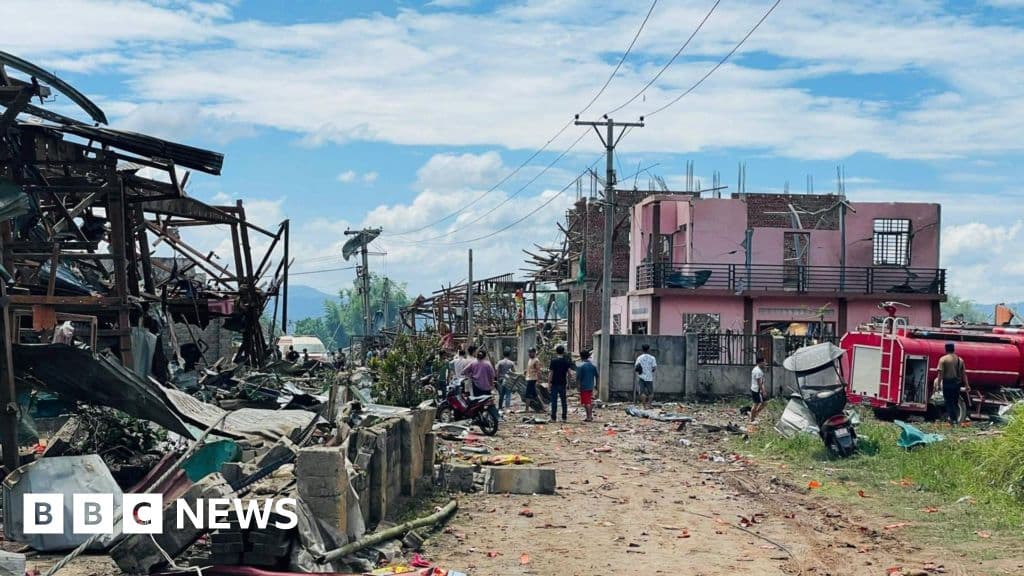
A devastating explosion in Myanmar's Kaung Tat village has killed at least 55 people, raising serious safety concerns and questions about civilian protection in conflict zones.
BBC World