
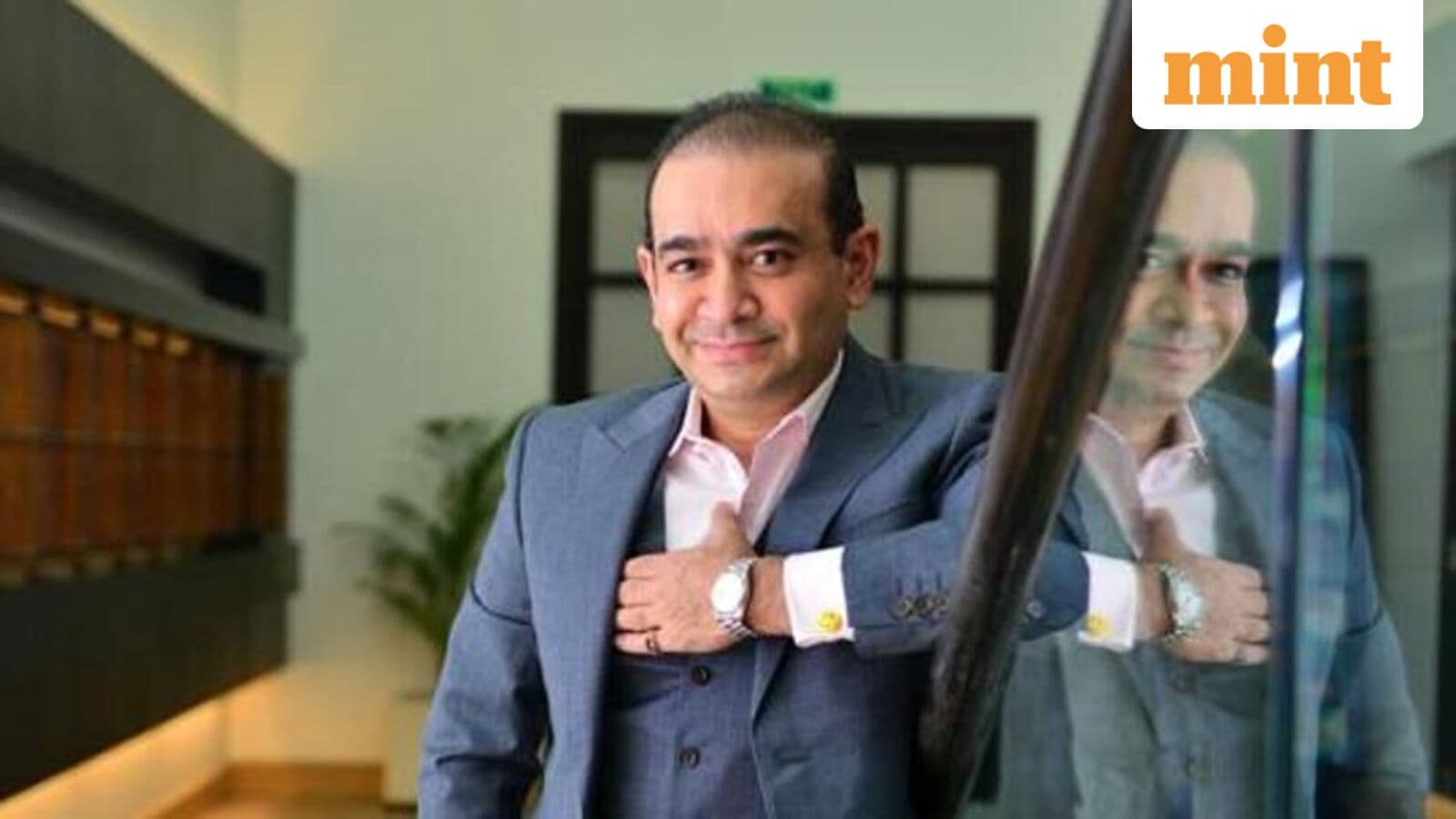
Image: Mint (Business)
Nirav Modi's appeal against extradition was denied by the London High Court, marking a critical step in his legal battle over the PNB fraud case.
GlipzoNirav Modi, the fugitive Indian businessman accused of orchestrating a massive financial fraud, faced a significant legal setback as the High Court of Justice in London dismissed his petition to reopen the extradition proceedings against him on Wednesday. This ruling, confirmed by the Central Bureau of Investigation (CBI), underscores the ongoing challenges Modi faces in his quest to evade justice.
The court's decision comes after a rigorous legal argument presented by the Crown Prosecution Service (CPS), which was bolstered by a dedicated CBI team that traveled to London specifically for the hearing. The CBI stated that the reopening application hinged on legal precedents, particularly the Bhandari judgment, but the court determined that the circumstances did not warrant reopening the case.
Modi's extradition saga has been ongoing since 2018, stemming from accusations of defrauding the Punjab National Bank (PNB) of a staggering ₹6498.20 crore. Following his arrest in the UK in March 2019, the courts had approved his extradition, dismissing previous appeals that contended there were legal barriers to his transfer to India. The court also accepted assurances from Indian authorities regarding his treatment upon extradition, further solidifying the grounds for his extradition.
Despite the initial approval, a temporary legal hurdle emerged but was lifted in August 2025, allowing the extradition process to continue. The CBI's recent statement emphasized that Modi's renewed application for reopening his appeal was based on unsubstantiated claims regarding potential mistreatment and questioned the adequacy of the protections offered by Indian authorities.
In delivering its ruling, the High Court remarked that the reasons provided for reopening the extradition case were not of an extraordinary nature. The judges concluded that the application did not present exceptional circumstances that would justify a reconsideration of the earlier decisions made by the courts.
The CBI's involvement in the proceedings has been pivotal, reflecting the Indian government's commitment to ensuring that economic offenders like Modi are brought to justice. The agency highlighted the coordinated efforts of its team, which meticulously prepared the necessary responses and engaged with the CPS to present a strong case against Modi's appeal.
The rejection of Nirav Modi's appeal marks a crucial development in the ongoing efforts to hold him accountable for his alleged crimes. With the courts now firmly rejecting his attempts to delay extradition, the focus shifts back to the CBI and the Indian legal system's readiness to bring him to trial.
This case has broader implications for India's fight against economic crime and its international cooperation in extraditing fugitives. By successfully challenging Modi's petition, the CBI demonstrates its capability and determination to tackle financial fraud on a global scale, sending a clear message to other economic offenders that there will be consequences for their actions.
As the legal battles continue, attention will remain focused on how the extradition proceedings will unfold in the coming months. Modi is currently remanded in a UK prison, where he has been since his arrest. With the High Court's decision reinforcing the extradition order, the CBI is likely to expedite the processes necessary for his transfer to India.
The next steps will involve coordinating with UK officials to finalize the logistics of the extradition while ensuring that Modi's rights are upheld throughout the process. As legal experts and observers watch closely, this case will serve as a significant benchmark for future extradition requests involving high-profile economic offenders.
Stay tuned for updates on this significant case as it progresses through the legal system and shapes the future of international extradition laws and economic justice in India.

Tensions soar as the US and Iran engage in air strikes near the Strait of Hormuz, raising concerns over global oil supply and regional stability.
BBC World
Trump's international interventions face serious stalemates. What will this mean for U.S. foreign policy? Explore the critical challenges ahead.
Indian Express
Tehran denies resignation of President Masoud Pezeshkian amid claims of IRGC influence. What does this mean for Iran's political stability? Click to learn more!
Indian Express