
Image: BBC World
Leqaa Kordia, a Palestinian activist detained for a year, has been released from immigration custody, highlighting critical issues in U.S. immigration policy.
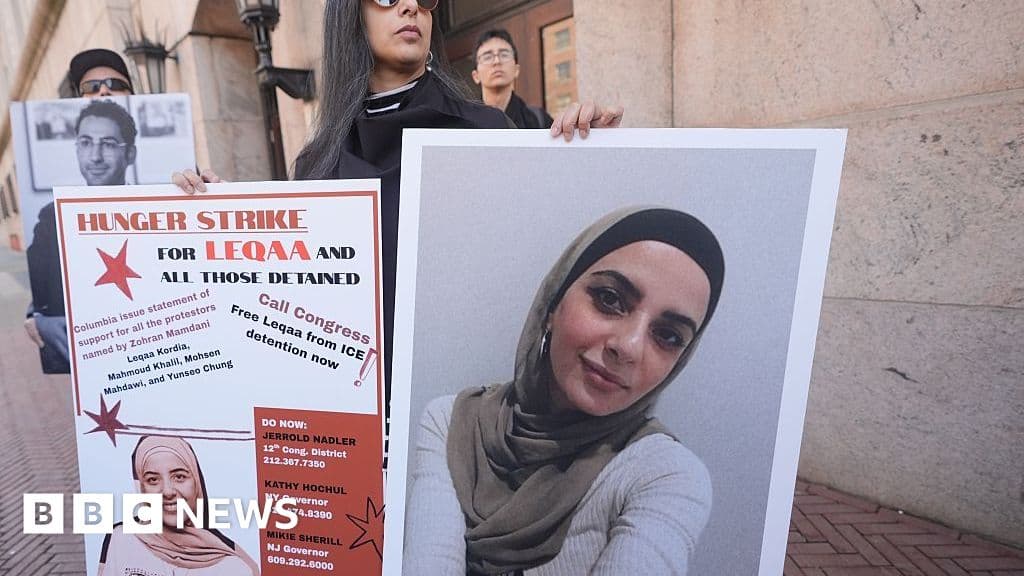
GlipzoLeqaa Kordia, a 33-year-old Palestinian woman, has been released after a year spent in immigration detention in Texas. Her attorneys confirmed her release, highlighting the circumstances surrounding her detention during protests at Columbia University last year. Kordia's journey from incarceration to freedom is both a personal triumph and a reflection of broader debates about immigration policy and free speech in the United States.
Kordia was initially arrested in April 2024 during a demonstration outside Columbia University against the Gaza war, where over 100 protesters were detained. Following her release, she faced another arrest in March 2025 during a routine immigration check-in, where the Department of Homeland Security (DHS) claimed she had overstayed her student visa, which had been terminated in 2022 due to lack of attendance.
The situation escalated as federal authorities began looking into financial transactions Kordia made to family members overseas, alleging that she may have provided support to individuals in countries considered hostile towards the U.S. Despite these claims, Kordia has not been charged with any crime.
Upon her release, Kordia expressed her elation, stating, “I don’t know what to say. I’m free! I’m free! Finally, after one year.” This moment of joy followed a pivotal decision by an immigration judge, who found that the government's arguments against her release were “disingenuous.” The judge ultimately ordered her release on $100,000 bail after examining evidence supporting Kordia's claims regarding the funds sent overseas.
Sarah Sherman-Stokes, a supervising attorney with the Boston University School of Law Immigrants' Rights Clinic, stated that Kordia is being unfairly targeted by the government due to her advocacy for Palestinian rights. This statement underscores the contentious environment surrounding activism and immigration, particularly in light of the previous administration's strict stance on immigration enforcement.
Kordia's year-long detention was marked by significant health challenges. In the previous month, she was hospitalized for three days following a seizure at the Alvarado detention facility in Texas. Reports indicated that she experienced fainting spells and alleged mistreatment, claiming that she had been chained to a bed and endured filthy and inhumane conditions.
Such revelations have sparked outrage among advocacy groups and highlight serious concerns regarding the treatment of detainees within the U.S. immigration system. Kordia’s case not only sheds light on individual suffering but also raises questions about the broader implications of immigration policies.
Kordia's cousin, Hamzah Abushaban, expressed relief and gratitude for her release, stating, “This past year has taken an unimaginable toll on Leqaa and our entire family.” He also acknowledged the community's support throughout this challenging period, emphasizing the power of collective prayer and solidarity during Ramadan, which provided hope during their darkest moments.
Kordia's detention occurred shortly after the arrest of Mahmoud Khalil, another prominent Palestinian activist involved in the same protests. The timing of these detentions coincided with a broader crackdown on international student activists during the Trump administration, igniting debates about the limits of free speech and the consequences of political activism.
As Kordia returns to her home in New Jersey, her legal battles are far from over. The outcome of her immigration status remains uncertain, and continued advocacy will be essential in ensuring her rights are upheld. The implications of her case extend beyond her personal situation, serving as a litmus test for the treatment of activists within the U.S. immigration system.
Moving forward, it will be crucial to monitor how U.S. immigration policy evolves in response to advocacy and political dissent. Kordia's experience illustrates the urgent need for reforms that protect the rights of individuals engaged in peaceful protest, particularly those from marginalized communities.
As discussions about immigration reform and free speech continue, Kordia's case may serve as a catalyst for change, prompting policymakers to reconsider how the law interacts with activism in a democratic society. The ongoing support from community members and legal advocates will play a pivotal role in shaping the narrative around immigration policy and the rights of protesters in the U.S.
Kordia's release highlights critical issues related to immigration, human rights, and the intersection of activism and law. As the nation grapples with these complex topics, her story serves as a reminder of the personal impact of policy decisions and the power of community support in seeking justice.

Tensions soar as the US and Iran engage in air strikes near the Strait of Hormuz, raising concerns over global oil supply and regional stability.
BBC World
Trump's international interventions face serious stalemates. What will this mean for U.S. foreign policy? Explore the critical challenges ahead.
Indian Express
Tehran denies resignation of President Masoud Pezeshkian amid claims of IRGC influence. What does this mean for Iran's political stability? Click to learn more!
Indian Express