
Image: BBC Business
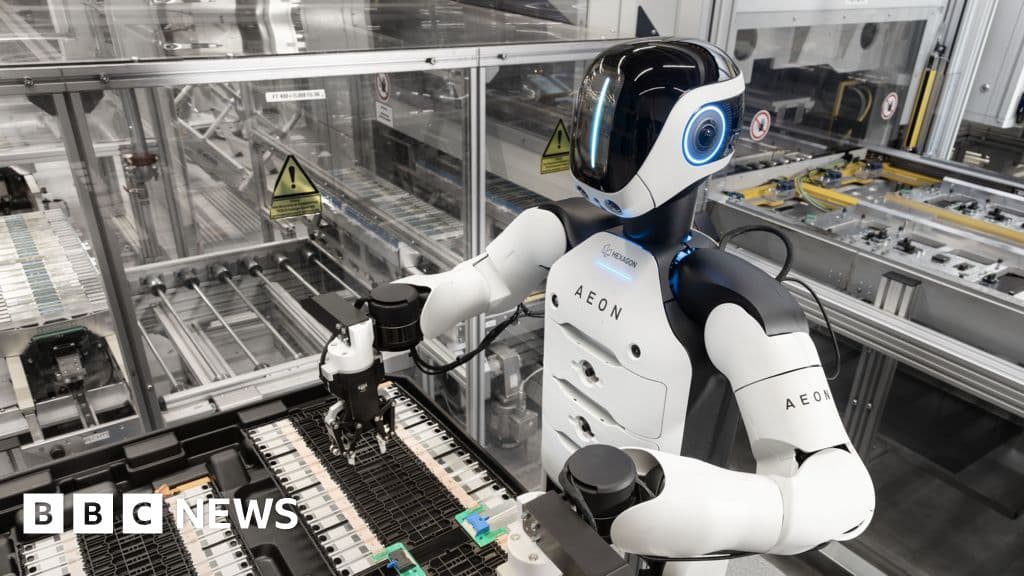
BMW is set to revolutionize car manufacturing with humanoid robots. Discover how Aeon will enhance productivity and address labor shortages.
GlipzoIn a groundbreaking move, BMW is set to integrate humanoid robots into their car manufacturing processes in Europe, marking a significant shift in automotive production. Slated for use starting this summer, the innovative robots, developed by Hexagon Robotics, are currently undergoing test operations at BMW's Leipzig factory. This initiative underscores the company's commitment to leveraging cutting-edge technology to enhance efficiency and productivity in their production lines.
"This will be the future of automotive production," declares Michael Nikolaides, the head of process management and digitalization at BMW. This statement echoes a growing trend within the auto industry, which has traditionally relied on robotic arms and automation technologies for decades.
So, why is BMW opting for humanoid robots? Nikolaides explains, "If you have a humanoid form, you can pretty much set it to any workplace where a human is working today because it has the same size and the same capabilities." This versatility allows these robots to seamlessly integrate into existing workflows, reducing the need for costly assembly line redesigns.
The economic landscape has shifted as well. With the cost of robots decreasing, it has become more financially feasible for manufacturers to implement humanoid robots without overhauling their entire production systems. Bill Ray, a distinguished VP analyst at Gartner, elaborates, "When a robot costs 17 million, you'd reorganize your factory around the robot, but it doesn't anymore. So now you want to fit it into your existing way of working."
The humanoid robot, named Aeon, stands at 1.65 meters (5 feet 5 inches) tall and weighs 60 kilograms (9 stone 6 lbs). Capable of moving at a speed of 2.4 meters per second, Aeon can carry 15 kilograms for short bursts or 8 kilograms continuously. Equipped with 21 sensors, including cameras and force sensors, Aeon is designed for various tasks within the manufacturing process.
The training of Aeon is particularly noteworthy. By employing a combination of teleoperation—where sensors track human movements—and simulations using a digital twin of the factory, Aeon learns efficiently. This process, referred to as reinforcement learning, allows the robot to refine its skills through repeated simulations, optimizing its performance for real-world tasks.
Arnaud Robert, president of robotics at Hexagon, emphasizes the potential of imitation learning, a process where robots learn by observing human actions. According to Robert, this method can significantly reduce training time from months to just a few days. "The best translation from the human to the robot is when the teacher and the student have the same form factor," he adds, highlighting the advantages of humanoid designs.
Could Aeon simply watch a human packing boxes and then join in? "That's the ultimate scenario," Robert predicts, suggesting that such advancements could be just a year or two away. Ray from Gartner foresees that within three to five years, we may see robots capable of understanding simple voice commands to perform specific tasks effectively.
Despite its impressive capabilities, Aeon has a battery life of only three hours, while a typical shift lasts eight hours. To address this, the robot has been engineered to swap its own battery in approximately three minutes, ensuring minimal downtime. At BMW, Aeon's responsibilities will include feeding parts to manufacturing tools and handling pick-and-place tasks, particularly in battery assembly.
While Aeon is versatile, similar to human employees, the robot is not expected to frequently switch tasks. Nikolaides notes that these robots could be particularly beneficial in repetitive or physically demanding roles, helping to fill gaps created by a looming labor shortage in the industry. "We know that staff will be short in a matter of years, and humanized robots help," he states.
Reflecting on past technological advancements, Nikolaides mentions, "When we automized the production of cars in the '70s, everybody said this would lead to a lot of job losses, but the opposite was the case." He believes that similar to previous innovations, the introduction of humanoid robots could lead to the creation of new job opportunities rather than the elimination of existing ones. This perspective is crucial as the industry evolves in response to both technological advancements and workforce dynamics.
BMW is not alone in exploring the potential of humanoid robotics. Other automotive giants, such as Toyota, are also investing in similar technologies. Toyota plans to utilize their own humanoid robot, Digit, to enhance efficiency in their production lines. As the automotive industry continues to innovate, the integration of humanoid robots represents a pivotal shift towards more flexible, efficient manufacturing processes.
As BMW prepares to roll out Aeon in its factories, the implications of this technology are far-reaching. The industry is on the brink of a transformation that will redefine how cars are manufactured. With advancements in AI and robotics, we can anticipate a future where humanoid robots play an increasingly central role in production.
What remains to be seen is how quickly these technologies will be adopted across the industry and how they will address the challenges posed by labor shortages. The next few years will be critical, as companies like BMW and Toyota lead the charge in integrating humanoid robots into their workflows. Stay tuned for updates as this exciting new chapter in automotive manufacturing unfolds.
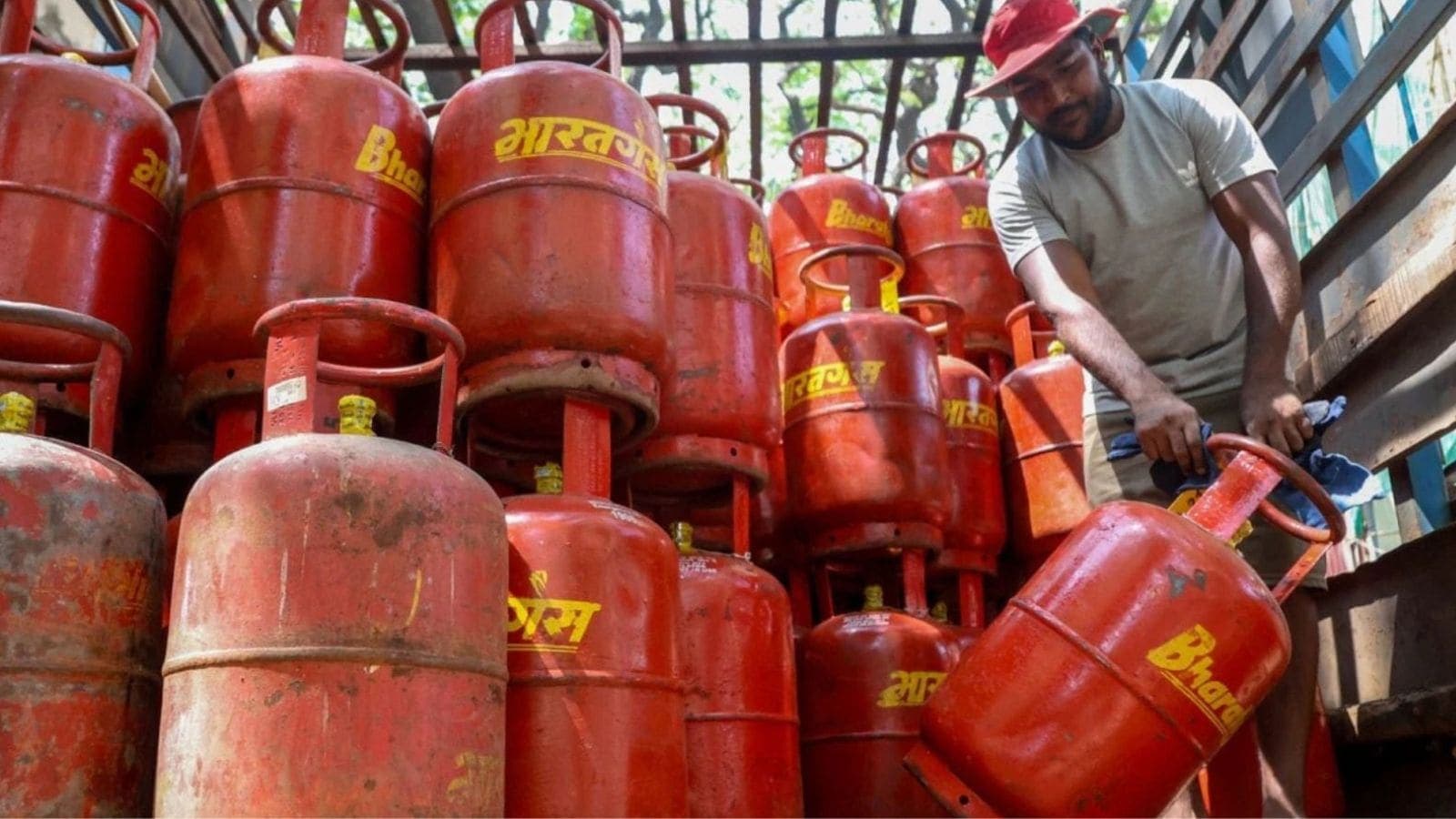
Commercial LPG prices have risen again, with increases of ₹42 in Delhi and ₹53.50 in Kolkata impacting businesses and consumers alike. Find out more.
Indian Express
Discover how a tragic coal mine explosion in Shanxi, China, reveals ongoing safety concerns in the industry amidst a push for green energy.
BBC Business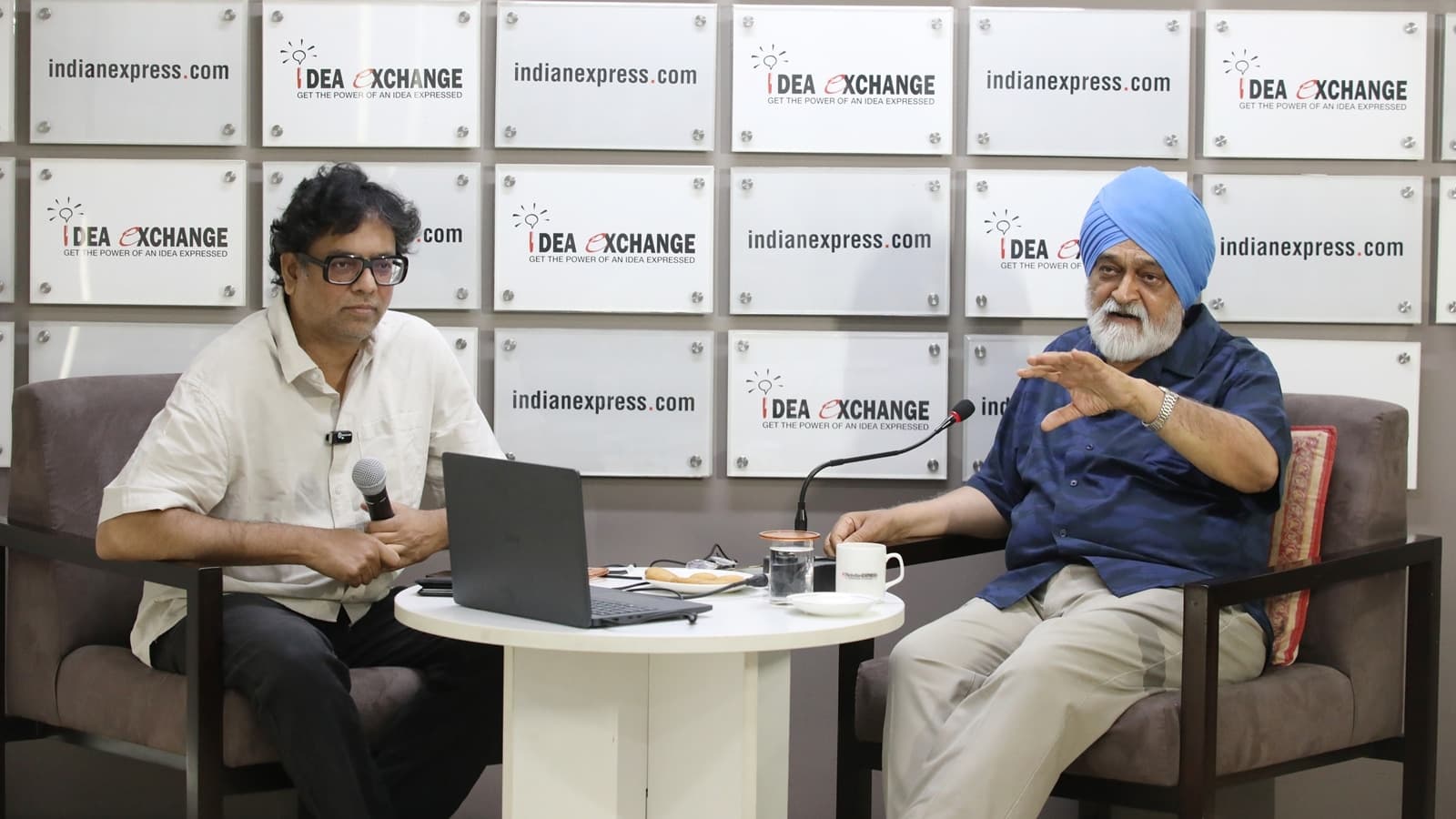
Montek Singh Ahluwalia highlights key economic challenges for India, emphasizing the need for a strategic approach to balance payments and investment.
Indian Express