
Image: BBC Business
Blue Origin's New Glenn rocket is grounded following a satellite launch failure. Learn about the FAA's investigation and what it means for the future.
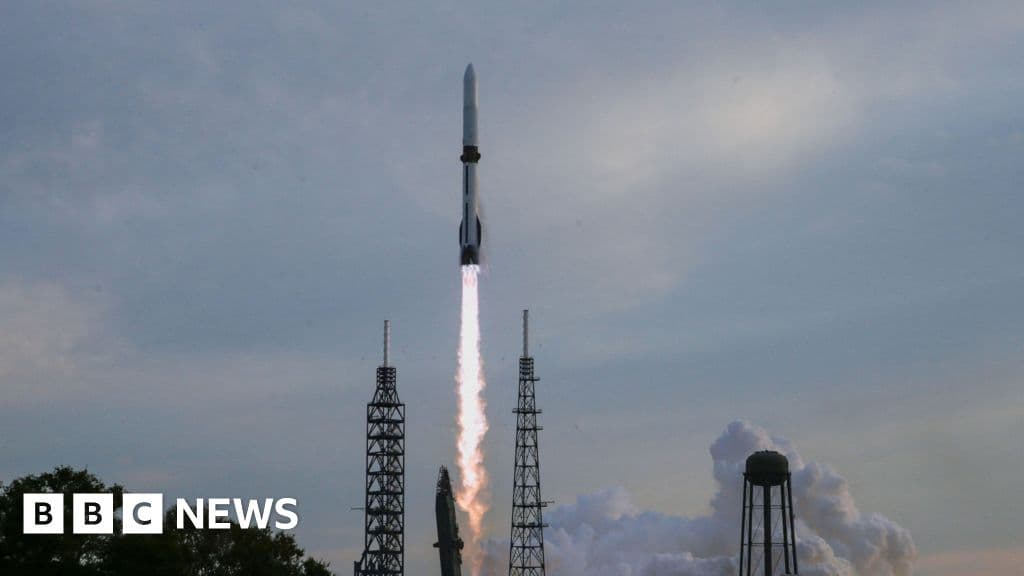
GlipzoIn a significant setback for Blue Origin, the company has been forced to ground its New Glenn rocket following a failed satellite launch. The Federal Aviation Administration (FAA) has stepped in to oversee an investigation after the rocket, intended to deploy a satellite for AST SpaceMobile, fell short of its orbital objectives. This incident happened on Sunday, marking a critical moment for Blue Origin, a company founded by Amazon's Jeff Bezos.
Dave Limp, Blue Origin's CEO, acknowledged that the failure was due to a lack of sufficient thrust from one of the rocket's engines. The repercussions of this mishap were felt immediately, with AST SpaceMobile's stock plummeting over 6% on the following Monday. Limp stated, "We clearly didn't deliver the mission our customer wanted, and our team expects."
The launch was crucial for AST SpaceMobile, which aims to provide mobile phone connectivity through satellites in low Earth orbit (LEO). Unfortunately, since the New Glenn rocket couldn't propel the satellite to the required altitude, it became unusable. In a statement on Sunday, AST confirmed that the loss would be covered by insurance, although the exact costs remain undisclosed.
The FAA has mandated that Blue Origin conduct a thorough investigation into the mishap, stating, "The FAA is requiring Blue Origin to conduct a mishap investigation. The FAA will oversee the Blue Origin-led investigation, be involved in every step of the process, and approve Blue Origin's final report, including any corrective actions."
Limp expressed optimism that the investigation would yield valuable insights, stating that it would allow Blue Origin to learn from the data collected and implement necessary improvements to return to flight operations swiftly. The FAA's findings will be pivotal in determining when the New Glenn rocket can be launched again.
This latest incident marks only the third flight of the New Glenn rocket, which Blue Origin had ambitious plans to utilize for up to a dozen launches this year. The loss of this satellite represents not only a financial setback but also a blow to Blue Origin’s operational timeline.
The satellite space has become increasingly competitive, especially with advancements in technology that enable internet access in hard-to-reach areas. Blue Origin has announced plans to launch thousands of satellites into LEO as part of its TerraWave project, aimed at competing with existing players in the market.
Meanwhile, Amazon is also making strides in this sector, having recently acquired a satellite manufacturer for $11 billion (£8.5 billion) to bolster its own satellite project, Leo. Both initiatives appear to be striving to catch up to Starlink, the satellite internet service from Elon Musk's SpaceX, which has already deployed thousands of satellites and is set to go public this year in what could be a landmark stock market listing.
The outcome of the FAA's investigation will not only impact Blue Origin’s future launches but also affect the broader satellite industry. As companies race to provide reliable internet access globally, the stakes are high. Any delays in launch schedules or operational setbacks can hinder progress in an industry that thrives on rapid innovation.
The competition with Starlink underscores a larger trend in the tech industry, where companies are increasingly investing in satellite technology to offer internet services in previously underserved regions. The success or failure of these projects could shape the future landscape of global connectivity.
As Blue Origin navigates through this challenging period, the industry will be watching closely. What happens next will be crucial not just for Blue Origin, but for the entire satellite launch market. Will they rebound quickly, or will this incident set them back in the race for LEO dominance? Only time will tell, as the investigation unfolds and the company works towards regaining its footing in the competitive aerospace sector.

Nvidia's new RTX Spark chip aims to transform personal computing with AI, marking a significant shift in technology. Discover what this means for consumers.
BBC Business
The explosion of Blue Origin's New Glenn rocket raises significant concerns over NASA's lunar ambitions and the future of Amazon's satellite projects. Discover the implications.
BBC Science
Discover how Meta's lack of engagement on user bans raises critical concerns about accountability and transparency in social media governance.
BBC Technology