
Image: BBC Business
Amsterdam makes history as the world's first capital to ban meat and fossil fuel ads, aligning public messaging with its ambitious climate goals. Discover why this matters.
GlipzoIn a groundbreaking move, Amsterdam has officially become the first capital city globally to implement a ban on public advertisements for meat and fossil fuels. This significant shift took effect on May 1, 2023, marking a new chapter in the city’s commitment to environmental sustainability. Billboards, tram shelters, and metro stations across the city have now been stripped of ads promoting meat products, petrol cars, and airlines, paving the way for a greener public space.
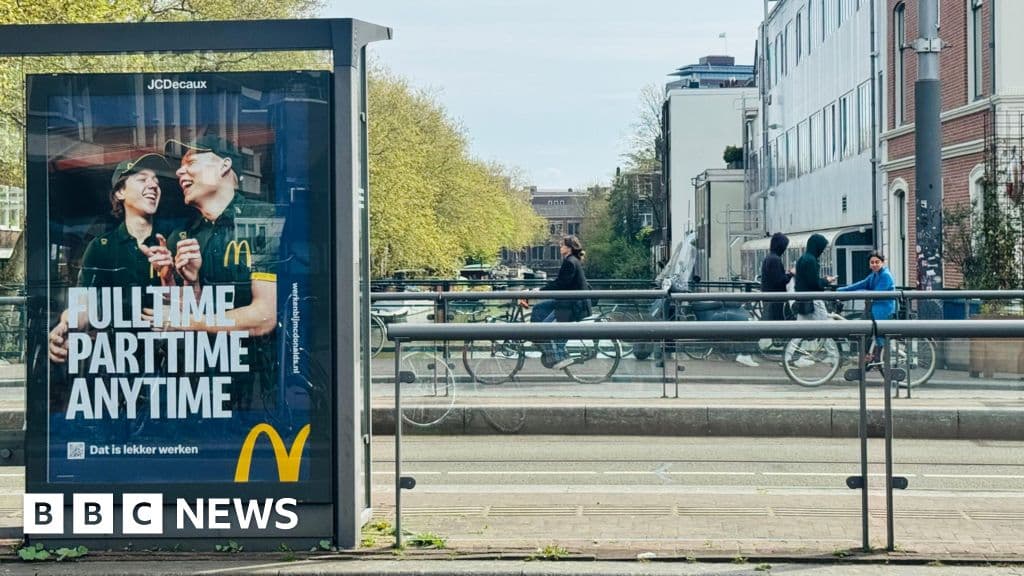
At one of Amsterdam's busiest tram stops, the landscape has transformed dramatically. Where once there were ads for chicken nuggets, SUVs, and budget vacations, the new messaging focuses on cultural attractions like the Rijksmuseum and local events such as piano concerts. This change is not just aesthetic; it’s emblematic of a broader environmental strategy aimed at aligning public messaging with the city’s ambitious goals.
The motivation behind this pioneering initiative is to synchronize Amsterdam's streetscape with the local government’s environmental targets. These objectives include achieving carbon neutrality by 2050 and reducing meat consumption among residents by half during the same timeframe. Politicians believe that by eliminating ads for meat and fossil fuels, they are taking a clear stance against products that contribute significantly to carbon emissions.
Anneke Veenhoff, a member of the GreenLeft Party, emphasized the urgency of the climate crisis, stating, "If you want to be leading in climate policies and you rent out your walls to exactly the opposite, then what are you doing?" This sentiment resonates with many city leaders who argue that profiting from advertising that contradicts environmental policies is counterproductive.
Anke Bakker, the leader of the Amsterdam chapter of the Party for the Animals, played a crucial role in spearheading the restrictions. She firmly believes that the ban does not infringe on individual freedoms but rather empowers residents to make informed choices. "We're trying to get the big companies not to tell us all the time what we need to eat and buy," Bakker stated.
Activists argue that removing visual cues for meat and fossil fuel consumption can help curb impulse buying. By reframing these products as non-aspirational lifestyle choices, the city aims to foster a culture of sustainability. With meat advertisements contributing only 0.1% of Amsterdam's outdoor advertising market, the shift is seen as symbolic, yet powerful.
Unsurprisingly, the move has sparked backlash from industry representatives. The Dutch Meat Association criticized the ban as an undesirable method to influence consumer behavior, stressing that meat provides essential nutrients and should remain accessible to consumers. Similarly, the Dutch Association of Travel Agents and Tour Operators expressed concerns that the ban on air travel advertisements represents an excessive restriction on commercial freedoms.
Despite these objections, the ban is viewed by many advocates as a necessary step toward a sustainable future. Hannah Prins, a lawyer and member of the environmental organization Advocates for the Future, likened the situation to a historical shift regarding tobacco advertising. She noted that just as society evolved past the normalization of smoking in public places, the same should apply to the promotion of high-carbon food products. "It’s not normal to see murdered animals on billboards," Prins asserted, highlighting the need for societal change.
Amsterdam’s ban is not an isolated incident. Nearby Haarlem was the first city to announce a comprehensive ban on meat advertising in public spaces back in 2022, which will take effect in 2024. This initiative, along with Amsterdam's ban, signals a growing trend among cities to take a stand against products that harm the environment.
Moreover, Utrecht has also joined the movement, showcasing that Amsterdam is part of a larger network of cities committed to environmental policies aimed at reducing carbon footprints and promoting sustainable practices. The ripple effect of Amsterdam's decision could inspire other cities worldwide to consider similar bans, further amplifying the message that sustainability is a priority.
As Amsterdam embraces its new advertising landscape, the city is poised to lead by example in the fight against climate change. The effectiveness of this ban will be closely monitored, particularly regarding its impact on consumer behavior and the overall market for meat and fossil fuel products in the Netherlands.
Looking forward, it will be critical to observe how other cities respond to Amsterdam's bold initiative. Will they follow suit, or will they resist such measures? The success of this ban could potentially reshape advertising norms globally, challenging industries to rethink their marketing strategies in favor of more sustainable practices.
Why It Matters: The ban on meat and fossil fuel advertisements in Amsterdam signifies a monumental shift towards prioritizing environmental health over commercial interests. It encourages a reevaluation of public spaces as platforms for promoting sustainable lifestyles, ultimately aiming to inspire change at a global level.

Survivors of the Laos cave rescue are aiding efforts to find the last two missing men trapped inside, sharing crucial insights for the search operation.
BBC World
A year after the tragic Air India crash, the Ali family reflects on grief, unanswered questions, and the enduring bonds of love in the face of loss.
BBC Business
A devastating explosion in Myanmar's Kaung Tat village has killed at least 55 people, raising serious safety concerns and questions about civilian protection in conflict zones.
BBC World