
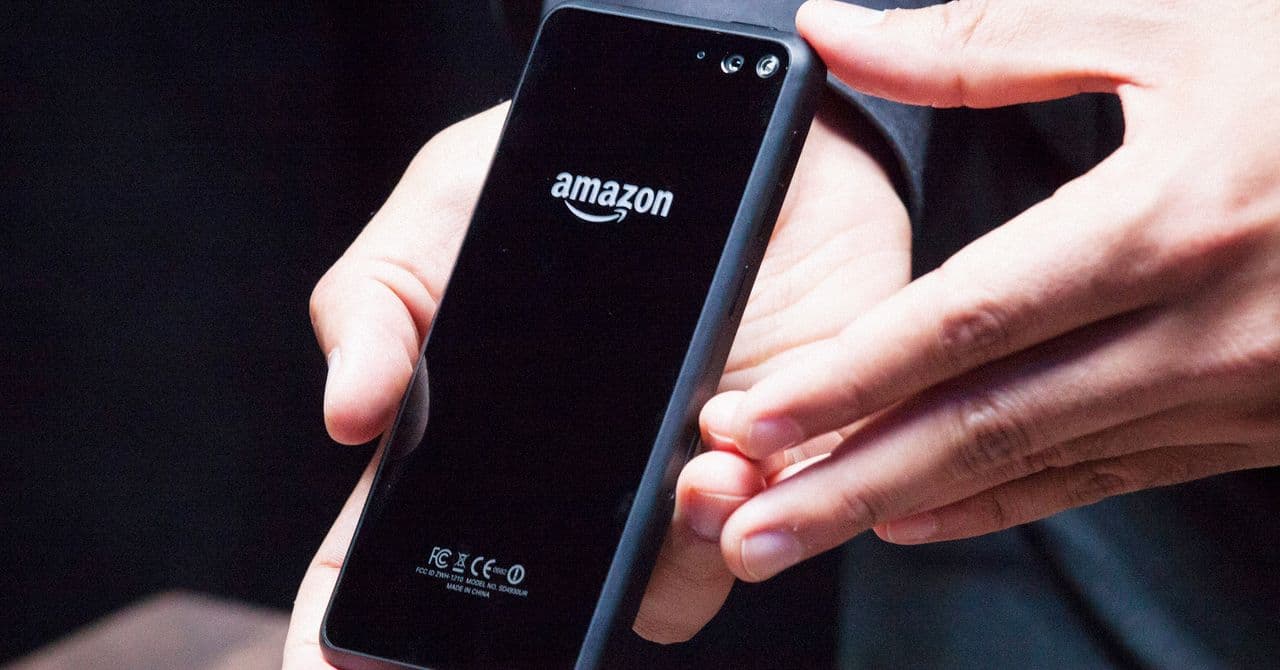
Image: Wired
Amazon is reportedly reviving its smartphone efforts with the Transformer, but skepticism abounds about its potential in a crowded market. What does this mean for the future?
GlipzoIn an unexpected move, Amazon is reportedly revisiting the smartphone market more than ten years after the Fire Phone debacle. The company is developing a new device known as the Transformer, which aims to integrate Alexa+ AI alongside a shopping-centric user experience. While the concept has piqued interest, many industry analysts are questioning the viability of this venture.
Rumors about the Transformer are still largely speculative, with minimal details available about its pricing, development costs, or launch timeline. An Amazon spokesperson declined to provide comments on these circulating rumors, reflecting the company's cautious approach. Given the mixed history of Amazon’s previous smartphone efforts, skepticism is mounting.
Amazon's first foray into smartphones, the Fire Phone, was launched in 2014 but quickly fell flat. The device was criticized for its limited app ecosystem and poor sales figures, leading to its discontinuation shortly after release. It featured a gimmicky 3D display and an app named Firefly, which allowed users to shop by pointing the camera at products. However, these features were not enough to captivate consumers.
As the tech landscape evolves, Amazon is attempting to learn from its past. The company is also rumored to be releasing a Fire tablet this year that will operate on Google’s Android system, marking a significant shift from its proprietary Fire OS. This new direction hints that the Transformer smartphone could also run on Android, although reports suggest it may feature an AI interface designed to minimize reliance on traditional app stores.
Amazon is not the only player exploring innovative user interfaces; companies like T-Mobile have begun showcasing concept devices that generate interfaces through voice commands, rather than conventional apps. Carl Pei, CEO of Nothing, has expressed a vision for a future where a single app serves as the operating system, pointing to a potential paradigm shift in how users interact with their devices.
Moreover, advancements in AI technology are rapidly changing the smartphone landscape. Google recently introduced Task Automation in its Gemini assistant, enabling users to automate tasks like ordering food or requesting rides. Similarly, OpenAI is collaborating with designer Jony Ive to create AI-powered devices, suggesting that the future of smartphones may involve more intelligent, collaborative gadgets.
Reports indicate that Amazon’s Transformer may draw inspiration from the Light Phone, a minimalist device designed to help users disconnect from the distractions of modern smartphones. While Amazon's design might not focus explicitly on digital detoxing, positioning the Transformer as a supplementary device could enable it to carve a niche in the fiercely competitive U.S. smartphone market, which is largely dominated by Apple and Samsung.
Francisco Jeronimo, a vice president at IDC, expressed concerns about Amazon's decision to re-enter the smartphone market, stating, "What can they bring to end users that is not already available from the likes of Apple or Samsung? That's where I'm struggling to understand the rationale behind this project." He believes that the current economic climate, marked by challenges such as the memory crisis and supply chain disruptions, could further complicate the development of the Transformer.
Despite the potential for innovative features, the reality is that Amazon faces steep challenges in the smartphone arena. Competitors like Apple, Samsung, and Xiaomi have already integrated their proprietary AI capabilities into their devices, likely matching or exceeding any offerings from Amazon. Furthermore, these companies do not impose their services or shopping platforms on users as Amazon might.
Jeronimo succinctly remarked, "If it's a phone, it's dead on arrival." He pointed out that from a hardware standpoint, competing against established giants would be an uphill battle for Amazon. While there may be short-term opportunities for innovative software solutions, the long-term outlook seems bleak as industry leaders continue to advance rapidly.
The potential launch of Amazon's Transformer smartphone could signal a pivotal moment in the tech industry, particularly in the realm of AI integration and user interface design. As companies increasingly explore ways to incorporate AI into personal devices, the outcome of Amazon's venture could set benchmarks for future smartphone development.
In conclusion, while Amazon's return to smartphones is intriguing, the path ahead is fraught with challenges and uncertainties. The company must navigate a complex market landscape and offer something truly unique to capture consumer interest in an era dominated by established brands.
Nvidia's new RTX Spark chip aims to transform personal computing with AI, marking a significant shift in technology. Discover what this means for consumers.
BBC Business
The explosion of Blue Origin's New Glenn rocket raises significant concerns over NASA's lunar ambitions and the future of Amazon's satellite projects. Discover the implications.
BBC Science
Discover how Meta's lack of engagement on user bans raises critical concerns about accountability and transparency in social media governance.
BBC Technology