
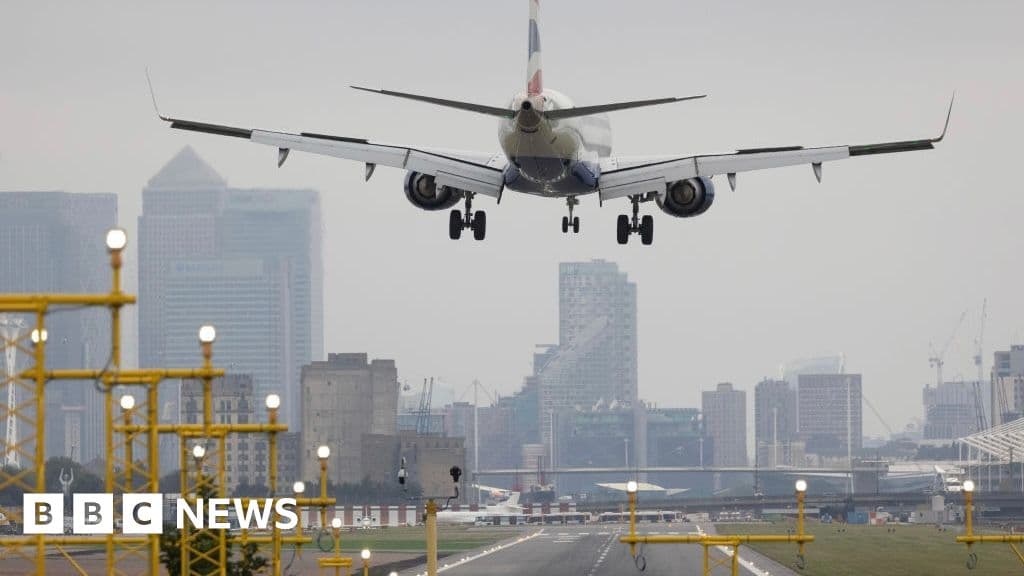
Image: BBC Business
Discover how new UK airline regulations aim to prevent flight cancellations due to fuel shortages this summer. Click to learn more!
GlipzoIn a proactive measure to mitigate the impact of potential fuel shortages, airlines in the UK will be allowed to cancel flights weeks in advance without the risk of losing valuable takeoff and landing slots at busy airports. This new initiative, announced by government officials, aims to streamline operations and provide clarity for travelers during the upcoming summer season.
The UK government has developed contingency plans that enable airlines to adjust their schedules ahead of time. This move is designed to minimize disruptive last-minute cancellations that passengers frequently face. Currently, airlines report that they are not experiencing any immediate fuel supply issues, but concerns loom over potential disruptions due to the ongoing conflict in Iran, which could impact fuel deliveries in the near future.
Approximately 65% of the jet fuel consumed in the UK is imported, with a significant portion typically sourced from the Middle East. However, the closure of the Strait of Hormuz has raised alarms regarding the stability of these fuel supplies. Experts from the International Energy Agency (IEA) have issued warnings that without alternative sources, Europe might face severe fuel shortages as early as June.
The government has also reached out to the UK's four major refineries to maximize jet fuel output and is exploring options to import more fuel from the United States. With the possibility of limited fuel availability, airlines are being encouraged to plan for potential adjustments to their flight schedules.
One of the significant challenges airlines face is the retention of their allocated takeoff and landing slots at key airports like Heathrow and Gatwick. These slots are not only crucial for operational efficiency but can also be worth millions of pounds. Currently, airlines must utilize their slots at least 80% of the time to retain them, which often leads to situations where airlines operate flights with fewer passengers just to maintain their slot rights.
In late April, the government clarified that under new guidance from Airport Coordination Limited (ACL), airlines would not lose their slots if fuel shortages prevented them from flying. The latest announcement, set to roll out on Sunday, expands on this by allowing airlines to temporarily hand back unused slots while retaining their rights to use them in the following year.
This new regulation is designed to empower airlines to make decisions at least two weeks ahead of potential flight cancellations, enabling proactive management of their operations rather than reactive measures. Transport Secretary Heidi Alexander emphasized the importance of this legislation, stating, "We're preparing to give families long-term certainty and avoid unnecessary disruption at the departure gate this summer. This legislation will give airlines the tools to adjust flights in good time if they need to, which helps protect passengers and businesses."
Airlines UK, the representative body for UK-based carriers, has expressed its support for this initiative. Chief Executive Tim Alderslade remarked that the plan would assist airlines in managing flight schedules more efficiently while maintaining connectivity for passengers and facilitating trade.
To implement these changes, the government must pass new legislation in the form of a statutory instrument, and a brief consultation period is underway this week. In addition to slot flexibility, the government is also assessing ways to enhance jet fuel supply options, including the potential introduction of the US fuel specification known as Jet A in the UK. Currently, British and European airlines are required to utilize Jet A1, which has a lower freezing point.
Although Jet A could alleviate some supply issues, the government acknowledges that challenges such as high demand and infrastructure limitations may complicate its adoption. As fuel supplies remain uncertain, the aviation industry must stay vigilant and adaptable.
The steps taken by the UK government represent a significant shift in how airlines manage their operations in the face of potential fuel shortages. As the summer season approaches, stakeholders across the aviation sector will be closely monitoring fuel supply developments and the impact of these new regulations.
In the coming weeks, travelers should be informed about potential flight changes and cancellations as airlines adjust their operations based on anticipated fuel availability. The success of this initiative will depend largely on the collaboration between government bodies, fuel suppliers, and airlines to ensure that passenger travel remains as uninterrupted as possible.
As the situation evolves, the aviation community and travelers alike will need to stay updated on any further changes to fuel supply protocols and flight regulations. Keeping an eye on developments in the Middle East and the government's ongoing efforts to bolster jet fuel supplies will be crucial for understanding the future landscape of air travel in the UK.
Commercial LPG prices have risen again, with increases of ₹42 in Delhi and ₹53.50 in Kolkata impacting businesses and consumers alike. Find out more.
Indian Express
Discover how a tragic coal mine explosion in Shanxi, China, reveals ongoing safety concerns in the industry amidst a push for green energy.
BBC Business
Montek Singh Ahluwalia highlights key economic challenges for India, emphasizing the need for a strategic approach to balance payments and investment.
Indian Express