
Image: Indian Express
Yogi Adityanath criticizes Mamata Banerjee's CAA stance, linking it to Hindu identity concerns. What does this mean for Bengal's future? Click to learn more.
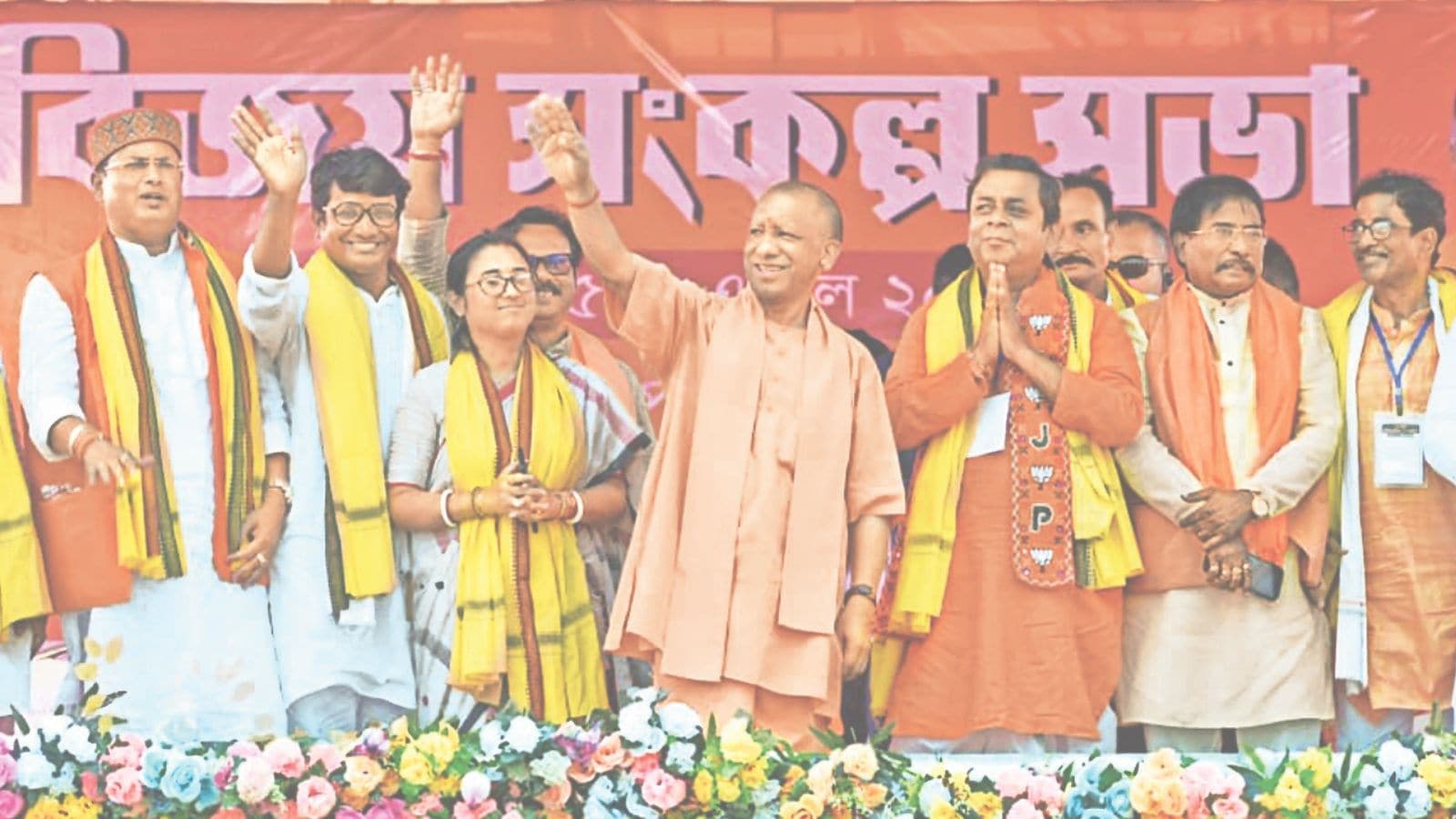
GlipzoIn a striking political rally over the weekend, Uttar Pradesh Chief Minister Yogi Adityanath launched a fierce critique against West Bengal Chief Minister Mamata Banerjee, asserting that her opposition to the Citizenship Amendment Act (CAA) stems from concerns about the implications of increased Hindu populations in the state. During his campaign for the Bharatiya Janata Party (BJP) in key constituencies, including Nabadwip, Katwa, and Bagda, Adityanath made headlines with his provocative remarks, claiming Banerjee is worried about the logistics of conducting iftar celebrations if the number of Hindus rises.
Adityanath’s comments come as the Bengal assembly elections approach, with tensions running high. He stated, “Everyone witnessed TMC’s hooliganism during the first phase of polling. But when the results come on May 4, TMC goons will be looking for work in puncture shops while others are concerned about their survival.” This statement underscores the intense rivalry between the BJP and the TMC, highlighting issues of safety and governance.
The Uttar Pradesh CM did not hold back in his criticism of the TMC, emphasizing that West Bengal is currently grappling with a loss of identity under Banerjee's leadership. He pointed out several pressing issues facing the state: - Industries shutting down - Farmers receiving inadequate prices for their crops - Youth unemployment - Government employees not receiving full salaries
According to Adityanath, these economic challenges have not only affected the livelihood of the people but have also contributed to a sense of despair amongst the population. He attributed these problems to the mismanagement of the TMC government, insisting that the party is failing to provide for the needs of the citizens.
Adityanath further criticized Banerjee's stance against the CAA, a law aimed at providing citizenship to religious minorities from specific neighboring countries. He asserted that many individuals in Bengal have benefited from the act, which was introduced in 2019. “Mamata Didi does not like it. She is worried that if Hindus increase in number, how will iftar be held on the streets,” he alleged, suggesting that Banerjee’s opposition is rooted in fear rather than principle.
In his speech, he highlighted the impact of the CAA on the Matua community, a group that he argued has long been marginalized. He pointed out that many Matuas, who migrated to India in 1947 and 1971, now feel a sense of security because of the provisions outlined in the CAA, thanks to Prime Minister Narendra Modi.
During his address, Adityanath shared details about his recent efforts to support displaced communities, mentioning a citizenship and land ownership certificate distribution event in Lakhimpur Kheri on April 12. He noted that many displaced individuals from Bangladesh reside in various districts of Uttar Pradesh, and he took pride in providing them with legal recognition and rights. This move aims to solidify the BJP's position as a protector of minority rights and a champion of Hindus migrating from neighboring countries.
Adityanath also made a bold declaration regarding the mafia elements prevalent in West Bengal, which he claims have been exacerbated under the TMC governance. He stated, “The mafia nurtured by the Congress and SP had their bones crushed by bulldozer action in my state,” drawing a stark contrast between the governance styles of his administration and that of the TMC.
The Chief Minister did not shy away from addressing cultural tensions, claiming that Mamata Banerjee has been detrimental to Hindu traditions in Bengal, specifically targeting Durga Puja celebrations and the public expression of faith. “Mamata Didi opposes Durga Puja, idol immersion, and Hindus in Bengal. She imposes restrictions on chanting ‘Jai Shri Ram’,” Adityanath claimed, suggesting that the TMC's policies suppress cultural and religious expressions.
He referred to instances where the Kolkata High Court had to step in to protect the rights of individuals celebrating Durga Puja, indicating that the TMC government has failed to uphold the law in these matters. This assertion further illustrates the ongoing cultural battle between the ruling party and the BJP.
As the assembly elections draw near, the political landscape in West Bengal is set to become even more dynamic. The BJP has been making significant inroads in the state, and with rallies like Adityanath's, the party is striving to amplify its message of governance, security, and cultural identity. The outcome of the elections will certainly affect not only the political future of Bengal but also the broader narrative surrounding religious and cultural identities within the region.
As voters prepare to make their voices heard, all eyes will be on how these contentious issues play out in the coming weeks. The battle for West Bengal is not just a fight for political supremacy; it's a struggle over the very identity of the state and its people.
Stay updated with the latest - Click here to follow us on Instagram.

Tensions soar as the US and Iran engage in air strikes near the Strait of Hormuz, raising concerns over global oil supply and regional stability.
BBC World
Trump's international interventions face serious stalemates. What will this mean for U.S. foreign policy? Explore the critical challenges ahead.
Indian Express
Tehran denies resignation of President Masoud Pezeshkian amid claims of IRGC influence. What does this mean for Iran's political stability? Click to learn more!
Indian Express