Glipzo
WorldTechnologyBusinessSportsEntertainmentScienceHealthPolitics
Glipzo
WorldTechnologyBusinessSportsEntertainmentScienceHealthPolitics
  1. Home
  2. /
  3. Politics
  4. /
  5. Who Really Calls the Shots in Iran's Leadership Crisis?
Who Really Calls the Shots in Iran's Leadership Crisis?

Image: BBC World

Politics
Saturday, April 25, 20264 min read

Who Really Calls the Shots in Iran's Leadership Crisis?

Who is truly in charge in Iran after the recent leadership change? Explore the complexities of power dynamics amidst ongoing conflict with the US and Israel.

Glipzo News Desk|Source: BBC World
Share
Glipzo

Key Highlights

  • Mojtaba Khamenei's public absence raises leadership concerns.
  • The IRGC's power overshadowing formal diplomatic roles.
  • Diplomatic negotiations with the US remain stalled and uncertain.
  • Iran's leadership is marked by fragmentation and military focus.

In this article

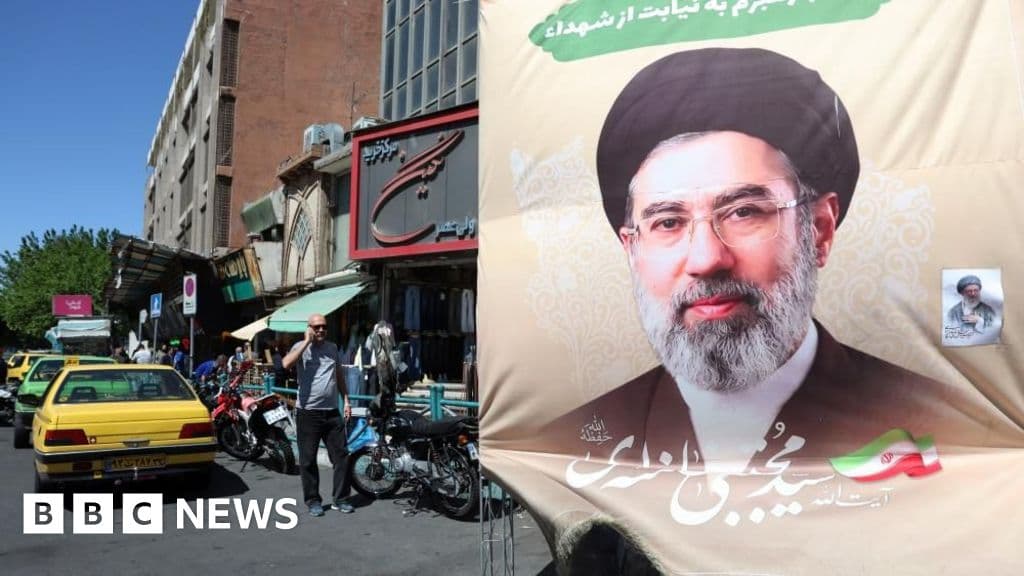
  • Understanding Iran’s Leadership Landscape Amidst Conflict The ongoing conflict between Iran and a coalition of the United States and Israel has sparked a critical question: **Who is truly in charge in Iran?** Following the death of **Ali Khamenei**, who passed away on **February 28**, 2023, his son, **Mojtaba Khamenei**, has taken on the mantle of **supreme leader**. While this transition appears straightforward, the reality of decision-making within Iran's political structure is far more complex and chaotic.
  • The Uncertain Role of Mojtaba Khamenei Following his father's death, **Mojtaba Khamenei** has remained largely absent from public view, raising concerns about his ability to lead effectively. His leadership is characterized by a stunning lack of visible authority, as he has only released a few written statements. This includes a firm declaration regarding the **Strait of Hormuz**, asserting that it remains closed. However, **Iranian officials** have confirmed that he sustained injuries during the initial military strikes, with reports indicating he may have faced significant damage to his face, complicating his ability to communicate.
  • A Fractured Leadership Structure Former U.S. President **Donald Trump** described Iran's leadership as **fractured**, suggesting that the **United States** is awaiting a unified response from Tehran. Leaders in Iran have sought to project unity, recently sending messages to citizens proclaiming that there are no hardliners or moderates, only one nation pursuing a singular path. However, the reality appears quite different.
  • The Role of the IRGC in Iranian Strategy Control over crucial strategic assets like the **Strait of Hormuz** is concentrated in the hands of the **Islamic Revolutionary Guard Corps (IRGC)**, led by **Ahmad Vahidi**. This shift indicates a significant power dynamic where military decisions are prioritized over diplomatic strategy. Araghchi's recent mixed messages concerning the status of Hormuz exemplify this disconnect, where military actions dictate the pace of events rather than diplomatic efforts.
  • Key Points of Power Dynamics - **Mojtaba Khamenei**’s limited public presence raises questions about his capability to lead. - The IRGC, rather than the formal government, seems to dictate key military actions and responses. - Diplomatic channels appear operational but lack decisive authority, complicating Iran's international negotiations.
  • Implications for Iran's Future This fragmentation within the Iranian leadership is critical for understanding how the nation might navigate the ongoing conflict. The **IRGC's** increasing autonomy suggests a military-focused approach to decision-making, which may lead to heightened tensions both domestically and internationally. The absence of a cohesive strategy could prove detrimental, particularly as diplomatic channels remain stalled, evidenced by the **interrupted talks** with the U.S. in **Islamabad**.
  • What Comes Next? As the situation evolves, the key areas to monitor include: - **Mojtaba Khamenei**’s potential re-emergence and how he might assert authority as the war progresses. - The IRGC's continued influence over military operations and its implications for Iran's foreign policy. - The diplomatic landscape and any efforts to revive negotiations with the United States, especially regarding critical issues like the **nuclear deal** and regional security.
  • Why It Matters Understanding who holds the reins of power in Iran is essential not only for neighboring countries but also for the global community. The dynamics at play could affect everything from regional stability to international trade routes, particularly through strategic chokepoints like the Strait of Hormuz. As Iran navigates this turbulent period, clarity about its leadership and decision-making processes will be crucial in anticipating future developments in the region.

Understanding Iran’s Leadership Landscape Amidst Conflict The ongoing conflict between Iran and a coalition of the United States and Israel has sparked a critical question: **Who is truly in charge in Iran?** Following the death of **Ali Khamenei**, who passed away on **February 28**, 2023, his son, **Mojtaba Khamenei**, has taken on the mantle of **supreme leader**. While this transition appears straightforward, the reality of decision-making within Iran's political structure is far more complex and chaotic.

The Uncertain Role of Mojtaba Khamenei Following his father's death, **Mojtaba Khamenei** has remained largely absent from public view, raising concerns about his ability to lead effectively. His leadership is characterized by a stunning lack of visible authority, as he has only released a few written statements. This includes a firm declaration regarding the **Strait of Hormuz**, asserting that it remains closed. However, **Iranian officials** have confirmed that he sustained injuries during the initial military strikes, with reports indicating he may have faced significant damage to his face, complicating his ability to communicate.

This absence creates a significant leadership vacuum, as the Islamic Republic relies not only on institutional power but also on the performative aspects of leadership. Ali Khamenei was known for his public speeches and appearances, which conveyed authority and direction. Without this visible leadership, uncertainty looms over Iran's strategic decisions during a critical time of conflict.

A Fractured Leadership Structure Former U.S. President **Donald Trump** described Iran's leadership as **fractured**, suggesting that the **United States** is awaiting a unified response from Tehran. Leaders in Iran have sought to project unity, recently sending messages to citizens proclaiming that there are no hardliners or moderates, only one nation pursuing a singular path. However, the reality appears quite different.

The current Iranian leadership includes Foreign Minister Abbas Araghchi, who is engaged in negotiations with the United States under President Masoud Pezeshkian. Yet, neither Araghchi nor Pezeshkian seems to be driving the strategic agenda. Instead, Parliament Speaker Mohammad-Bagher Ghalibaf heads the Iranian delegation, suggesting a lack of cohesive strategy from the traditional diplomatic channels.

The Role of the IRGC in Iranian Strategy Control over crucial strategic assets like the **Strait of Hormuz** is concentrated in the hands of the **Islamic Revolutionary Guard Corps (IRGC)**, led by **Ahmad Vahidi**. This shift indicates a significant power dynamic where military decisions are prioritized over diplomatic strategy. Araghchi's recent mixed messages concerning the status of Hormuz exemplify this disconnect, where military actions dictate the pace of events rather than diplomatic efforts.

Key Points of Power Dynamics - **Mojtaba Khamenei**’s limited public presence raises questions about his capability to lead. - The IRGC, rather than the formal government, seems to dictate key military actions and responses. - Diplomatic channels appear operational but lack decisive authority, complicating Iran's international negotiations.

Implications for Iran's Future This fragmentation within the Iranian leadership is critical for understanding how the nation might navigate the ongoing conflict. The **IRGC's** increasing autonomy suggests a military-focused approach to decision-making, which may lead to heightened tensions both domestically and internationally. The absence of a cohesive strategy could prove detrimental, particularly as diplomatic channels remain stalled, evidenced by the **interrupted talks** with the U.S. in **Islamabad**.

What Comes Next? As the situation evolves, the key areas to monitor include: - **Mojtaba Khamenei**’s potential re-emergence and how he might assert authority as the war progresses. - The IRGC's continued influence over military operations and its implications for Iran's foreign policy. - The diplomatic landscape and any efforts to revive negotiations with the United States, especially regarding critical issues like the **nuclear deal** and regional security.

Why It Matters Understanding who holds the reins of power in Iran is essential not only for neighboring countries but also for the global community. The dynamics at play could affect everything from regional stability to international trade routes, particularly through strategic chokepoints like the Strait of Hormuz. As Iran navigates this turbulent period, clarity about its leadership and decision-making processes will be crucial in anticipating future developments in the region.

In conclusion, while the formal leadership structure in Iran suggests a clear authority under Mojtaba Khamenei, the reality is a complex interplay of military and political influences, raising fundamental questions about the future direction of the Islamic Republic during this period of crisis.

Did you find this article useful? Share it!

Share

Related Articles

Critical Air Strikes Erupt Between US and Iran in Gulf Region
Politics
Jun 1, 2026

Critical Air Strikes Erupt Between US and Iran in Gulf Region

Tensions soar as the US and Iran engage in air strikes near the Strait of Hormuz, raising concerns over global oil supply and regional stability.

BBC World
Trump Faces Stalemate in International Military Strategy
Politics
Jun 1, 2026

Trump Faces Stalemate in International Military Strategy

Trump's international interventions face serious stalemates. What will this mean for U.S. foreign policy? Explore the critical challenges ahead.

Indian Express
Tehran Denies Rumors of President Pezeshkian’s Resignation
Politics
Jun 1, 2026

Tehran Denies Rumors of President Pezeshkian’s Resignation

Tehran denies resignation of President Masoud Pezeshkian amid claims of IRGC influence. What does this mean for Iran's political stability? Click to learn more!

Indian Express

Categories

  • World
  • Technology
  • Business
  • Sports

More

  • Entertainment
  • Science
  • Health
  • Politics

Explore

  • Web Stories
  • About Us
  • Contact

Legal

  • Privacy Policy
  • Terms of Service
  • Disclaimer

© 2026 Glipzo. All rights reserved.


