
Image: The Hindu
Vice President J.D. Vance publicly supports Trump on Iran war, assuring confidence in his leadership while navigating his own anti-war stance.
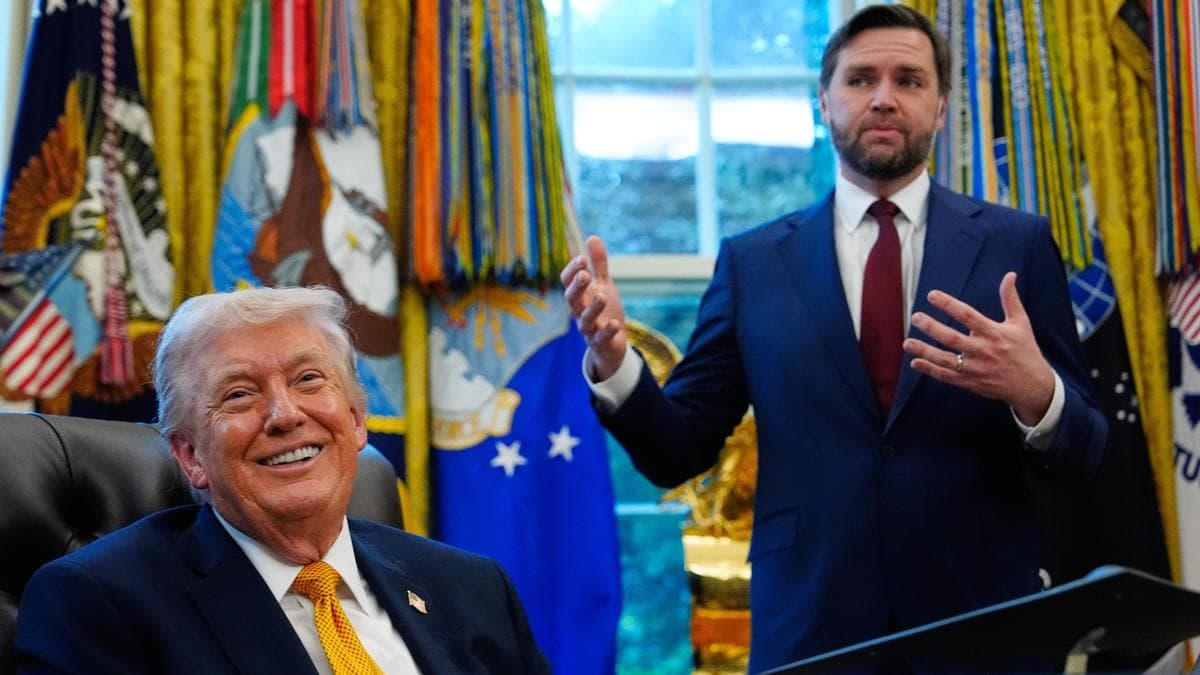
GlipzoIn a significant show of unity, U.S. Vice President J.D. Vance publicly supported President Donald Trump regarding the ongoing conflict in Iran. During an event in the Oval Office on March 16, 2026, Vance emphasized his confidence in Trump to navigate the complexities of the war, ensuring that past mistakes are not repeated.
Vance's statement serves to quell rising speculation about potential ideological rifts between him and Trump. Known for his staunch anti-war stance, Vance had refrained from offering full support for the war since it commenced on February 28, 2026. This cautious approach has raised eyebrows, especially in light of Trump's earlier comments suggesting Vance held different views on military engagement.
In a pointed response to inquiries about his position on the conflict, Vance stated, “I trust President Trump to get the job done,” highlighting the former president's commitment to preventing Iran from acquiring nuclear weapons. His comments reflect a deliberate attempt to align with Trump's policies, which have been marked by a more aggressive stance against Iran compared to Vance's historical skepticism regarding U.S. military interventions.
During the Oval Office event, Vance remarked, “I think one big difference is... we have a smart president whereas in the past, we’ve had dumb presidents.” This statement underscores his belief in Trump’s capability to lead effectively, contrasting it with his past experiences under different administrations.
Once a self-identified “never-Trumper,” Vance has recently shifted his tone towards the former president. In an opinion piece published in the Wall Street Journal in early 2023, he noted that Trump’s foreign policy achievements included not starting new wars during his first term from 2017 to 2021. This retrospective acknowledgment suggests a growing recognition of the complexities of foreign policy, particularly in the context of military engagements.
Vance's history of skepticism towards military interventions, particularly his opposition to excessive U.S. involvement in foreign conflicts, is noteworthy. He has expressed concerns over the Biden administration's decision to send significant military aid to Ukraine amidst its conflict with Russia. Vance's comments reveal a nuanced understanding of America’s role in global conflicts, advocating for a more cautious approach.
As the situation in Iran escalates, the dynamics between Vance and Trump are under intense scrutiny. Political analysts are paying close attention to how Vance's support for Trump may impact his reputation among anti-war constituents. While Vance seeks to position himself as a supportive vice president, he must also navigate the complexities of his previous stances on military engagement.
The alignment between Vance and Trump comes at a critical juncture as the Iran-Israel conflict intensifies. As tensions rise, Vance’s endorsement of Trump’s strategy could either fortify their political alliance or expose vulnerabilities if the situation deteriorates further.
As the conflict in Iran continues, the Biden administration's foreign policy strategy will likely face increasing scrutiny. The question remains: how will Vance's support for Trump shape future U.S. engagement in the region? The vice president's recent comments may signal a broader shift within the Republican Party towards a more hawkish stance on Iran, reflecting the complexities of navigating domestic and international pressures.
With both Trump and Vance in pivotal roles, their relationship will be essential to watch as the U.S. seeks to balance its interests in the Middle East while addressing the concerns of its constituents back home. Expect further developments in U.S.-Iran relations as both leaders continue to articulate their strategies and responses to the ongoing crisis.
Vance's support for Trump amidst the Iran conflict highlights the ongoing evolution of political alliances within the Republican Party. As the war progresses, how these dynamics unfold could have significant implications for U.S. foreign policy and the party's overall stance on military engagement. Furthermore, their approach will impact the perception of the Republican leadership as it seeks to address national security concerns while maintaining support from their base.
In summary, Vance’s endorsement of Trump marks a critical moment in U.S. politics, revealing the complexities of aligning personal beliefs with party loyalty in times of international strife. As events unfold, the political landscape could shift, influencing both domestic politics and international relations in the coming months.

Tensions soar as the US and Iran engage in air strikes near the Strait of Hormuz, raising concerns over global oil supply and regional stability.
BBC World
Trump's international interventions face serious stalemates. What will this mean for U.S. foreign policy? Explore the critical challenges ahead.
Indian Express
Tehran denies resignation of President Masoud Pezeshkian amid claims of IRGC influence. What does this mean for Iran's political stability? Click to learn more!
Indian Express