
Image: BBC World
The U.S. is reportedly set to indict Raúl Castro over a 1996 plane shootdown, signaling a major shift in U.S.-Cuban relations. What’s next for Cuba?
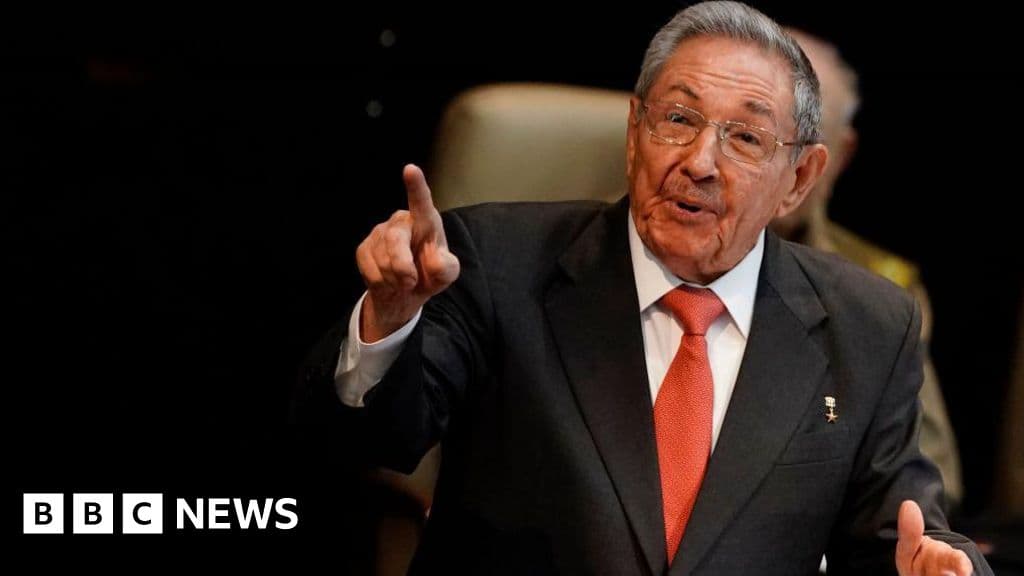
GlipzoIn a significant development, the U.S. Justice Department is reportedly preparing to file charges against former Cuban leader Raúl Castro related to a tragic incident from February 24, 1996. The event in question involves the shooting down of two aircraft operated by the humanitarian group Brothers to the Rescue, which tragically resulted in the deaths of four individuals. This indictment, if it comes to fruition, would mark a pivotal moment in U.S.-Cuban relations, particularly as Castro, now 94 years old, has long been a central figure in Cuban politics.
The anticipated charges are part of a broader pressure campaign by the United States aimed at addressing Cuba's ongoing political and humanitarian crises. With the CIA director recently visiting Cuba to engage in discussions, this potential indictment signals a renewed focus on the island nation. The indictment would require the approval of a U.S. grand jury, and officials suggest that we could see movement on this front as soon as next Wednesday.
The incident that could lead to Castro's indictment involved the downing of two planes belonging to Brothers to the Rescue, a group dedicated to assisting Cuban migrants. These aircraft were reportedly shot down over international waters, a fact corroborated by the International Civil Aviation Organization, despite claims from the Cuban government that the planes were violating Cuban airspace. The downing was ordered while Fidel Castro was president and Raúl was serving as armed forces minister.
The Brothers to the Rescue group had previously conducted missions to drop anti-Castro leaflets and search for Cuban rafters attempting to reach the United States. The U.S. Department of Justice has not disclosed the specific charges that may be brought against Raúl Castro, but the investigation has gained traction following a recent announcement from Florida’s attorney general to reopen the inquiry into Castro’s involvement.
The unfolding situation has garnered significant attention from U.S. political leaders. Florida Governor Ron DeSantis expressed his support for potential criminal charges, labeling them as “long overdue.” The increasing scrutiny of Raúl Castro reflects a broader strategy from the U.S. government under the current administration, which aims to exert pressure on the Cuban regime to foster political change.
President Donald Trump, speaking to reporters aboard Air Force One, indicated that while he would leave the specifics to the Department of Justice, he emphasized the dire conditions in Cuba, stating, “They are really a nation in decline.” This remark underscores the humanitarian crisis on the island, exacerbated by the oil blockade and widespread sanctions imposed by the U.S., which have led to severe fuel shortages.
The potential indictment has implications that extend beyond Raúl Castro himself. It highlights the ongoing struggle between the two nations, characterized by decades of hostility and sanctions. The Cuban government, led by Foreign Minister Bruno Rodriguez, has responded defiantly to U.S. actions, asserting that despite the embargo and sanctions, Cuba will continue along its path of sovereignty and socialism.
In recent months, the U.S. has intensified its focus on Cuba, especially following the indictment of Venezuelan leader Nicolás Maduro. There’s a growing expectation that the U.S. may adopt a more aggressive stance toward Cuba, particularly with the backdrop of discussions surrounding economic and security issues. A CIA official mentioned that Washington is open to dialogue, but only if Cuba undergoes significant changes.
As we look ahead, the possibility of an indictment against Raúl Castro raises important questions about the future of U.S.-Cuban relations. If charges are indeed filed, it could further exacerbate tensions between the two nations and complicate any potential diplomatic engagement.
Moreover, the outcome of these proceedings may have repercussions for the Cuban populace, who are grappling with the effects of sanctions and economic hardship. The U.S. has pledged $100 million in aid to alleviate some of these issues, but the effectiveness of such initiatives remains to be seen.
In conclusion, the developments surrounding Raúl Castro’s potential indictment are emblematic of the broader geopolitical landscape in which the U.S. seeks to influence change in Cuba. Observers will be keenly watching for the grand jury's decision and any subsequent actions that may shape the relationship between these two countries moving forward.
The indictment of Raúl Castro could represent a critical juncture in U.S.-Cuban relations, highlighting ongoing conflicts over human rights and governance. As both nations navigate this complex relationship, the implications for regional stability and humanitarian conditions in Cuba are profound. The world will be watching closely as this story unfolds.

Tensions soar as the US and Iran engage in air strikes near the Strait of Hormuz, raising concerns over global oil supply and regional stability.
BBC World
Trump's international interventions face serious stalemates. What will this mean for U.S. foreign policy? Explore the critical challenges ahead.
Indian Express
Tehran denies resignation of President Masoud Pezeshkian amid claims of IRGC influence. What does this mean for Iran's political stability? Click to learn more!
Indian Express