
Image: BBC World
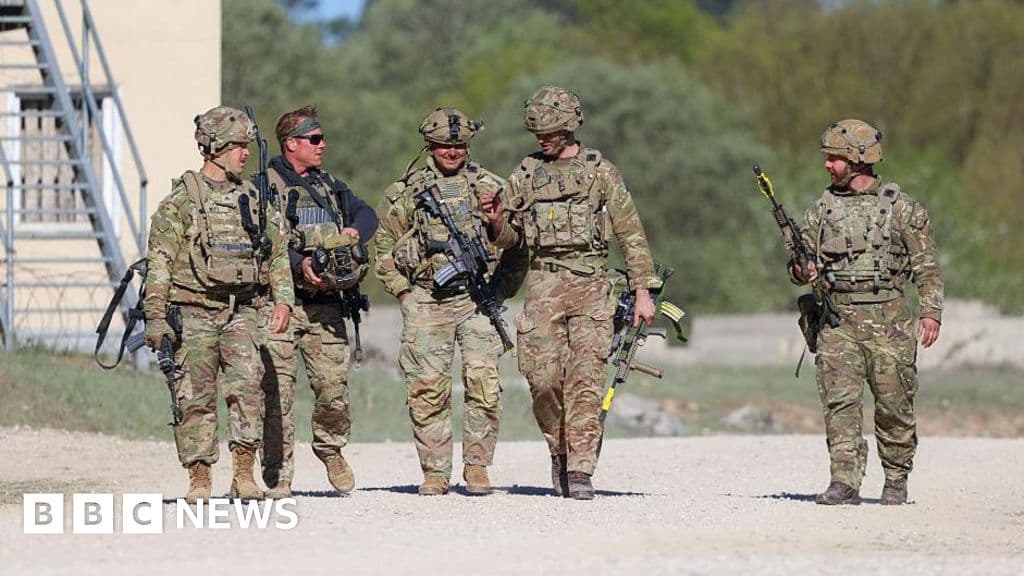
The U.S. plans to withdraw 5,000 troops from Germany amid tensions between Trump and Merz over Iran. What could this mean for NATO and European security?
GlipzoIn a surprising move, the U.S. Department of Defense is set to withdraw 5,000 troops from Germany. This significant cutback comes amid rising tensions between U.S. President Donald Trump and German Chancellor Friedrich Merz, who have publicly clashed over the ongoing conflict in Iran. The announcement, made on Thursday, marks a pivotal shift in U.S. military strategy in Europe, bringing into question the future of the transatlantic alliance.
This decision follows Trump's recent criticisms of Merz, who stated that the United States had been "humiliated" by Iranian negotiators. The exchange highlights the growing rift between the two nations as they navigate complex geopolitical dynamics. Trump took to social media, voicing his discontent with Merz's leadership and questioning Germany's commitment to defense and international cooperation.
“Merz is doing a terrible job,” Trump declared, emphasizing his dissatisfaction with Germany’s stance on immigration and energy policies. In addition to troop reductions in Germany, Trump has hinted at plans to possibly withdraw forces from other NATO allies, including Italy and Spain.
The U.S. maintains a substantial military presence in Germany, with over 36,000 active-duty troops stationed at various bases throughout the country as of December. The Pentagon has stated that this decision is part of a comprehensive review of U.S. force posture in Europe, taking into account the current conditions on the ground and strategic military requirements.
Sean Parnell, a spokesman for the Pentagon, confirmed that the withdrawal is expected to be completed within the next six to twelve months. This marks a significant reduction in U.S. forces, which could have lasting implications for European security and NATO's collective defense strategy.
Trump’s remarks regarding NATO allies Italy and Spain have raised eyebrows. “Why shouldn’t I?” he questioned when asked about pulling troops from these nations, citing their lack of involvement in the Iranian conflict as a primary reason. He lambasted both countries for their perceived failures to assist U.S. military operations, stating, “In all cases, they said, 'I don't want to get involved.'”
This rhetoric reflects Trump's longstanding criticism of NATO, where he has previously accused member countries of not meeting their defense spending obligations. Under the Merz government, Germany is projected to increase its defense spending significantly—€105.8 billion by 2027, with an estimated 3.1% of GDP allocated for defense in the upcoming year. This marks a substantial shift from previous administrations and a response to Trump’s earlier accusations of Germany being “delinquent” in its defense expenditures.
In response to Trump's comments, Merz articulated that the “Americans clearly have no strategy” regarding the situation in Iran. He criticized the U.S. approach, suggesting that the Iranians have outmaneuvered American negotiators, leaving the U.S. without any tangible outcomes.
Merz’s remarks underscore the growing frustration in Germany over U.S. policy and the perceived lack of a coherent strategy. In a statement, he claimed that the “entire nation” was being “humiliated” by the Iranian leadership, further complicating the diplomatic landscape.
Trump’s retort on his platform, Truth Social, accused Merz of advocating for a nuclear-armed Iran and dismissed his insights as misguided. “No wonder Germany is doing so poorly, both economically and otherwise!” Trump’s comments have sparked a wave of reactions, drawing criticism from various political factions within Germany.
The U.S. military deployment in Germany is the largest in Europe, surpassing the 12,000 troops stationed in Italy and 10,000 in the UK. A significant portion of these forces are based at Ramstein Air Base, strategically located near the southwestern city of Kaiserslautern. This base serves as a critical hub for American operations in the region, raising questions about future military readiness and response capabilities in Europe.
Historically, attempts to reduce U.S. troop levels in Germany have faced hurdles. In 2020, a plan to relocate 12,000 troops was blocked by Congress, and subsequent policy changes under President Joe Biden reversed many of Trump’s proposals. This ongoing back-and-forth raises concerns about the stability of U.S. military commitments in Europe, especially as tensions with Russia remain high.
As the situation continues to evolve, the implications of these troop reductions are significant. The withdrawal from Germany may embolden adversaries and alter the balance of power in the region. Observers are keenly watching how European NATO members respond to this shift and whether they will step up to fill the void left by American forces.
Moreover, as Trump continues to challenge traditional alliances and criticize NATO spending, the future of U.S. military presence in Europe hangs in the balance. The upcoming months will be crucial in determining how these dynamics play out and whether the transatlantic alliance can adapt to the changing geopolitical landscape.
As we await further developments, it remains essential to monitor the evolving strategies of both the U.S. and European nations in response to these dramatic changes in military posture.
Why It Matters: The reduction of U.S. troops in Germany not only impacts European security but also signals a potential shift in U.S. foreign policy under the Trump administration, challenging long-standing NATO commitments and altering the dynamics of international relations.

Tensions soar as the US and Iran engage in air strikes near the Strait of Hormuz, raising concerns over global oil supply and regional stability.
BBC World
Trump's international interventions face serious stalemates. What will this mean for U.S. foreign policy? Explore the critical challenges ahead.
Indian Express
Tehran denies resignation of President Masoud Pezeshkian amid claims of IRGC influence. What does this mean for Iran's political stability? Click to learn more!
Indian Express