
Image: BBC World
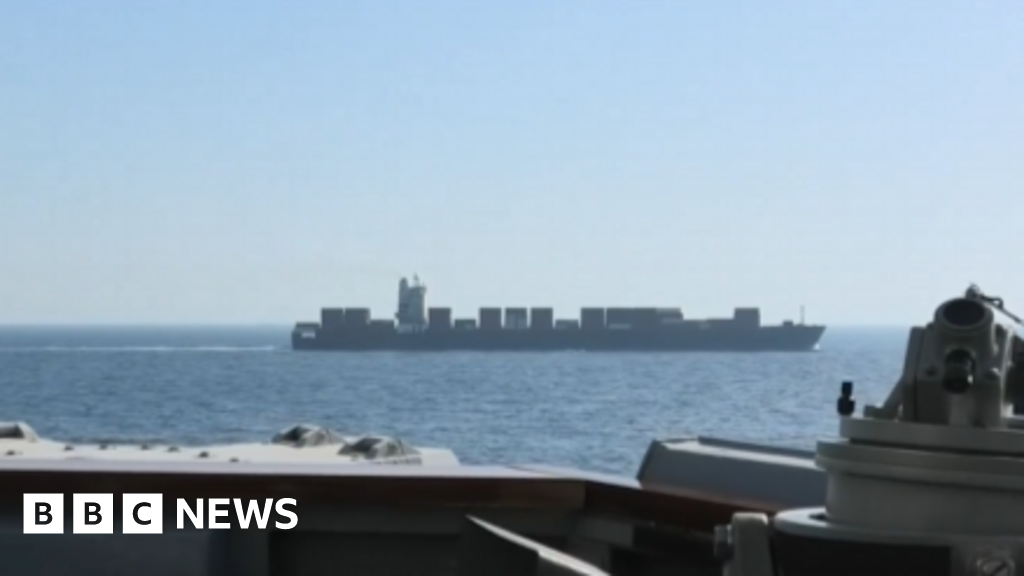
The U.S. Navy has intercepted the Iranian cargo ship Touska amid escalating tensions. What does this mean for U.S.-Iran relations? Find out more.
GlipzoIn a significant escalation of tensions, the U.S. Navy intercepted an Iranian-flagged cargo vessel, the Touska, in the Gulf. This move comes as a part of the ongoing naval blockade imposed by the United States, as confirmed by former President Donald Trump on his Truth Social platform. The incident occurred after the ship failed to heed warnings to halt its journey, raising concerns about maritime security and international relations in the region.
Trump stated that the Touska, measuring nearly 900 feet and weighing close to that of an aircraft carrier, attempted to breach the U.S. blockade. He remarked, "Today, an Iranian-flagged cargo ship named TOUSKA tried to get past our Naval Blockade, and it did not go well for them." According to Trump, the U.S. Navy intervened by damaging the vessel's engine room, effectively preventing it from continuing its course.
This interception aligns with the broader context of strained relations between the United States and Iran, following a series of military confrontations. The White House has confirmed that Vice President JD Vance will lead a delegation for renewed discussions aimed at resolving the ongoing conflict with Iran, which has been a focal point of U.S. foreign policy. However, Iran's response to the blockade and the proposed talks remains ambiguous, as officials have yet to confirm their participation.
In a statement, Trump emphasized that the Touska was under U.S. Treasury sanctions due to its history of illegal activities. He noted, "We have full custody of the ship, and are seeing what's on board!" Meanwhile, U.S. Central Command released footage purportedly showing the naval operation that intercepted the vessel, highlighting the military's readiness to enforce the blockade.
The announcement of the Touska's seizure coincides with stalled negotiations between the U.S. and Iran, which have been marked by a lack of agreement on critical issues, including Iran's nuclear program and the control of the Strait of Hormuz. This strategic waterway is vital for global oil transport, with about 20% of the world’s oil and liquefied natural gas passing through it. The ongoing conflict has significantly reduced maritime traffic, causing a spike in global energy prices.
In recent weeks, the situation has escalated following a series of strikes by U.S. and Israeli forces across Iran, leading to a two-week ceasefire. However, as the ceasefire period nears its end, Trump stated that the blockade would remain in place until a satisfactory deal is reached, further complicating the diplomatic landscape.
Despite the U.S. announcement, Iranian state media reported that officials are hesitant to engage in talks while the naval blockade persists. They have characterized the U.S. demands as excessive and have expressed skepticism about the negotiations' validity. The Islamic Revolution Guard Corps (IRGC) recently announced the temporary closure of the Strait of Hormuz, citing violations by the U.S. and the blockade's impact on the ceasefire agreement.
As preparations for discussions in Islamabad continue, it remains uncertain whether a breakthrough will occur. The Pakistani government has been playing a mediating role, with Prime Minister Shehbaz Sharif engaging with Iranian President Masoud Pezeshkian to facilitate dialogue.
The stakes are high as the U.S. and Iran navigate this complex geopolitical landscape. Trump's threats to escalate military actions against Iran if negotiations fail add a layer of urgency to the situation. He stated, "If they don't take the DEAL, it will be my Honour to do what has to be done," signaling a willingness to employ forceful measures to secure U.S. interests in the region.
Looking forward, the expiration of the ceasefire on Wednesday will be a critical moment. Observers are keeping a close eye on how both nations will proceed, especially regarding the potential for renewed hostilities or a diplomatic resolution. The international community is also watching, as any further escalation could have far-reaching implications for global oil markets and regional stability.
In summary, the interception of the Touska reflects the heightened tensions between the U.S. and Iran, with ongoing negotiations at risk of collapse. As both sides prepare for what could be a pivotal moment in their diplomatic relations, the world waits to see how this situation will unfold.

Tensions soar as the US and Iran engage in air strikes near the Strait of Hormuz, raising concerns over global oil supply and regional stability.
BBC World
Trump's international interventions face serious stalemates. What will this mean for U.S. foreign policy? Explore the critical challenges ahead.
Indian Express
Tehran denies resignation of President Masoud Pezeshkian amid claims of IRGC influence. What does this mean for Iran's political stability? Click to learn more!
Indian Express