
Image: BBC World
Tensions escalate in the Gulf as the US strikes Iranian boats while Iran attacks UAE oil facilities. What does this mean for global oil markets?
GlipzoIn a dramatic escalation of hostilities in the Middle East, President Donald Trump announced that the United States has successfully targeted and struck seven Iranian fast boats in the Strait of Hormuz. This military action comes as the U.S. aims to navigate vessels safely through the increasingly perilous waters of the Gulf, which have been largely blocked following an earlier series of airstrikes by the U.S. and Israel against Iranian targets.
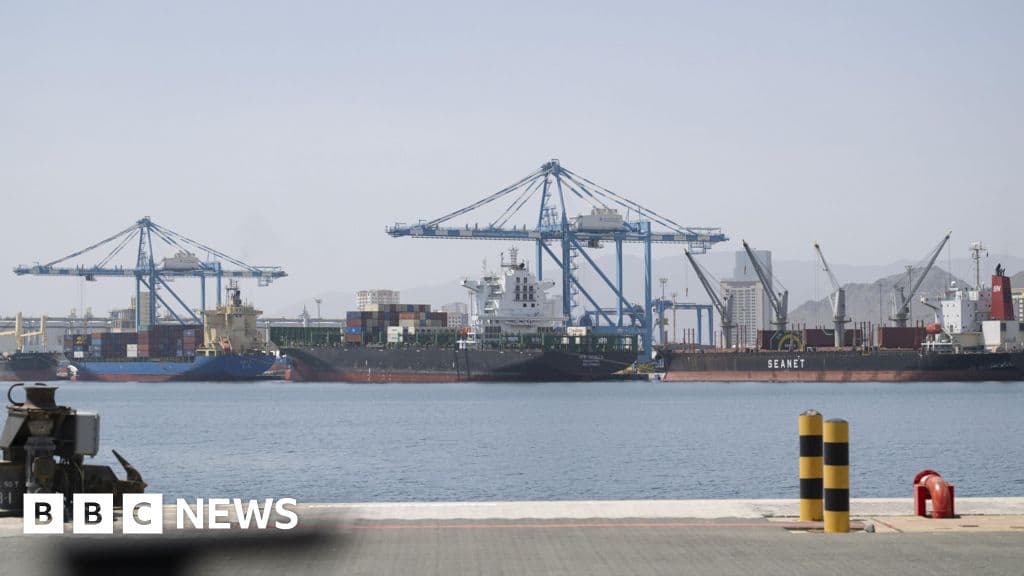
The Strait of Hormuz is a critical maritime corridor, accounting for approximately 20% of global oil and liquefied natural gas shipments. On Monday, both the United Arab Emirates (UAE) and South Korea reported attacks on ships in this vital channel, heightening concerns over the safety of maritime operations in the region. Concurrently, a fire broke out at the Fujairah oil port following an Iranian strike, as tensions escalated further.
In a statement to the BBC, shipping giant Maersk confirmed that one of its U.S.-flagged vessels successfully navigated through the strait, protected by U.S. military forces under an initiative dubbed “Project Freedom.” Iranian Foreign Minister Abbas Araghchi responded to the situation by asserting that the ongoing events demonstrate the futility of military solutions to political crises, remarking, “Project Freedom is Project Deadlock.”
The vessel in question, the Alliance Fairfax, had been stranded in the Gulf since late February, following the airstrikes by the U.S. and Israel. Maersk stated, “The transit of the vessel was completed without incident, and all crew members are safe and unharmed.” This development raises questions about the effectiveness of U.S. military measures in ensuring safe passage for commercial shipping through the region.
In response to the U.S. strikes, Iranian officials have denied any attacks on their vessels, with Iranian military representatives asserting that they fired warning shots at a U.S. warship, a claim the U.S. military has refuted. The deteriorating situation has led to a significant military presence in the Strait of Hormuz, with U.S. Navy destroyers and commercial vessels operating under heightened security protocols.
The UAE has reported that a tanker affiliated with its state-owned oil company, Adnoc, was struck in the strait, while South Korea also mentioned an explosion involving one of its ships near UAE waters. The UAE's defense ministry stated that air defenses intercepted 12 ballistic missiles, three cruise missiles, and four drones during the ongoing conflict, resulting in a large fire at the crucial oil port of Fujairah and several injuries.
In light of these developments, the UAE government described the Iranian actions as a “dangerous escalation,” emphasizing its right to respond to such threats. In a broader international context, leaders including French President Emmanuel Macron and British Prime Minister Sir Keir Starmer have condemned the Iranian strikes, labeling them as “unjustified and unacceptable.”
Following the attacks, the price of Brent crude oil surged, surpassing $115 a barrel, reflecting the immediate impact of geopolitical tensions on global oil markets. The situation is made more complex by the fact that Fujairah, located on the eastern coast of the UAE, serves as a key alternative for oil shipping, especially when the Strait of Hormuz is blocked.
As the conflict continues to escalate, neighboring countries are voicing concerns. Qatar condemned the attack on the Adnoc tanker and called for the unconditional reopening of the strait, highlighting the potential repercussions for regional stability. Meanwhile, in Oman, reports emerged of injuries following an attack on a residential building in Bukha, demonstrating the far-reaching implications of the conflict.
The situation remains fluid, with diplomatic channels potentially strained as military actions intensify. Observers are keenly watching how the U.S. military will respond to Iranian provocations in the coming days and whether any form of renewed dialogue can be established to de-escalate tensions.
As the situation develops, key factors to monitor include: - The effectiveness of U.S. military operations in ensuring safe passage for shipping in the Strait of Hormuz. - Potential retaliatory measures from Iran following the U.S. strikes. - The global oil market's response to ongoing tensions, particularly regarding price stability and supply chain disruptions. - The role of international governments in mediating the crisis and restoring diplomatic relations in the Gulf region.
The unfolding events in the Gulf underscore the precarious balance of power and the need for diplomatic efforts to prevent further escalation. The global community watches closely as actions taken in the coming days could have lasting consequences for both regional security and international economic stability.

Tensions soar as the US and Iran engage in air strikes near the Strait of Hormuz, raising concerns over global oil supply and regional stability.
BBC World
Trump's international interventions face serious stalemates. What will this mean for U.S. foreign policy? Explore the critical challenges ahead.
Indian Express
Tehran denies resignation of President Masoud Pezeshkian amid claims of IRGC influence. What does this mean for Iran's political stability? Click to learn more!
Indian Express