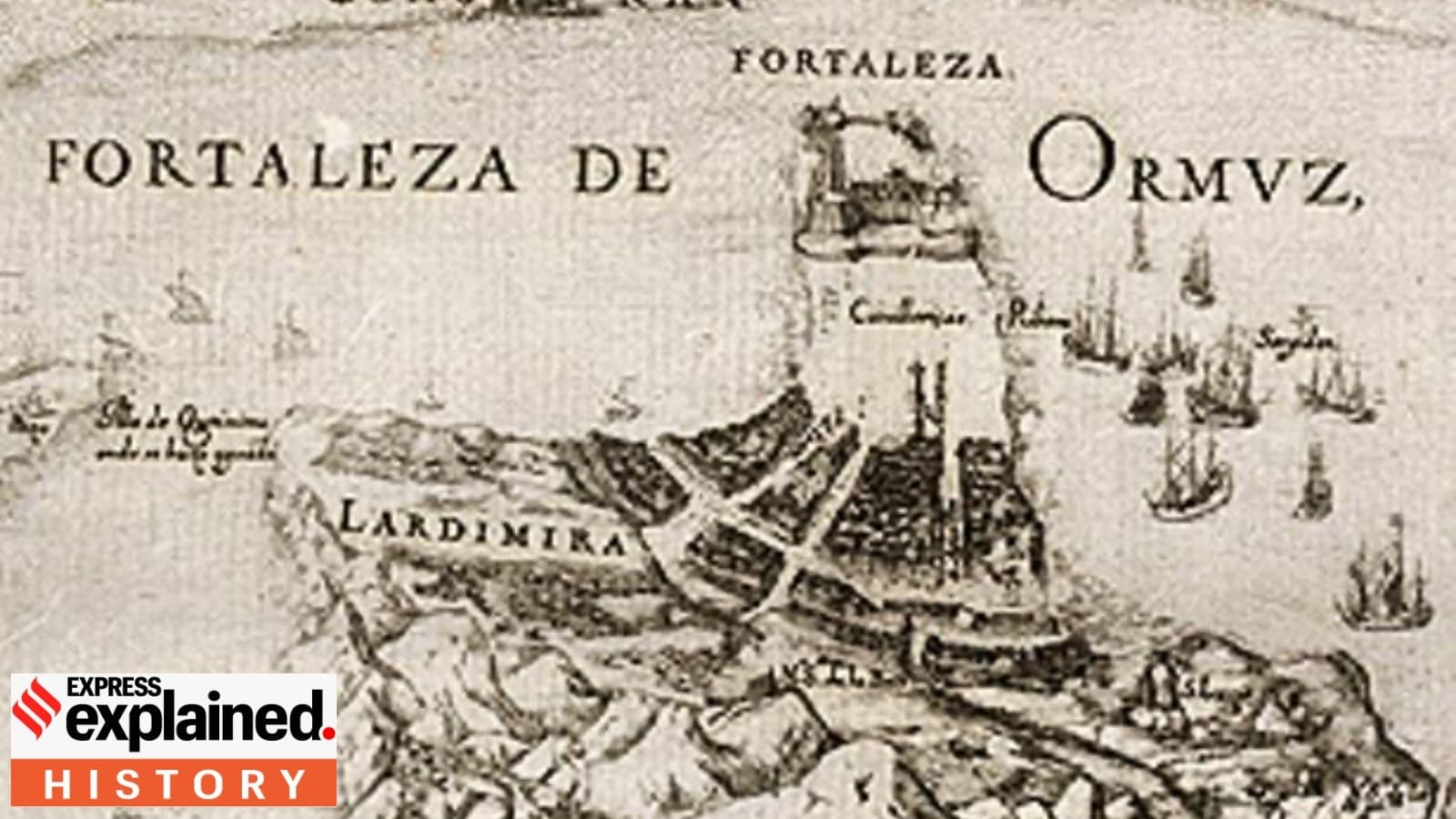
Explore the historical battles for control over the Strait of Hormuz, a critical energy passage that still impacts global geopolitics today.
The Strategic Importance of the Strait of Hormuz
The ongoing geopolitical tension in West Asia can largely be traced back to the **Strait of Hormuz**, a critical maritime passage that facilitates the movement of approximately **20% of the world's oil supply**. On **February 28**, following a **US-Israeli attack**, Iran made a bold move by effectively closing this vital waterway. In response, **President Donald Trump** established a naval blockade in the region, intensifying the already fragile status quo. Understanding the historical context of this strait is essential, as it has been a focal point of imperial ambitions for centuries, shaping trade routes and international relations.
By the early 17th century, the EIC, seeking to displace Portuguese control, aligned itself with the Safavid Empire under Shah Abbas I, whose naval capabilities were lacking. The collaboration culminated in 1622, when the British and the Safavids, with assistance from the Dutch East India Company, successfully ousted the Portuguese, marking the end of a century-long Iberian rule.
The Fourth Anglo-Dutch War from 1780 to 1784 severely weakened the Dutch position in the Persian Gulf. Facing bankruptcy, the VOC liquidated its assets, creating a vacuum that British interests were eager to exploit. Recognizing the need to secure their maritime routes to British India, which was their most valuable colony, the British sought to eliminate local threats.
British Control: The Trucial States Era
With the Dutch departure, the British initiated a series of military campaigns against the **Al Qawasim confederation** in the early **1800s**, justifying their actions by labeling the local rulers as pirates. This led to significant naval engagements in **1809** and **1819**, during which the British destroyed the confederation's fleets and bombarded coastal cities. These aggressive actions were part of a broader strategy to ensure the safety of trade routes leading to **Bombay**.
To solidify their control over the region, the British established relationships with local Arab leaders through treaties that allowed them to influence foreign policy while permitting the local Sheikhdoms to maintain autonomy over domestic affairs. These agreements effectively transformed these territories into British protectorates, now recognized as the United Arab Emirates. The British approach contrasted sharply with that of the Portuguese, focusing more on diplomatic control rather than outright colonization.
The Legacy of Imperial Interests in the Strait
The historical struggles for dominance over the **Strait of Hormuz** illustrate how control over this narrow passage has played a pivotal role in shaping international trade and political alliances throughout history. The imperial powers of the past understood its strategic importance, which continues to resonate in modern geopolitical conflicts. Today, the strait remains a flashpoint in global politics, underscoring the fragility of international relations in the region.
Why It Matters: The Ongoing Impact on Global Energy Supplies
The implications of these historical conflicts are still felt today, as the **Strait of Hormuz** is a lifeline for global energy supplies. With the current tensions between Iran and the United States, the potential for disruption in this crucial waterway poses risks not only to regional stability but also to global economies reliant on oil imports. As the world watches closely, the historical context of the strait reminds us that the power dynamics of the past continue to influence present-day conflicts.
Looking Ahead: What’s Next for the Strait of Hormuz?
As tensions remain high in the region, stakeholders must navigate the complex legacies of historical imperialism while addressing current geopolitical realities. The **Strait of Hormuz** will undoubtedly remain a focal point in discussions of energy security, diplomacy, and international trade. Observers should pay attention to how future negotiations may unfold, as well as the potential for new alliances or conflicts arising from the region's longstanding strategic importance. The balance of power in this vital maritime corridor will continue to shape global dynamics for years to come.