
Image: BBC World
Ukraine capitalizes on the Iran conflict to strengthen military alliances. Explore how Zelensky's strategy could impact future peace negotiations.
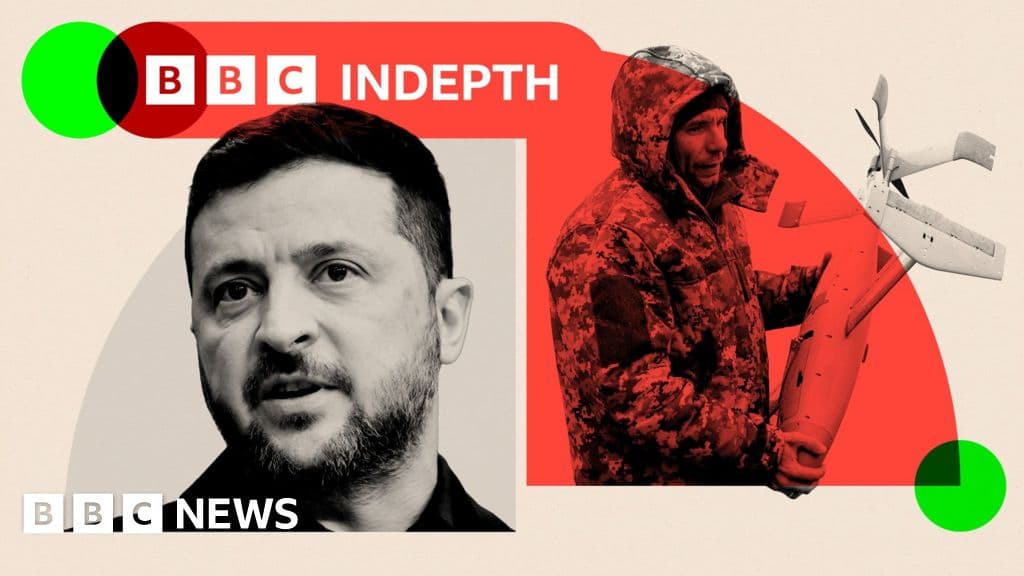
GlipzoIn a surprising twist in international affairs, Ukrainian President Volodymyr Zelensky recently leveraged the ongoing conflict in Iran to bolster Ukraine's military alliances. This occurred during his high-profile visit to Saudi Arabia in March, where he walked down a lilac carpet, symbolizing Ukraine's resilience and determination amid the war with Russia. In a post on X, Zelensky emphasized his aim to "strengthen the protection of lives," reflecting Ukraine's commitment to its sovereignty and security.
Zelensky’s visit is more than just a diplomatic gesture; it represents a calculated effort to highlight Ukraine's military prowess, particularly its advancements in drone warfare. By partnering with Gulf nations that have recently faced Iranian missile and drone attacks, Ukraine aims to showcase its battlefield expertise. So far, Ukraine has established agreements with Saudi Arabia, the UAE, and Qatar to share knowledge and technology related to drone capabilities, potentially leading to lucrative defense contracts with these wealthy, US-aligned nations.
> "We want to help [Gulf states] defend themselves. And we will continue building such partnerships with other countries," Zelensky remarked, underscoring Ukraine’s proactive approach to international alliances.
At first glance, the Iran conflict appeared detrimental to Ukraine’s ongoing struggle against Russian aggression. The geopolitical tensions could divert the attention of key figures like Donald Trump, who had previously been involved in facilitating peace talks between Moscow and Kyiv. Moreover, the situation allowed Russia to replenish its dwindling war funds by selling oil at elevated prices, especially as the flow of Middle Eastern oil faced disruptions due to the conflict.
With Moscow benefiting from these developments, there was concern that increased financial resources could prolong the war in Ukraine. As countries began to prioritize their energy needs amid rising global costs, Trump’s administration renewed waivers permitting nations to purchase sanctioned Russian oil, further empowering Moscow.
Despite the initial setbacks, Ukraine has demonstrated remarkable adaptability since the invasion began in February 2022. Zelensky’s recent actions indicate that Ukraine is intent on turning the Iran conflict to its advantage. By establishing military partnerships with Gulf states facing similar threats from Iran, Ukraine is positioning itself strategically before any potential peace negotiations with Russia.
In a notable development, Trump expressed optimism about reaching a resolution concerning Ukraine, following a productive conversation with Vladimir Putin. While he suggested that some factors complicate a ceasefire, the dialogue indicates a potential shift in the dynamics of the conflict.
However, a concrete solution remains elusive, prompting Zelensky to focus on reinforcing Ukraine's military capabilities. His adept use of opportunism is proving to be one of his strongest assets during this tumultuous time.
During his April visit to Saudi Arabia, Zelensky highlighted the parallels between the attacks on both nations. The Iranian-designed Shahed-136 drone, a key asset in Russia's arsenal, has been particularly effective against Ukrainian defenses. With costs ranging from $80,000 to $130,000, these drones pose a significant threat; however, Zelensky pointed out that intercepting them could be achieved with systems costing as little as $10,000. This stark contrast in costs emphasizes the need for more affordable and effective defense solutions.
As NATO countries become increasingly aware of the drone threat, Ukraine has made substantial strides in securing defense agreements. In April alone, Ukraine finalized two significant partnerships with European allies:
These partnerships not only strengthen Ukraine’s military but also signal a growing recognition of the importance of defending against drone warfare within Europe.
As tensions continue to rise in the Middle East, the implications for Ukraine are significant. The country is actively seeking further support from Gulf states to bolster its defenses against Russian advances. With the United States increasingly stretched in its military commitments abroad, the need for alternative partnerships becomes even more critical.
Zelensky's strategy of turning adversities into opportunities may pave the way for a stronger coalition of nations united in their opposition to aggression. As the global landscape shifts, all eyes will be on Ukraine as it navigates these complex relationships and seeks to emerge from the conflict stronger than before.
In conclusion, the intersection of the Iran conflict and Ukraine's ongoing struggle offers a compelling narrative of resilience and strategic adaptation. As diplomatic and military developments unfold, the international community will be watching closely to see how Ukraine continues to leverage its unique position on the global stage.
---
Ukraine's ability to form new alliances amid the Iran conflict not only strengthens its military position but also reshapes global perceptions of its role in this multifaceted geopolitical landscape. The outcomes of these alliances could significantly influence the direction of the war, the stability of the region, and the future of international relations.

Tensions soar as the US and Iran engage in air strikes near the Strait of Hormuz, raising concerns over global oil supply and regional stability.
BBC World
Trump's international interventions face serious stalemates. What will this mean for U.S. foreign policy? Explore the critical challenges ahead.
Indian Express
Tehran denies resignation of President Masoud Pezeshkian amid claims of IRGC influence. What does this mean for Iran's political stability? Click to learn more!
Indian Express