
Image: BBC World
Uganda's Yoweri Museveni sworn in for a record seventh term amid election disputes and human rights concerns. What’s next for the nation?
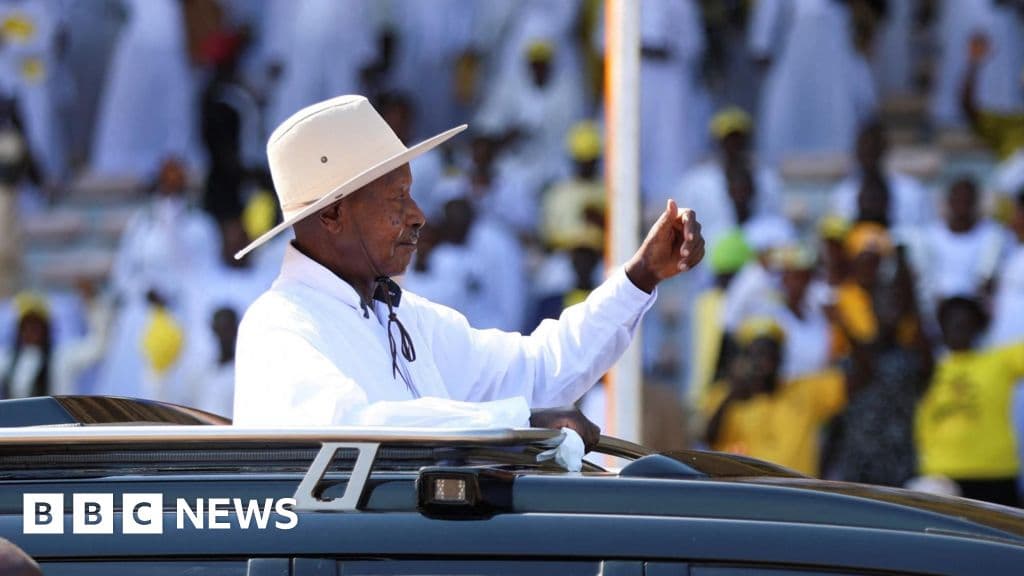
GlipzoIn a significant moment for Uganda and Africa, President Yoweri Museveni, aged 81, has been officially sworn in for a seventh consecutive term on May 12, 2021. This inauguration follows his landslide victory in the January elections, which were marred by allegations of fraud and violence. As one of the continent's longest-serving leaders, Museveni's continued presidency raises questions about the future of democracy in Uganda and the broader region.
The inauguration took place in Kampala, the capital, under tight security measures that included the deployment of armoured tanks. Police described these precautions as necessary to ensure public order amid tensions surrounding the election results. During his speech, Museveni called on Ugandans to engage actively in economic development, stating, "This is a time for no more sleep for all Ugandans". He emphasized the need to create jobs and wealth, building on the progress made during his long tenure.
Museveni's re-election was announced with over 70% of the vote, a figure his main opponent, Bobi Wine—a popular pop star turned politician—has vehemently contested. Wine alleged that the election was tainted by ballot-stuffing, a claim that election officials have denied. Following the elections, Wine, whose real name is Robert Kyagulanyi Ssentamu, felt compelled to flee Uganda, fearing for his safety. He claimed that the regime was intent on eliminating him.
Historically, Museveni has held power since 1986, winning multiple elections since then, but his administration has faced increasing scrutiny over human rights abuses and the suppression of dissent. The opposition leader, Wine, has urged Ugandans to resist what he describes as a dictatorship that undermines their democratic rights.
The swearing-in ceremony was marked by a public holiday declared by the government, with thousands of Museveni's supporters gathering at the Kololo Independence Grounds to celebrate. Among the distinguished guests were several African leaders, including Tanzania's President Samia Suluhu Hassan and Félix Tshisekedi of the Democratic Republic of Congo. Their presence underscores the regional implications of Uganda's political landscape.
In his inaugural address, Museveni pledged to utilize revenues from anticipated oil production to boost the economy and reduce poverty levels. He asserted, "We must protect what has been achieved, correct what still needs improvement, and move forward together as one country." This message resonates with many Ugandans who hope for tangible benefits from the country’s natural resources.
With one of the youngest populations globally, many Ugandans have only known Museveni as their leader. His prolonged rule raises critical questions about the future of governance in the nation, especially as he has not indicated when he plans to retire. Observers speculate that this could be his final term, with Museveni's son, Gen Muhoozi Kainerugaba, emerging as a potential successor. However, Kainerugaba's controversial social media behavior, including threats against opposition figures like Wine, has drawn criticism both domestically and internationally.
Despite Museveni's claims of a fair election process, human rights organizations have condemned the government's actions post-election. Amnesty International reported that between January 15 and 18, at least 16 individuals were killed by police and military forces during protests, with victims reportedly unarmed. This crackdown has raised serious concerns about the state of civil liberties in Uganda.
Moreover, the treatment of other opposition figures, such as Kizza Besigye, who has been imprisoned since late 2024 under dubious circumstances, continues to highlight the risks associated with opposing the Museveni regime. Besigye, who was allegedly abducted and forcibly returned to Uganda, faces military charges that many believe are politically motivated.
As Museveni embarks on his new term, the eyes of both Ugandans and the international community will be closely watching his administration’s actions. Will he take steps to address the concerns of the opposition and improve human rights conditions? Or will the trend of repression continue?
The coming months will be critical as the government attempts to implement its economic plans while facing mounting pressure from civil society. Bobi Wine's call for resistance and the ongoing unrest signal that Uganda's political landscape remains volatile. The future of democracy in Uganda hangs in the balance, and the reactions of the populace and international actors may very well shape the next chapter in this ongoing story.
In conclusion, the swearing-in of Yoweri Museveni for a seventh term is not just a continuation of his presidency; it is a pivotal moment that will determine the trajectory of Uganda's governance and civil rights for years to come.

Tensions soar as the US and Iran engage in air strikes near the Strait of Hormuz, raising concerns over global oil supply and regional stability.
BBC World
Trump's international interventions face serious stalemates. What will this mean for U.S. foreign policy? Explore the critical challenges ahead.
Indian Express
Tehran denies resignation of President Masoud Pezeshkian amid claims of IRGC influence. What does this mean for Iran's political stability? Click to learn more!
Indian Express