
Image: BBC World
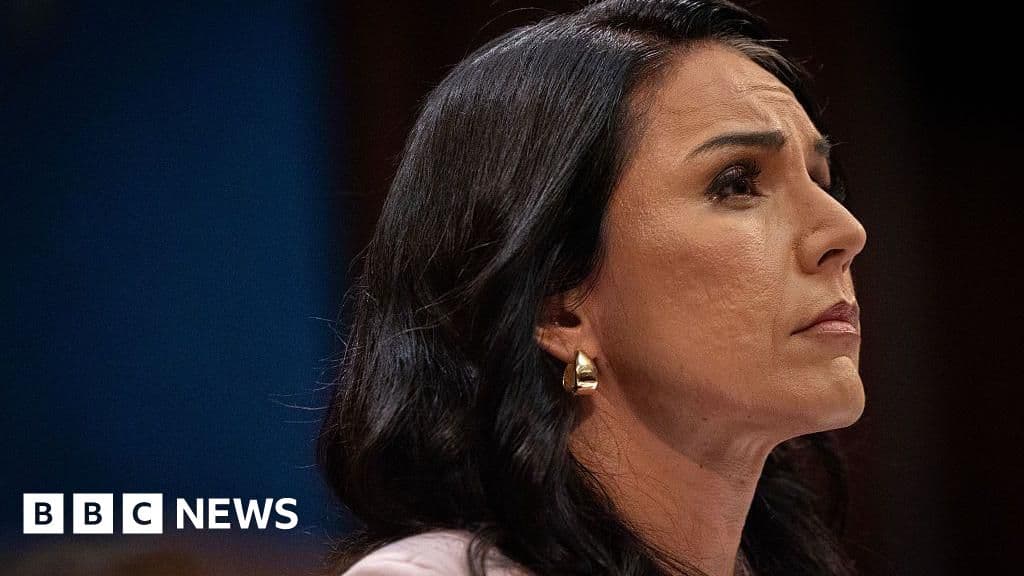
Tulsi Gabbard resigns as US director of national intelligence, prioritizing family amid husband's cancer diagnosis. What does this mean for US intelligence?
GlipzoIn a significant development within the Trump administration, Tulsi Gabbard has announced her resignation as the US director of national intelligence. The decision comes in light of her husband’s recent diagnosis of bone cancer, compelling her to prioritize family over her demanding position. Gabbard expressed her sentiments in a heartfelt resignation letter, stating, "His strength and love have sustained me through every challenge. I cannot in good conscience ask him to face this fight alone while I continue in this demanding and time-consuming position."
President Donald Trump publicly acknowledged Gabbard's contributions, commenting on social media, "She has done an incredible job, and we will miss her." Her resignation will take effect on June 30, with Aaron Lukas, the principal deputy director, set to take over as acting director.
Gabbard’s resignation marks her exit from a key role she assumed just months after Trump returned to the White House in 2025. Known for her strong stance against foreign military interventions, she has been a polarizing figure, particularly after US military actions against Iran and other international incidents.
In her resignation letter, Gabbard mentioned that her husband, Abraham, is facing considerable challenges in the upcoming weeks, further emphasizing the personal nature of her decision. Trump echoed her sentiments, stating, "She rightfully wants to be with him, bringing him back to good health as they currently fight a tough battle together. I have no doubt he will soon be better than ever."
This marks the fourth departure of a Cabinet member under the Trump administration this year, following the exits of Lori Chavez-DeRemer as labor secretary, Kristi Noem as Homeland Security Secretary, and Pam Bondi as Attorney General. Gabbard’s resignation could have significant implications for the intelligence community, particularly in light of her previous support for Trump's policies in the Middle East.
Throughout her tenure, Gabbard has often found herself at odds with both her administration and members of Congress regarding foreign policy, especially concerning Iran's nuclear capabilities. During a congressional hearing in March, she carefully sidestepped questions about the administration's strategies, which led to scrutiny from fellow Democrats who felt there were inconsistencies in the information being presented.
Gabbard’s political trajectory is notable; she was first elected to the Hawaii Legislature at just 21 years old and later became the first Hindu member of the House of Representatives. Her journey took her from the Democratic Party to the Republican side, culminating in her endorsement of Trump during the 2024 presidential campaign.
Gabbard’s resignation is not only a personal crisis but a political one as well. As a prominent figure in intelligence, her departure raises questions about the stability and direction of US intelligence policies under the Trump administration. Her anti-interventionist stance has garnered both support and criticism, and her absence may shift the dynamics within the intelligence community.
Her resignation also reflects the growing strain within the Trump administration, which has seen several high-profile exits this year. This trend could signal a potential reshaping of Trump’s inner circle as he gears up for the upcoming election cycle.
With Gabbard stepping down, the focus will likely shift to Aaron Lukas as he takes on the role of acting director. As the US continues to navigate complex international relationships and security challenges, Lukas’s leadership will be critical in maintaining continuity and ensuring that the intelligence community remains effective.
As for Gabbard, her future remains uncertain. Having made waves in her political career, she has the potential to continue influencing political discourse, particularly on issues of foreign policy and civil liberties. Her previous work in Congress and her role as a political commentator on Fox News might pave the way for further contributions in public life, possibly even in future political endeavors.
In conclusion, the implications of Gabbard’s resignation extend beyond her personal circumstances. It could reshape the future of US intelligence strategies and highlight the ongoing challenges faced by the Trump administration as it approaches a pivotal election period. As her husband battles health issues, Gabbard’s next steps will be closely watched by supporters and critics alike.

Tensions soar as the US and Iran engage in air strikes near the Strait of Hormuz, raising concerns over global oil supply and regional stability.
BBC World
Trump's international interventions face serious stalemates. What will this mean for U.S. foreign policy? Explore the critical challenges ahead.
Indian Express
Tehran denies resignation of President Masoud Pezeshkian amid claims of IRGC influence. What does this mean for Iran's political stability? Click to learn more!
Indian Express