
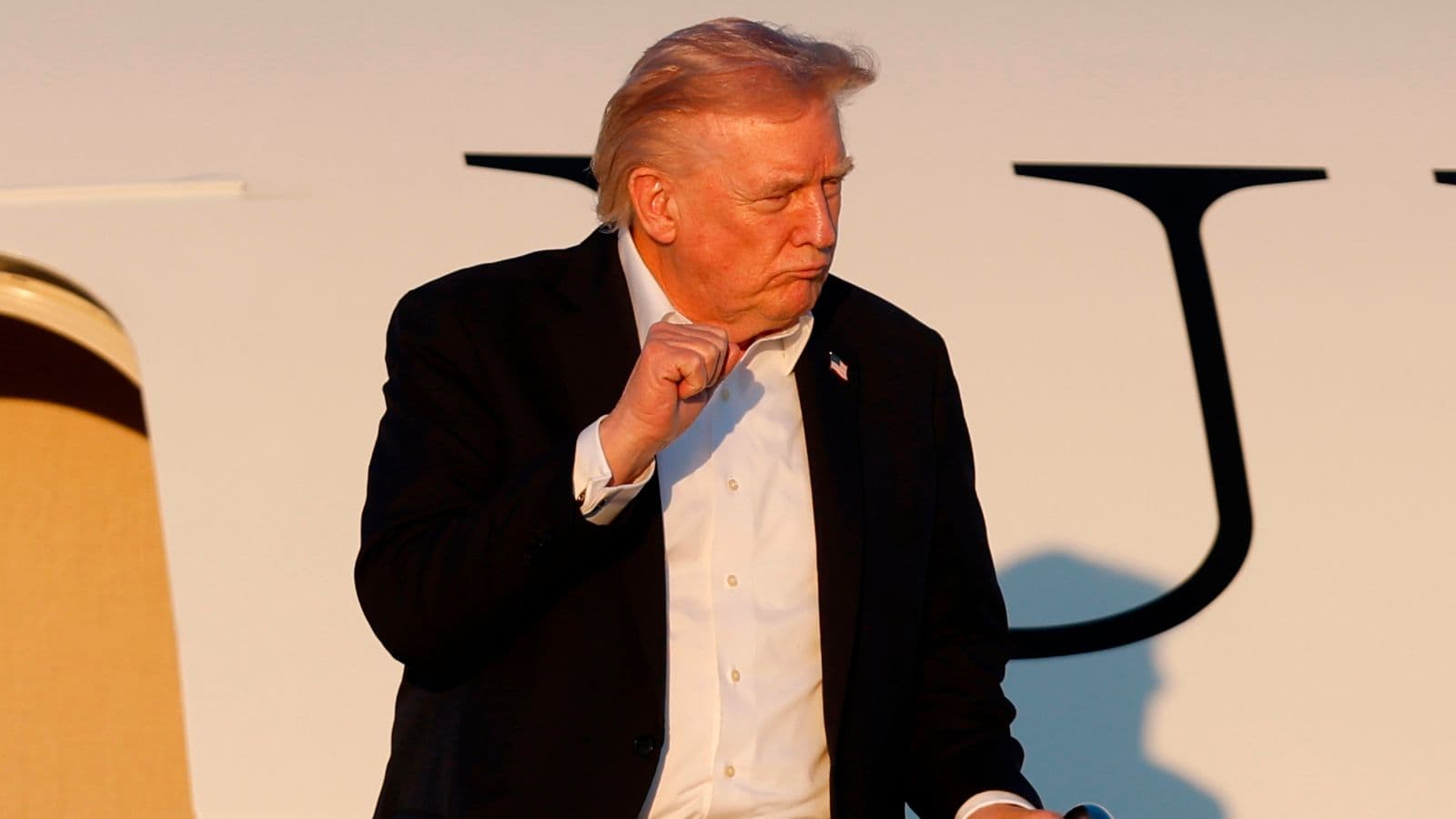
Image: Indian Express
Trump warns Iran of dire consequences if American ships are targeted, heightening tensions in the strategic Strait of Hormuz. What’s next?
GlipzoIn a dramatic escalation of rhetoric, President Donald Trump issued a stark warning to Iran, stating that the country risks being "blown off the face of the earth" if it poses a threat to American naval vessels in the Strait of Hormuz. This warning comes in the wake of a significant operation launched by the US on Monday to assist over 800 commercial ships trapped in the Gulf due to ongoing tensions and blockades in this vital shipping route.
During an interview with Fox News, President Trump emphasized that the United States is prepared to respond decisively to any aggression against its naval operations in the region. He proclaimed, "We have more weapons and ammunition at a much higher grade than we had before. We can use all of that stuff, and we will, if we need it."
This operation is critical, as nearly 20,000 crew members are currently stranded, unable to navigate through the Strait of Hormuz, which is a crucial passage for global oil supply. According to US Central Command, approximately 50 commercial vessels have been redirected to ensure their safety during this operation.
In response to the US's militaristic posturing, Iranian officials have issued their own threats, vowing to strike any American naval vessel that approaches the strait. Iran's military has controversially claimed to have targeted a US warship with missiles, although these assertions have not been verified by US authorities. The situation remains tense, with both nations actively exchanging warnings and military maneuvers.
The US has reported that it has taken down multiple Iranian boats and intercepted missiles and drones. Conversely, Iran has denied these claims, further complicating the narrative surrounding the ongoing conflict.
The backdrop to these heightened tensions includes a ceasefire that was intended to ease hostilities in the region. While it has curbed direct attacks, the ceasefire has not led to the reopening of the Strait of Hormuz, raising concerns about the possibility of further escalation in military confrontations.
The Strait of Hormuz is a strategic maritime chokepoint, with nearly one-third of the world’s oil supply passing through it. This makes the strait not only vital for regional economies but also for global energy markets. Any disruption in this area could have catastrophic consequences for international trade and energy prices.
Trump's earlier statements, suggesting that a "whole civilisation will die" if Iran does not comply with US demands regarding the strait, have drawn significant criticism. Analysts point out that such rhetoric could heighten tensions rather than promote diplomatic resolutions.
As the US military continues its operations in the Gulf, the global community watches closely. The stakes are high, and the potential for conflict looms large.
The recent developments in the Strait of Hormuz have significant implications not only for Iran and the US but also for global politics and security. As both nations continue to posture militarily, the potential for miscalculation grows, raising fears of an unintended conflict.
Key questions remain: - Will the US maintain its naval presence in the region, and how will Iran respond? - What diplomatic measures could be taken to prevent further escalation? - How will global oil markets react to continued tensions and potential disruptions?
In summary, the standoff between the US and Iran in the Strait of Hormuz highlights the fragile balance of power in the region. The international community must remain vigilant, as any misstep could lead to significant ramifications.
As we look ahead, the focus will be on how both nations navigate this precarious situation. Will there be room for diplomacy, or are we on the brink of a larger military confrontation? Only time will tell, but the stakes have never been higher.

Tensions soar as the US and Iran engage in air strikes near the Strait of Hormuz, raising concerns over global oil supply and regional stability.
BBC World
Trump's international interventions face serious stalemates. What will this mean for U.S. foreign policy? Explore the critical challenges ahead.
Indian Express
Tehran denies resignation of President Masoud Pezeshkian amid claims of IRGC influence. What does this mean for Iran's political stability? Click to learn more!
Indian Express