
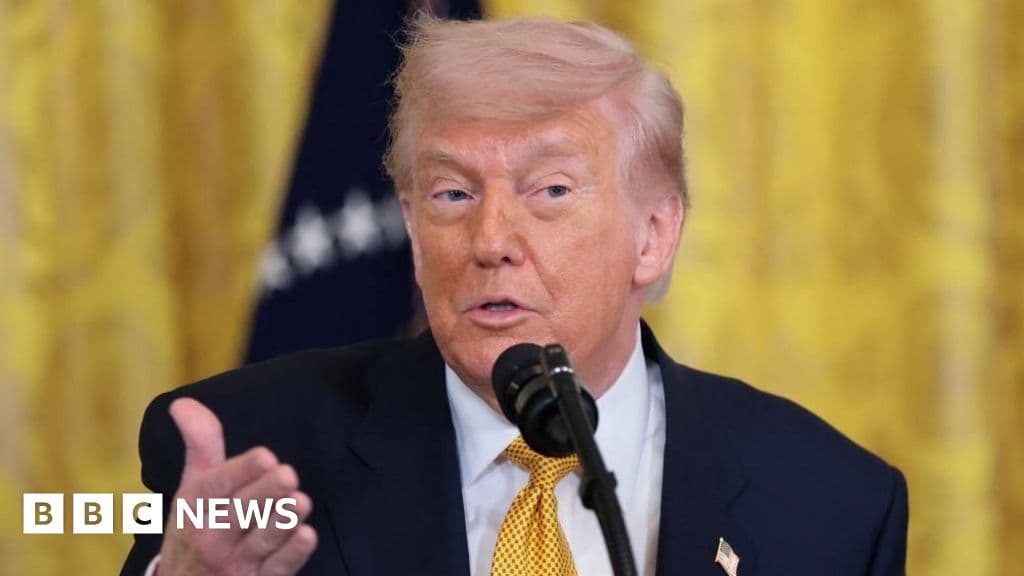
Image: BBC World
Trump's Iran deal efforts fluctuate, posing risks and opportunities. What lies ahead for U.S.-Iran negotiations? Discover insights and expert analyses!
GlipzoIn a surprising turn of events, Donald Trump recently announced a pause on the controversial initiative known as Project Freedom, aimed at ensuring safe passage for vessels through the Strait of Hormuz. This strategic pivot came after Trump claimed that the United States and Iran were making headway towards a "Complete and Final Agreement" to resolve ongoing tensions in the Gulf region. The initial announcement seemed to calm the oil markets and raised hopes for a significant diplomatic breakthrough that could stabilize the region.
However, optimism surrounding the possibility of a deal was met with a dose of sobering realism from Trump himself. On Wednesday, Iranian officials confirmed that they were evaluating a new proposal from Washington, as reports surfaced from unnamed U.S. officials indicating that a one-page memorandum to conclude hostilities was within reach. A source involved in mediation efforts in Pakistan expressed confidence, stating: "We will close this very soon. We are getting close."
Despite the promising developments, Trump’s tone shifted dramatically just hours after his initial announcement. In a post on Truth Social, he announced the suspension of Project Freedom to allow for potential finalization of the agreement, only to later characterize any Iran deal as a "big assumption." He warned that if negotiations faltered, military actions would escalate significantly, hinting at a return to "bombing at a much higher level and intensity than it was before."
This stark warning came in the wake of US Secretary of State Marco Rubio declaring that Operation Epic Fury, a series of military strikes on Iranian targets, had concluded. In a telephone interview with PBS, Trump showed cautious optimism regarding the Iran deal while acknowledging the historical difficulties in reaching agreements with Tehran. “I felt that way before with them,” he remarked, adding, “So we'll see what happens.”
Amid the unfolding situation, Trump expressed reluctance about sending US envoys for further negotiations in Islamabad. Reports from Axios and Reuters indicated that Washington was moving closer to a 14-point memorandum aimed at de-escalating tensions, lifting sanctions, and addressing Iran’s nuclear ambitions. However, skepticism was prevalent among U.S. officials regarding the feasibility of such a deal, particularly concerning the internal dynamics of Iran's leadership.
Ebrahim Rezaei, an Iranian parliamentarian, criticized the proposed points as a mere "wish list" from the United States. He asserted that Iran is prepared to take military action if the necessary concessions are not met. This highlights the precarious nature of the negotiations, with both sides seemingly leveraging threats alongside diplomatic overtures.
Foreign policy analysts have cautioned against excessive optimism, noting that the abrupt pause of Project Freedom indicates that the administration believes a deal could be attainable yet is aware of the potential pitfalls. Grant Rumley, a former Middle East policy advisor, reflected on the situation, stating, "Clearly, the administration thinks a deal is possible... But we have been here before, and we've seen negotiations collapse at the last minute for a variety of reasons."
Trump has frequently hinted at imminent agreements since the ceasefire announcement on April 7. Just ten days later, he claimed that Iran had "agreed to everything," a statement that Iranian officials have firmly denied. In the White House, he reiterated that Iran is eager to negotiate but warned that the final outcome remains uncertain.
Even if a one-page memorandum is eventually accepted, experts like Rumley emphasize that it is "highly unlikely" that such an agreement would resolve all underlying issues, especially given the complexities surrounding Iran's nuclear program. Historical context reveals that during the Obama administration, it took over 20 months to negotiate the finer details of a nuclear deal.
Shipping experts have also noted that Project Freedom, launched recently, had limited impact initially, with only a handful of ships navigating the strait. Ali Vaez, the Iran project director at the International Crisis Group, stated that the Iranian response to the evolving situation remains critical. The interplay of diplomatic efforts and military posturing will be crucial in determining the future of U.S.-Iran relations.
The ongoing developments between the U.S. and Iran are significant not just for the two nations but also for global stability, especially in oil markets. A successful deal could reduce tensions in a historically volatile region, while failure could lead to renewed conflict, impacting international relations and economic conditions worldwide. As negotiations evolve, close attention to both diplomatic communications and military actions will be essential in understanding the trajectory of this critical geopolitical issue.
As the situation unfolds, several factors will be crucial to watch: - The response from Iran regarding the proposed memorandum and any concessions they may seek. - The internal dynamics within the Iranian leadership and how different factions might influence negotiations. - The reaction from U.S. officials and military leaders to Trump's fluctuating rhetoric. - Developments in oil markets and international reactions to any escalations in conflict or progress in diplomacy. - Future public statements from both Trump and Iranian officials, as these will likely shape the narrative and direction of negotiations.
In conclusion, while the possibility of an Iran deal presents a glimmer of hope, significant hurdles remain. The delicate balance between diplomacy and military readiness will shape the future of U.S.-Iran relations, making it imperative to stay informed as this critical situation develops.

Tensions soar as the US and Iran engage in air strikes near the Strait of Hormuz, raising concerns over global oil supply and regional stability.
BBC World
Trump's international interventions face serious stalemates. What will this mean for U.S. foreign policy? Explore the critical challenges ahead.
Indian Express
Tehran denies resignation of President Masoud Pezeshkian amid claims of IRGC influence. What does this mean for Iran's political stability? Click to learn more!
Indian Express