
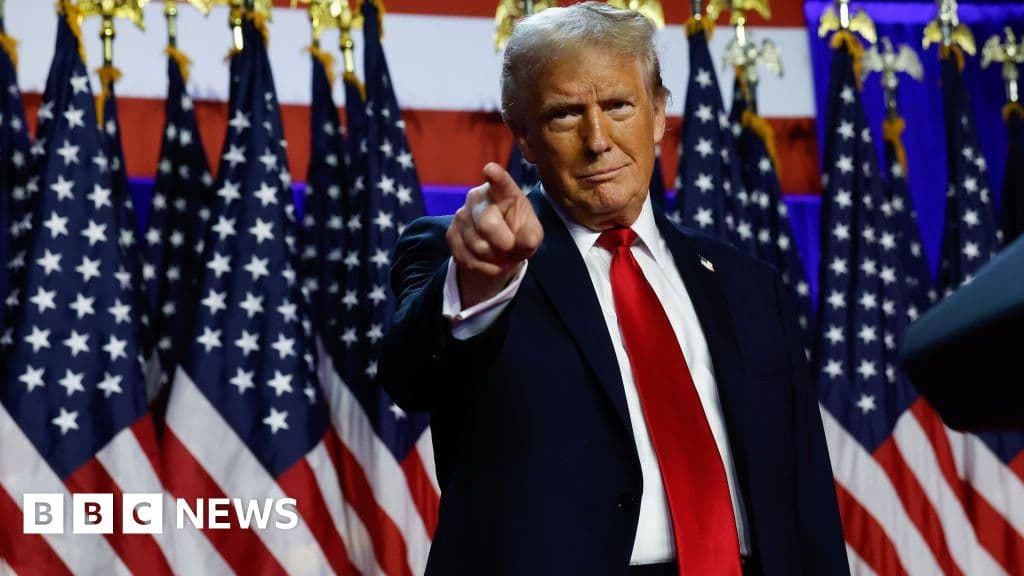
Image: BBC Business
Can Trump's economic growth narrative survive rising living costs? Discover key insights as midterms approach amidst a global energy crisis.
GlipzoFormer President Donald Trump once predicted a swift end to the US-Israeli conflict in Iran, projecting it would last no more than six weeks. However, as the situation escalates, the war has now persisted for over three months, significantly affecting global economic conditions. The ongoing conflict has sparked an energy crisis reminiscent of the oil shocks of the 1970s, leading to increased prices for essential goods, from fuel to groceries.
In the midst of this turmoil, new economic data released this week suggests a resilient economy, with the first quarter of 2026 showing a 2% annualized growth rate. This positive indicator comes at a critical time for Trump and the Republican Party, as they prepare for the upcoming midterm elections in November. With the war showing no immediate signs of abating, Trump is likely to leverage these growth figures to bolster his economic policies as beneficial for the nation.
Despite the pressures on consumers due to US tariffs and the fresh energy shock caused by the Iran conflict, recent reports indicate that consumer spending has grown by 1.6% on an annualized basis. Economists suggest that while consumer spending is cooling, significant investments by tech companies in areas like artificial intelligence (AI) have become the principal drivers of economic growth.
James Knightley, chief international economist at ING, noted that as consumer expenditures wane, the technology sector's investments are increasingly pivotal in sustaining growth. This trend is critical for the Republicans, as they adopt the familiar mantra: "It's the economy, stupid," in their campaign narratives.
While growth figures are encouraging, the reality for everyday Americans is far more complex. Many voters are likely to base their electoral decisions on immediate financial pressures, particularly the rising cost of living. Trump's military actions in Iran, coupled with the closure of the Strait of Hormuz, have dramatically increased oil prices. Following the outbreak of hostilities, Brent crude oil prices surged to a four-year high of $126 per barrel, only to retract to approximately $111 in recent days. For context, prices were around $73 before the conflict escalated in late February.
Consequently, by the end of April, the price of gasoline shot up to $4.30 per gallon, up from less than $3 just two months prior. This spike has fueled inflation, with March's year-over-year inflation rate reaching 3.3%, a notable increase from February's 2.4%.
The implications of rising inflation due to the Iran war have dashed hopes for an imminent interest rate cut by the Federal Reserve. On Wednesday, the central bank maintained its base rate at 3.5% to 3.75%, deferring expectations for a series of cuts that many had anticipated prior to the onset of the conflict. Higher oil prices and the expectation of prolonged US sanctions on Iranian ports have led analysts like Samuel Tombs, chief economist at Pantheon Macroeconomics, to suggest that any rate cuts may be pushed back until 2027.
The average interest rate for a 30-year mortgage has already climbed from 5.98% to 6.3% since the conflict began, complicating the financial landscape for American homeowners.
Despite the overarching challenges stemming from the war, investors have experienced a relatively positive turnaround in the stock market. Major US indices, including the S&P 500, Dow Jones Industrial Average, and Nasdaq Composite, have rebounded significantly since the initial turbulence following the conflict's outbreak.
These gains are promising for investors and those with retirement funds tied to the stock market, such as 401(k) plans.
As the Republican Party prepares for the midterm elections, the central question remains: will economic growth be enough to offset the voters' concerns about rising living costs? With the Republicans potentially facing losses in both the House and Senate, how Trump navigates the narrative surrounding the economy will be crucial.
In the months leading up to the elections, the interplay between economic indicators and the political landscape will be closely monitored. Trump's ability to emphasize economic growth, despite soaring inflation and energy prices, will be put to the test as voters head to the polls.
The outcome of the upcoming midterm elections could significantly influence future economic policies in the US. Understanding these dynamics is essential as they will shape the economic recovery trajectory and the political landscape moving forward.

Tensions soar as the US and Iran engage in air strikes near the Strait of Hormuz, raising concerns over global oil supply and regional stability.
BBC World
Trump's international interventions face serious stalemates. What will this mean for U.S. foreign policy? Explore the critical challenges ahead.
Indian Express
Tehran denies resignation of President Masoud Pezeshkian amid claims of IRGC influence. What does this mean for Iran's political stability? Click to learn more!
Indian Express