
Image: BBC World
Trump's controversial comments on dyslexia ignite debate about leadership and learning disabilities. What does this mean for the future of politics?
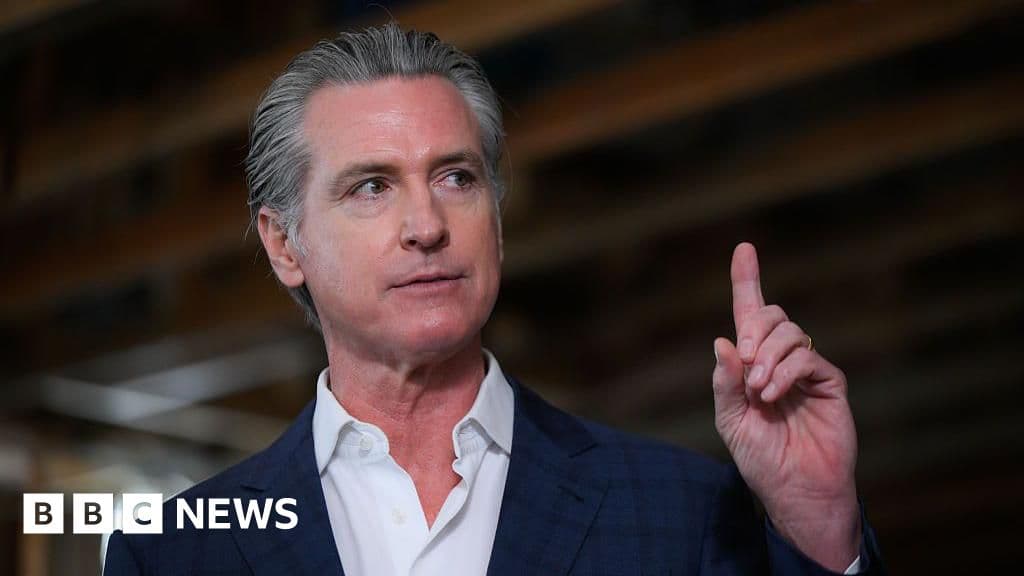
GlipzoIn a provocative statement that has stirred significant backlash, Donald Trump recently claimed that individuals with learning disabilities should not hold the office of the president. This comment came as he targeted California Governor Gavin Newsom, who has openly acknowledged his dyslexia. Trump's remarks, made during a press briefing in the Oval Office, have raised questions about the intersection of health, intelligence, and leadership qualifications.
Trump's critique was direct and harsh. He characterized Newsom, a potential candidate for the 2024 Democratic presidential nomination, as “dumb,” emphasizing his belief that a president's mental acuity should be unimpeachable. “Honestly, I’m all for people with learning disabilities, but not for my president,” Trump stated, indicating a narrow view of leadership capabilities. This comment, while controversial, highlights a broader societal stigma around dyslexia and similar conditions.
The National Center for Learning Disabilities reacted strongly to Trump’s assertions, expressing their dismay and condemning his remarks. They emphasized that dyslexia, which affects approximately 15-20% of the U.S. population, does not correlate with a person's intelligence or leadership potential.
Dyslexia is a learning disability that affects how individuals process written language, making reading and writing challenging. It is not indicative of a person’s overall cognitive abilities or potential for success. In fact, many prominent figures, including past U.S. presidents such as George Washington, John F. Kennedy, and Woodrow Wilson, are believed to have had dyslexia.
Trump’s insistence that dyslexia disqualifies someone from the presidency is not only a misrepresentation of the condition but also perpetuates harmful stereotypes about learning disabilities. It suggests that those who face such challenges are inherently less capable, a notion that numerous studies and examples have disproven.
The exchange between Trump and Newsom escalated as the latter responded to Trump's comments on social media, asserting, “NO THANK YOU, WE BELIEVE IN FREE ELECTIONS!” This retort highlights not only Newsom's awareness of the political implications of Trump’s mockery but also his determination to stand up against such characterizations.
During a recent event in Atlanta, Newsom shared his personal experiences with dyslexia, explaining, “I’ve never read a speech because I cannot read a speech.” His candid confessions resonated with many who face similar challenges, reinforcing the idea that learning disabilities do not define a person's worth or capabilities.
The implications of Trump's comments extend beyond personal insults. They touch on societal attitudes toward learning disabilities and the qualifications necessary for leadership. The National Center for Learning Disabilities emphasized that individuals with learning disabilities can and do occupy high positions in government, dispelling the myths that Trump’s comments seem to perpetuate.
Jackie Rodriguez, the chief executive of the center, remarked, “Dyslexia does not impair a person's intelligence, judgement, or ability to lead.” This statement is a crucial reminder that effective leadership comes in many forms and that diversity of experience—including overcoming learning challenges—can enrich leadership in profound ways.
As the political landscape heats up with the approach of the 2024 elections, Trump's remarks may have far-reaching consequences for his campaign and for the broader discourse surrounding disabilities in leadership. Observers will be watching closely to see how this exchange impacts both candidates’ support bases and the attitudes towards learning disabilities within the electorate.
Going forward, it will be essential to foster a more nuanced understanding of learning disabilities in political discourse. Advocates for people with disabilities are likely to continue pushing back against stigmatizing narratives, emphasizing that the ability to lead is not determined by one’s learning style but by one’s vision and commitment to serve.
In the wake of these comments, we may see more conversations about inclusivity in leadership roles, and perhaps a greater appreciation for the diverse talents that individuals with learning disabilities bring to the table. As the political dialogue evolves, the focus should ideally shift towards a more empathetic and informed understanding of how various experiences can contribute to effective governance.
Trump's remarks serve as a stark reminder of the stigma surrounding learning disabilities and the need for greater awareness and acceptance in all levels of society. It is imperative that we encourage open discussions about the capabilities of individuals with learning disabilities, promoting a culture that values diversity in all its forms.
As the narrative unfolds, it will be crucial for both political figures and the public to challenge outdated perceptions and advocate for a more inclusive approach to leadership. The future of political discourse may depend on it.

Tensions soar as the US and Iran engage in air strikes near the Strait of Hormuz, raising concerns over global oil supply and regional stability.
BBC World
Trump's international interventions face serious stalemates. What will this mean for U.S. foreign policy? Explore the critical challenges ahead.
Indian Express
Tehran denies resignation of President Masoud Pezeshkian amid claims of IRGC influence. What does this mean for Iran's political stability? Click to learn more!
Indian Express