
Image: BBC World
Trump's visit to China marks a potential reset in U.S.-China relations. What challenges lie ahead? Discover the key issues at play.
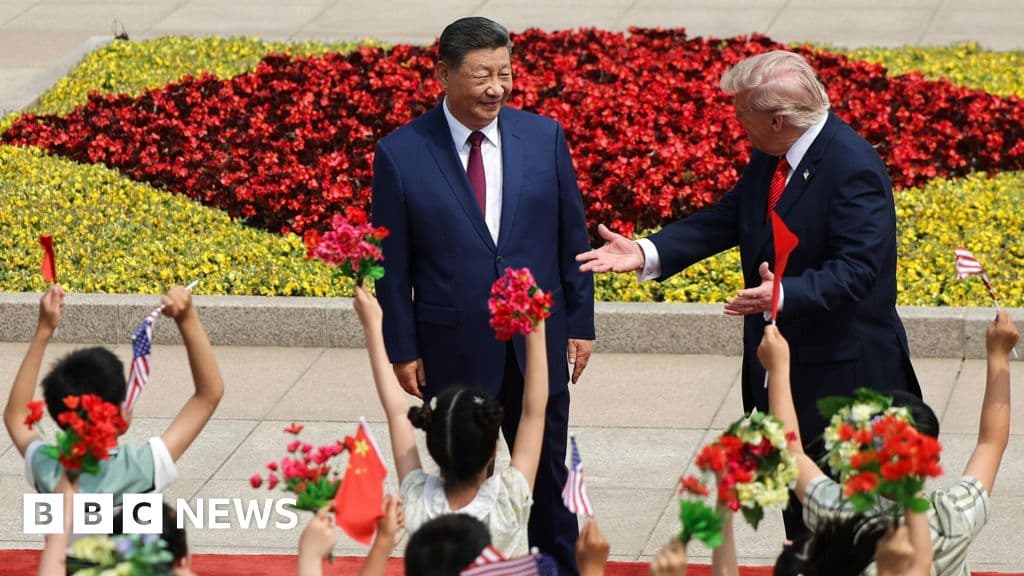
GlipzoIn a dramatic display of diplomacy, Xi Jinping rolled out the red carpet for Donald Trump on his recent visit to China, marking a potential turning point in the often strained relations between the two superpowers. The grand welcome ceremony unfolded at the Great Hall of the People, featuring a military honor guard, a gun salute, and a performance of the U.S. national anthem. Children waving flags from both nations cheered as Trump arrived, setting a tone of camaraderie.
As the two leaders met, Trump engaged in a gesture of warmth, patting Xi on the arm while expressing his admiration. "You're a great leader. I say it to everybody," Trump proclaimed in what appeared to be an off-the-cuff remark, showcasing a stark contrast to his previous rhetoric about China. Later, he extolled the beauty of China during a visit to the Temple of Heaven and referred to the discussions as a "cherished opportunity" at a lavish banquet.
This welcoming ceremony is notably significant, considering Trump built much of his political identity on a platform of strong criticism against China. During his 2016 campaign, he famously declared, "We can't continue to allow China to rape our country, and that's what they're doing." By 2020, his stance had not softened, as he accused China of having "ripped off the United States like no one has ever done before" and labeled the COVID-19 pandemic the "Chinese virus."
Following years of escalating trade tensions, including tariffs exceeding 100%, the question looms large: will this visit lead to a lasting truce? Key issues on the agenda include not only trade relations but also the delicate matters surrounding Iran and Taiwan. Can China assist in mediating a deal relating to Iran? And how will tensions over Taiwan, a self-governing ally of the U.S. that China claims as its own, be addressed?
While the spectacle was designed to impress Trump and the 30 CEOs in his entourage, it also served as a demonstration of China's growing strength on the world stage. Xi's comments during the summit hinted at the ongoing challenges related to Taiwan, illustrating that while the welcome was warm, significant issues remain unresolved.
John Delury, a senior fellow at the Asia Society, remarked, "We are witnessing a historical change." He cautioned against overestimating the immediate impact of this summit but acknowledged that China's rise as a global power is increasingly evident. "Beijing is now the second world capital," he asserted, highlighting the shifting dynamics of global leadership.
As President Xi aims to position himself as a steady global leader compared to Trump's unpredictable nature, many world leaders from allied nations like Canada, the UK, and Germany have shown interest in collaborating with China. Since Trump’s first term, China's trade has expanded significantly, ready to counter the tariffs Trump promised.
Last year, in response to U.S. tariffs, China enacted its own retaliatory measures, including restricting exports of rare earth minerals, which are vital for advanced manufacturing. This back-and-forth ultimately led to a reduction in tariffs as both nations sought a more stable trade relationship.
Trump's visit signals a potential shift in power dynamics, with China appearing to hold a favorable position amidst ongoing U.S. challenges, including the conflict in Iran. The Strait of Hormuz, a crucial shipping corridor, has been a point of contention, and Trump is expected to seek Xi’s assistance in reopening this vital route.
While issues surrounding human rights and relationships with countries like Russia and North Korea continue to cast a shadow over China's global image, they may take a backseat during this high-profile summit. The implications of Trump’s engagement with Xi could indicate a recalibration of international relations, where the balance of power may increasingly tilt in favor of China.
Looking ahead, the key question remains: how will this diplomatic engagement evolve? With the fragile peace established post-trade war, both countries have a vested interest in avoiding further conflict. However, the underlying tensions regarding Taiwan and Iran could pose significant obstacles.
As the world watches, the outcomes of this visit could reshape not only U.S.-China relations but also global geopolitics as a whole. Observers will be keen to see how both leaders navigate these challenges in the coming days, and whether any concrete agreements emerge from the fanfare of this summit. This moment may indeed mark a pivotal chapter in the ongoing saga of U.S.-China relations, setting the stage for future engagements and potential conflicts.
Why It Matters: The results of Trump’s visit could redefine the landscape of international diplomacy, impacting global trade, security alliances, and economic strategies in the years to come.

Tensions soar as the US and Iran engage in air strikes near the Strait of Hormuz, raising concerns over global oil supply and regional stability.
BBC World
Trump's international interventions face serious stalemates. What will this mean for U.S. foreign policy? Explore the critical challenges ahead.
Indian Express
Tehran denies resignation of President Masoud Pezeshkian amid claims of IRGC influence. What does this mean for Iran's political stability? Click to learn more!
Indian Express