
Image: BBC World
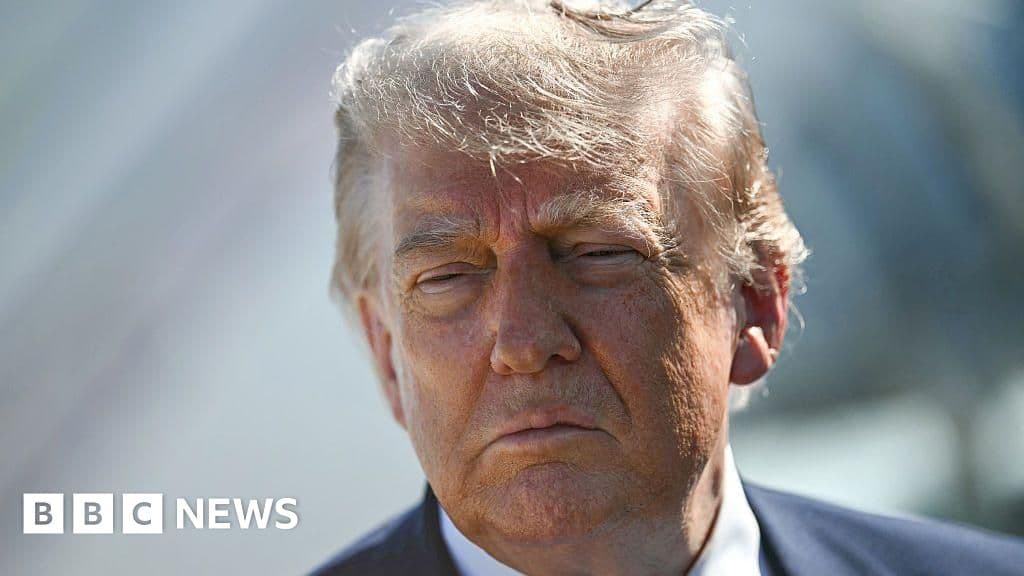
Trump urges negotiators to take time on Iran deal, emphasizing caution as discussions progress. What might this mean for U.S.-Iran relations? Click to find out!
GlipzoIn a significant development regarding U.S.-Iran relations, President Donald Trump has publicly advised negotiators to take their time and not rush into a deal. This instruction comes amidst reports that an agreement could be on the horizon. The potential deal under consideration reportedly includes a 60-day ceasefire extension, the reopening of the Strait of Hormuz, and further discussions about Iran's nuclear program.
In a recent social media update, Trump stated that while constructive talks are ongoing, both sides should ensure that they do not overlook any details. He emphasized, "I have informed my representatives not to rush into a deal, as time is on our side. Both sides must take their time and get it right—there can be no mistakes!"
According to various reports, the proposed agreement has made substantial progress, although there remain one or two points of contention. Iranian officials have echoed this sentiment, noting that while talks are advancing, reaching a consensus on critical issues is still a challenge. The Iranian Foreign Ministry spokesperson, Esmail Baghaei, commented that progress does not guarantee agreements on all pivotal matters.
The discussions have sparked a divide within the Republican Party. Some lawmakers argue that the proposed agreement could be too lenient towards Iran, raising concerns about national security. Notable figures like Senator Ted Cruz have voiced strong opposition, labeling it a "disastrous mistake." Conversely, Representative Mike Lawler, a member of the House Foreign Affairs Committee, praised the administration's efforts to bring Iran to the negotiation table, highlighting a shift in the regime's stance.
The backdrop of these negotiations includes escalating tensions in the Middle East. On February 28, the U.S. and Israel executed extensive strikes against Iran, triggering a series of retaliatory attacks from Iran targeting Israel and U.S.-aligned nations in the Gulf. In light of this conflict, a ceasefire established in April has primarily held, despite sporadic clashes.
In his continued commentary on the situation, Trump reiterated that Iran must unequivocally understand that pursuing a nuclear weapon is unacceptable. This position aligns closely with the views of Israel and other Western allies, who harbor suspicions that Iran's nuclear ambitions extend beyond peaceful applications.
Reports indicate that part of the ongoing negotiations may involve Iran agreeing to surrender its stockpile of highly-enriched uranium. Current estimates suggest that Iran possesses about 440 kg (970 lbs) of this material, which could potentially be weaponized if further enriched. The implications of such a deal would be monumental, as it would address a significant concern regarding nuclear proliferation in the region.
Moreover, Trump confirmed that the U.S. blockade on Iranian ports, initiated in early April, would remain intact until a formal agreement is reached and ratified. This blockade is a strategic move aimed at applying economic pressure on Tehran to comply with U.S. demands.
The Strait of Hormuz continues to play a pivotal role in this geopolitical drama, as it is a crucial maritime route for global oil and gas supplies. Iran maintains control over this strait, and its actions have resulted in soaring oil prices worldwide. U.S. Secretary of State Marco Rubio remarked that significant yet preliminary progress has been made in negotiations concerning Hormuz, hinting at a possible scenario where the strait could be reopened without tolls, facilitating smoother international trade.
Amidst these high-stakes discussions, Pakistan's Deputy Prime Minister Ishaq Dar, who has been facilitating talks, expressed optimism about recent developments. He noted that the current negotiations present grounds for hope that a beneficial conclusion is within reach.
As the dialogue continues, attention remains focused on whether both sides can overcome their differences and finalize an agreement that addresses the myriad concerns on the table.
The road ahead for U.S.-Iran relations is fraught with challenges, and the outcome of these negotiations could significantly influence regional stability. Observers are keenly watching to see if the talks will yield a comprehensive agreement that can effectively curb Iran’s nuclear ambitions while ensuring security in the region.
As the situation evolves, the international community will be looking for signs of progress and any potential shifts in strategy from both the U.S. and Iran. With tensions running high, the next steps taken in these negotiations could have far-reaching consequences, not just for the involved parties, but for global geopolitics as a whole.

Tensions soar as the US and Iran engage in air strikes near the Strait of Hormuz, raising concerns over global oil supply and regional stability.
BBC World
Trump's international interventions face serious stalemates. What will this mean for U.S. foreign policy? Explore the critical challenges ahead.
Indian Express
Tehran denies resignation of President Masoud Pezeshkian amid claims of IRGC influence. What does this mean for Iran's political stability? Click to learn more!
Indian Express