
Image: BBC World
Trump's return to China reveals a stronger, assertive nation. Explore the shifting dynamics and what to expect from this pivotal meeting.
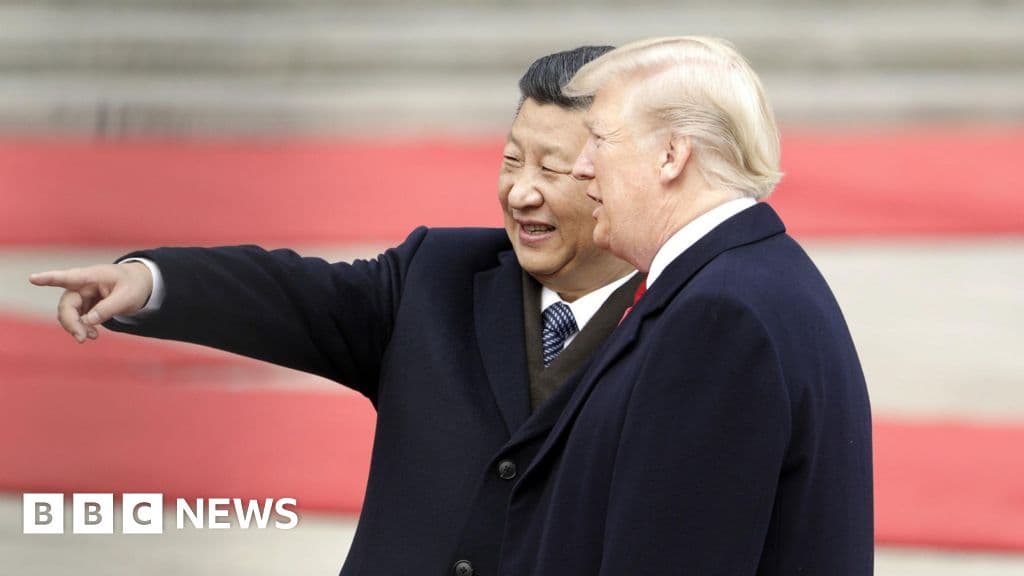
GlipzoThis week, Donald Trump finds himself back in Beijing, a decade after his previous visit, where he was treated to an unparalleled display of diplomatic hospitality. In 2017, he dined in the illustrious Forbidden City, a rare honor for any U.S. president. This time, however, the stakes are higher as Trump meets with Xi Jinping, China’s leader, in a landscape transformed by years of economic and technological advancements.
The upcoming meetings promise to be as grand as before, with an agenda filled with complex issues such as trade, technology, Iran, and Taiwan. As Trump steps back into the Chinese capital, he will witness a nation that has emerged as a formidable global competitor, significantly reshaping its position on the world stage.
Since Trump’s last visit, Xi Jinping has embarked on an ambitious journey during his unprecedented third term, diligently pushing forward initiatives centered around renewable energy, robotics, and artificial intelligence. This shift highlights China’s commitment to harnessing innovative technologies to drive economic growth.
As Trump and his team engage with their Chinese counterparts, they will need to look beyond the grand palaces and into the rapidly evolving regions that symbolize China’s ambition. The stark contrast between 2017 and now is evident; where once China sought to present itself as an equal to the United States, it now embodies a posture of confidence and assertiveness.
Chongqing, in particular, serves as a prime example of this transformation. Once a gritty industrial center, it has undergone a renaissance as a tech-savvy urban hub. The city’s evolution is marked by significant state funding, which has turned it into a vibrant symbol of a modern China eager to showcase its advancements.
A local resident expressed, “China has been making forward-looking strategies for decades.” This sentiment reflects a growing awareness among the Chinese populace regarding their country's strategic positioning in the world. As they embrace new technologies, China is not only competing with the U.S. but is also rebranding itself to attract global attention.
Trump's unpredictable leadership style has made him a unique figure in the eyes of many in China. Known as Chuan Jianguo, or “Trump the nation builder,” he is viewed by some as inadvertently strengthening China's global influence through his policies. A tourist from Chongqing remarked, “He should know that we share the same world,” emphasizing the need for cooperation rather than competition.
As the U.S. acknowledges China as a “near-peer”, experts like Ali Wyne from the International Crisis Group underline the significant shift in dynamics. “Beijing is arguably the most powerful competitor that the United States has confronted in its history,” he stated, underscoring the seriousness of the challenges that lie ahead for both nations.
As Trump engages with Xi this week, the backdrop of growing tensions across various fronts will loom large. The discussions around trade policies, technological competition, and geopolitical strategies will likely shape the future of U.S.-China relations.
The outcomes of this visit could significantly impact not only bilateral relations but also global stability. As both nations grapple with their roles on the world stage, the need for dialogue and understanding becomes increasingly critical. As Trump returns to a more assertive China, the world watches closely to see how these two global giants will collaborate—or clash—in the years to come.
In conclusion, this pivotal moment in U.S.-China relations marks a significant juncture. The emphasis on cooperation, rather than confrontation, might define the future landscape of international politics. As the two leaders meet in Beijing, the implications of their discussions will resonate far beyond their borders, shaping the global order for years ahead.

Tensions soar as the US and Iran engage in air strikes near the Strait of Hormuz, raising concerns over global oil supply and regional stability.
BBC World
Trump's international interventions face serious stalemates. What will this mean for U.S. foreign policy? Explore the critical challenges ahead.
Indian Express
Tehran denies resignation of President Masoud Pezeshkian amid claims of IRGC influence. What does this mean for Iran's political stability? Click to learn more!
Indian Express