
Image: BBC World
Trump calls Iran's response to U.S. peace proposals 'unacceptable.' Explore the implications for global stability and regional tensions.
GlipzoIn a significant diplomatic flashpoint, President Donald Trump has firmly rebuffed Iran's recent response to U.S. proposals aimed at bringing an end to hostilities, labeling it as "totally unacceptable." This assertion comes amid the ongoing conflict that has escalated since February, when the U.S. and Israel launched military operations in the region.
According to Iran's semi-official Tasnim news agency, Tehran submitted its proposal via Pakistan, a nation acting as a mediator in the discussions. The outlined terms included an immediate cessation of hostilities across all fronts, a halt to the U.S. naval blockade, and assurances against further attacks on Iranian territory. Despite the ongoing conflict, a ceasefire has largely held, allowing for some intermittent exchanges of fire, indicating a fragile truce amidst the chaos.
Earlier this week, Trump reiterated his belief that the conflict would conclude swiftly, stating, "the war in Iran will be over quickly." However, Israeli Prime Minister Benjamin Netanyahu countered this optimism, emphasizing that any resolution must involve the dismantling of Iran's enriched uranium stockpile before the war can truly be considered over. In a forthcoming interview with CBS’s '60 Minutes', Netanyahu remarked, "There are still enrichment sites that have to be dismantled."
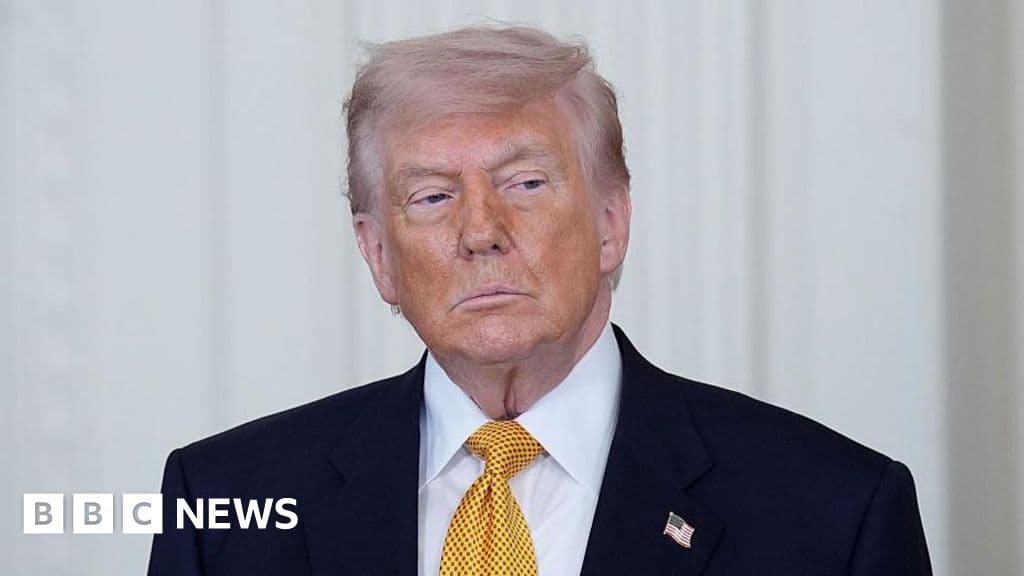
In the wake of Iran's proposal, Trump took to Truth Social, expressing his dissatisfaction with the Iranian representatives' response. He stated, "I have just read the response from Iran's so-called 'Representatives.' I don't like it – TOTALLY UNACCEPTABLE." This strong reaction underscores the tense atmosphere surrounding the negotiations.
U.S. media outlet Axios reported that the initial one-page, 14-point memorandum from the U.S. includes critical elements such as a suspension of Iranian nuclear enrichment, lifting of sanctions, and the restoration of free transit through the Strait of Hormuz. However, these provisions are contingent on a final agreement, leaving many questions about the future of U.S.-Iran relations.
Iran’s actions in the Strait of Hormuz have been pivotal in the ongoing conflict. The strait is a crucial maritime corridor through which approximately 20% of the world’s oil and natural gas is transported. Iran has continued to assert its influence there, warning that vessels passing through would face "severe consequences" if they do not comply with Tehran's directives.
Military spokesman Mohammad Akraminia declared that the U.S. would not succeed in establishing a real blockade in this strategically important waterway, despite its significant naval presence. The U.S. has stationed forces across the Gulf, including in Qatar, Bahrain, Kuwait, the UAE, Saudi Arabia, and Oman, as a show of strength and deterrence.
The geopolitical landscape is further complicated by international military movements. Recently, the British Royal Navy announced it would deploy a warship to the region, potentially joining a coalition to protect maritime shipping in the Strait of Hormuz. UK Prime Minister Sir Keir Starmer and French President Emmanuel Macron are advocating for this mission, although it is contingent on a cessation of hostilities.
In response to these developments, Iran has cautioned against any deployments from French or British forces, warning of a "decisive and immediate response." Macron clarified that France's intentions do not involve a naval deployment but rather a security mission coordinated with Iran.
The conflict has not only affected U.S.-Iran relations but has also led to tensions between Iran and its regional neighbors, particularly those aligned with U.S. interests. An incident reported by the UK’s Maritime Trade Operations Centre (UKMTO) indicated that a bulk carrier was struck by an unknown projectile near Doha, Qatar, resulting in a small fire but no reported casualties. Reports suggest that the vessel may have been sailing under a U.S. flag, further complicating the situation.
The implications of this conflict extend far beyond the immediate region. The Strait of Hormuz is a vital artery for global energy supplies, and any disruptions could have significant ramifications for world oil prices and economic stability. Additionally, the potential for military escalation remains high, as both sides appear unwilling to compromise on key issues.
With U.S. officials and Iranian leaders entrenched in their positions, the path to peace seems fraught with challenges. Observers are left to wonder how long the ceasefire can hold and what strategies both nations will employ as they navigate these turbulent waters.
As the situation continues to evolve, key things to watch include: - Further Diplomatic Engagement: Will the U.S. and Iran be willing to engage in more meaningful dialogue? - Impact on Oil Prices: How will continued tensions affect global oil markets? - Military Movements: Will there be any escalations or new deployments from U.S. or allied forces? - Regional Stability: How will neighboring countries react to the ongoing conflict, and what role will they play?
In this high-stakes environment, the decisions made in the coming weeks will be critical for the future of U.S.-Iran relations and the broader geopolitical landscape in the Middle East.

Tensions soar as the US and Iran engage in air strikes near the Strait of Hormuz, raising concerns over global oil supply and regional stability.
BBC World
Trump's international interventions face serious stalemates. What will this mean for U.S. foreign policy? Explore the critical challenges ahead.
Indian Express
Tehran denies resignation of President Masoud Pezeshkian amid claims of IRGC influence. What does this mean for Iran's political stability? Click to learn more!
Indian Express