
Image: BBC World
Trump cautions Taiwan against declaring independence after talks with Xi Jinping, emphasizing the need for peace and stability in U.S.-China relations.
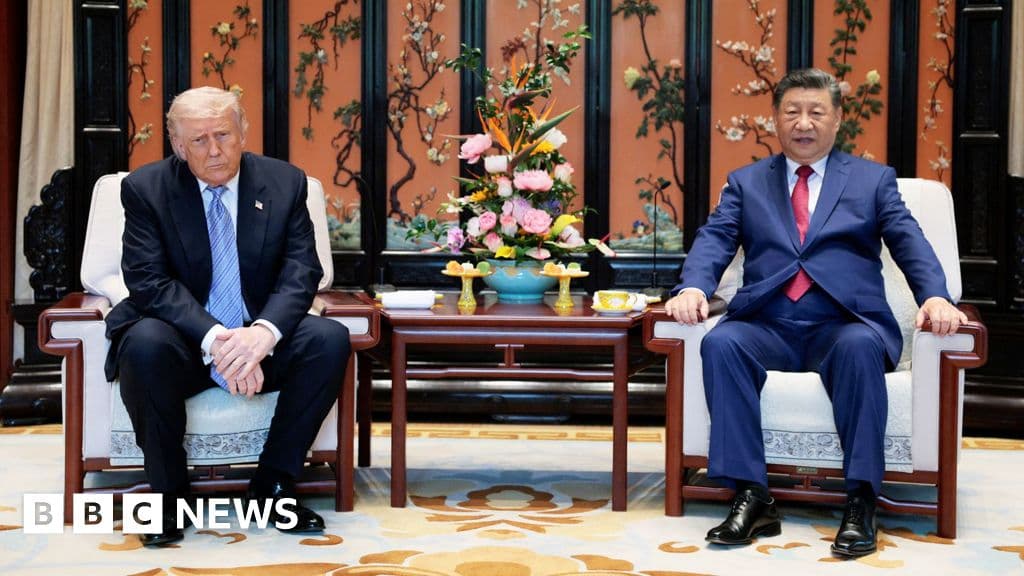
GlipzoIn a significant warning, U.S. President Donald Trump advised Taiwan against making a formal declaration of independence from China. This statement emerged shortly after a two-day summit with Chinese President Xi Jinping in Beijing.
During an interview with Fox News, Trump stated, "I'm not looking to have somebody go independent," emphasizing the delicate balance the U.S. must maintain in its foreign relations. This caution comes at a critical juncture, as Taiwan's stance on its sovereignty continues to provoke tensions with Beijing.
Taiwanese President Lai Ching-te has made it clear that the island already perceives itself as a sovereign nation, negating the need for a formal declaration of independence. The U.S. has historically supported Taiwan, providing it with defensive resources as mandated by U.S. law. However, this support often clashes with the necessity of nurturing diplomatic ties with China.
Trump's comments reflect a continuation of longstanding U.S. policy regarding Taiwan. While Washington has not officially recognized Taiwan's independence, it also does not endorse Beijing's claim over the island.
During their discussions, Trump noted that he and Xi had focused heavily on Taiwan, although he refrained from commenting on whether the U.S. would intervene militarily if tensions escalated. Trump remarked that Xi has strong sentiments regarding Taiwan and that both leaders understand the potential for conflict if the situation is not handled carefully.
Xi, echoing this sentiment, stated, "The Taiwan question is the most important issue in China-U.S. relations," warning that mismanagement could lead to a collision between the two nations. Despite these tensions, Trump expressed optimism, saying, "No, I don't think so. I think we'll be fine. [Xi] doesn't want to see a war."
Amid these diplomatic discussions, China has increased its military drills around Taiwan, heightening regional tensions. Such maneuvers are perceived as testing the limits of the U.S.'s support for Taiwan and its commitment to maintaining peace in the area.
Late last year, the Trump administration proposed an $11 billion arms package to Taiwan, which includes advanced rocket systems and missiles. This sale provoked a strong condemnation from Beijing, further complicating the already fraught U.S.-China relations. Trump mentioned that he would soon make a decision regarding the sale, indicating ongoing deliberations about the implications of such support.
Although the U.S. has significant unofficial ties with Taiwan, it lacks formal diplomatic relations with the island. Traditionally, U.S. presidents avoid direct communication with Taiwan's leadership to prevent aggravating Beijing, which views President Lai as a separatist. Trump’s comments to Fox News highlighted this sensitive dynamic, saying, "We're not looking to have wars, and if you kept it the way it is, I think China's going to be OK with that."
This delicate balancing act has historically angered China, especially when the U.S. has appeared to soften its stance on Taiwan's independence. For instance, in February 2025, the U.S. State Department removed a statement affirming its opposition to Taiwanese independence from its website, a move that Beijing criticized as sending the wrong signal.
The ongoing situation in Taiwan is not merely a regional issue; it holds significant implications for global geopolitics. The U.S.'s approach to Taiwan serves as a litmus test for its broader strategy in Asia and its willingness to confront China on various fronts. With Taiwan's sovereignty at stake, the potential for conflict remains high, making it crucial to monitor Washington's decisions and Beijing's responses closely.
As the world watches these developments, it's clear that the relationship between the U.S., Taiwan, and China is evolving, with significant ramifications for international stability and security. The coming months will be critical in determining the direction of these complex dynamics.

Tensions soar as the US and Iran engage in air strikes near the Strait of Hormuz, raising concerns over global oil supply and regional stability.
BBC World
Trump's international interventions face serious stalemates. What will this mean for U.S. foreign policy? Explore the critical challenges ahead.
Indian Express
Tehran denies resignation of President Masoud Pezeshkian amid claims of IRGC influence. What does this mean for Iran's political stability? Click to learn more!
Indian Express