
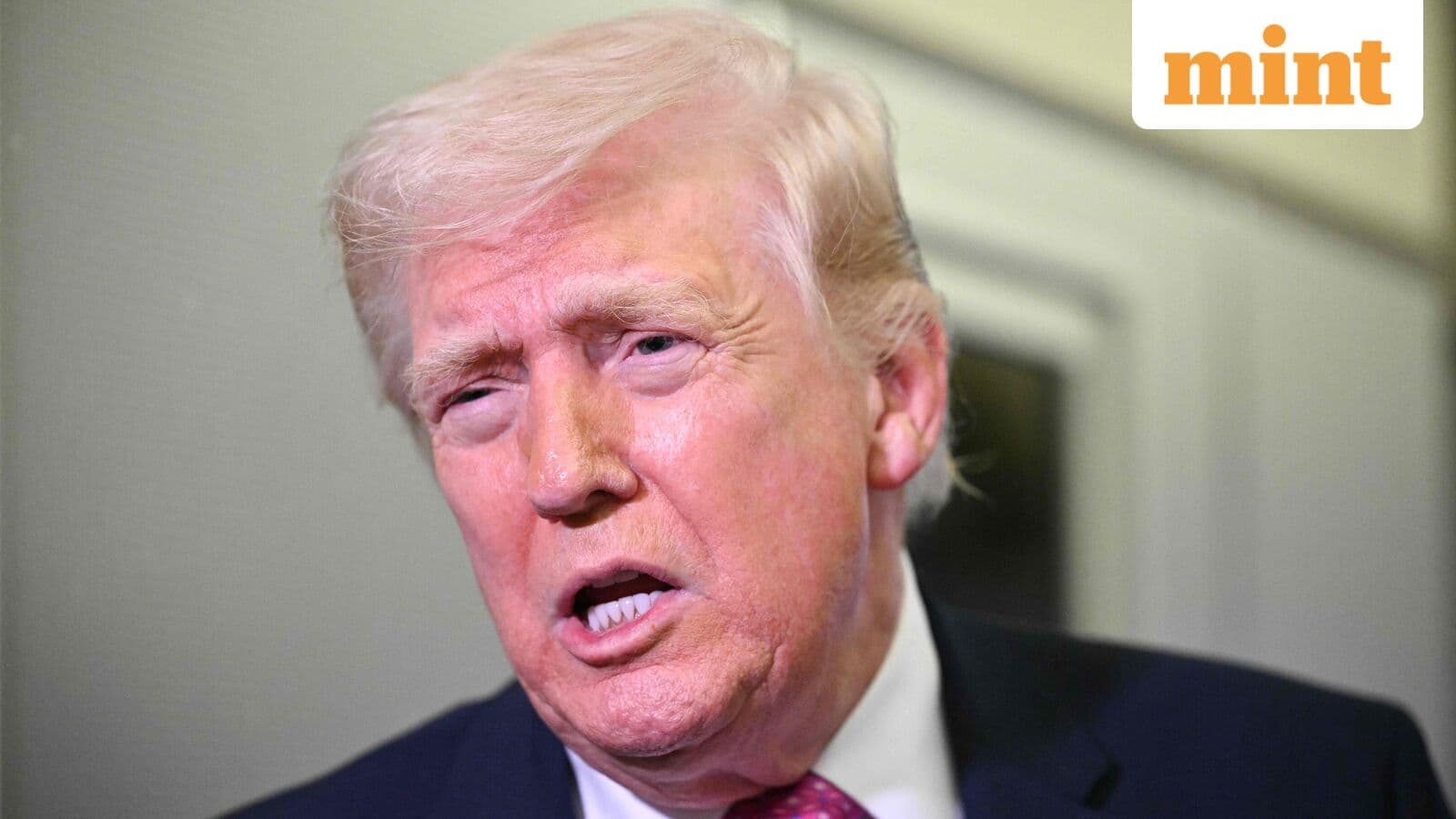
Image: Mint (Business)
Trump warns Iran to reopen the Strait of Hormuz or face potential strikes on infrastructure as tensions escalate dramatically in the region.
GlipzoIn a significant escalation of tensions, President Donald Trump issued a stern warning to Iran on Monday regarding the reopening of the Strait of Hormuz. This pivotal maritime corridor is crucial for global energy supplies, handling about 20% of the world's oil and gas shipments. Trump indicated that if an agreement isn't reached soon, the United States might take drastic measures, potentially including strikes on key Iranian infrastructure—an action he claims has been avoided thus far.
Trump's remarks were shared on Truth Social, where he emphasized that the US is currently in serious negotiations with what he described as a “new and more reasonable” leadership in Iran. He expressed optimism about reaching a deal but warned that failure to reopen the Strait would lead to severe consequences for Iranian facilities, including power plants, oil fields, and Kharg Island, a critical oil export hub.
The Strait of Hormuz has become a focal point in the ongoing geopolitical conflict, as it serves as a vital passage for oil tankers. The United States and its allies view Iran's recent actions to restrict access as a direct threat to global energy stability. Trump articulated his frustrations on social media, stating, “If the Hormuz Strait is not immediately ‘Open for Business,’ we will conclude our lovely ‘stay’ in Iran by blowing up and completely obliterating all of their Electric Generating Plants, Oil Wells, and Kharg Island.”
Trump's rhetoric underlines the heightened military posture of the US, as it seeks to deter Iranian aggression and protect its interests in the region. This stance is not just about economic implications; it also speaks to a broader strategy of asserting US power in the Middle East, particularly as tensions rise with Iran.
Iran's response to Trump's ultimatum has been staunchly defiant. On the same day, Iranian Foreign Ministry spokesperson Esmaeil Baghaei dismissed US peace proposals as “unrealistic, illogical, and excessive.” He reiterated that Iran is focused on defending itself amid what it perceives as military aggression from the US and its allies. This sentiment reflects the ongoing hostilities that have escalated since the US-Israeli strikes on Iran, which began on February 28.
As the situation unfolds, Iran has been actively engaging in military operations against Gulf Arab nations, including a recent attack on a significant water and power facility in Kuwait. The conflict has also seen Israeli forces conducting operations in Lebanon against Hezbollah, further complicating the already volatile regional dynamics.
In response to the escalating situation, the US Army's elite 82nd Airborne Division has begun deploying troops to the Middle East. This military reinforcement signals a potential readiness for direct action against Iranian forces, raising concerns about a broader conflict that could draw in multiple nations. Trump’s administration may be weighing its options regarding military engagement, as the ongoing unrest threatens to disrupt not only regional stability but also global economic conditions.
The death of high-ranking Iranian military leaders, including Revolutionary Guards Navy Commander Alireza Tangsiri, adds another layer of complexity to the conflict. This ongoing cycle of violence and retaliation has led to thousands of casualties, primarily among civilians in Iran and Lebanon, exacerbating the humanitarian crisis in the region.
As we look to the future, several key developments warrant close attention: - Negotiations: Will the US and Iran find common ground to reopen the Strait of Hormuz, or will tensions escalate further? - Military Movements: The deployment of US troops could indicate an impending military response if diplomatic efforts fail. - Global Oil Prices: Any significant military action could lead to spikes in oil prices, impacting economies worldwide. - Regional Alliances: The evolving situation could reshape alliances in the Middle East, particularly with countries like Saudi Arabia, Turkey, and Pakistan involved in discussions.
In conclusion, the unfolding events surrounding the Strait of Hormuz are critical not only for the involved nations but for global peace and economic stability. Continued vigilance and diplomatic efforts will be essential in navigating this precarious situation and avoiding a full-scale conflict.
Garvit Bhirani is a journalist based in Gurugram and serves as the Deputy Chief Content Producer at LiveMint, where he focuses on delivering accurate and compelling national and international news stories.

Tensions soar as the US and Iran engage in air strikes near the Strait of Hormuz, raising concerns over global oil supply and regional stability.
BBC World
Trump's international interventions face serious stalemates. What will this mean for U.S. foreign policy? Explore the critical challenges ahead.
Indian Express
Tehran denies resignation of President Masoud Pezeshkian amid claims of IRGC influence. What does this mean for Iran's political stability? Click to learn more!
Indian Express