
Image: BBC World
Trump warns the Iran ceasefire is on 'massive life support' as tensions escalate. What does Iran's counter-offer mean for future negotiations?
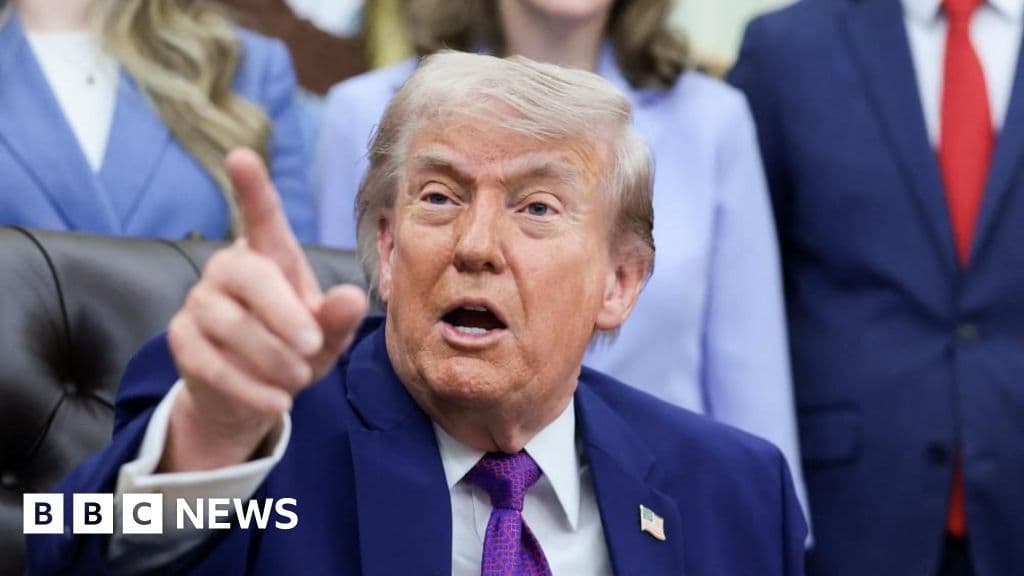
GlipzoIn a stark assessment of the fragile peace between the United States and Iran, President Donald Trump stated that the ongoing ceasefire is on "massive life support". This unsettling declaration was made during a press briefing in the Oval Office on Monday, where Trump characterized the situation as "unbelievably weak" despite the ceasefire technically still being in effect.
The backdrop of these comments is an escalating tension fueled by Iran's recent counter-offer to end the ongoing conflict and reopen the crucial Strait of Hormuz. The Iranian government outlined its demands on Sunday, which included calls for an immediate cessation of hostilities and the lifting of the U.S. naval blockade on its ports. Trump, however, dismissed this proposal as "totally unacceptable" and even referred to it as a "piece of garbage."
The Iranian proposal, as reported by the semi-official Tasnim news agency, included several key demands that reflect Tehran's strategic interests: - An immediate end to the conflict on all fronts, particularly concerning Israeli military actions against Iranian-backed Hezbollah in Lebanon. - A halt to the U.S. blockade of Iranian ports. - Guarantees against further attacks on Iranian territory. - Compensation for damages incurred during the conflict. - Assurance of Iranian sovereignty over the Strait of Hormuz.
In response to Trump's rejection, Esmail Baghaei, a spokesperson for Iran's foreign ministry, defended the proposal, emphasizing its responsibility and generosity. He warned that Iran would take necessary measures to safeguard its interests if the U.S. continued its current stance.
During his remarks in the Oval Office, Trump painted a grim picture of the ceasefire's viability, drawing an analogy to a patient on life support with minimal chances for recovery. He emphasized that the situation is precarious, especially considering that sporadic exchanges of fire have continued even under the ceasefire's terms.
Trump's rhetoric included sharp criticism of Iranian leadership, labeling them as "very dishonourable people" and expressing frustration over what he perceived as Iran's dishonesty in negotiations. He claimed that Iran had reneged on an agreement regarding the removal of enriched uranium supplies, reiterating his commitment to preventing Iran from acquiring a nuclear weapon.
Iranian sources close to the negotiation team quickly countered, asserting that their proposal did not include any acceptance of the removal of enriched nuclear materials, highlighting the disarray in communication between the two nations.
The stakes are high as the conflict extends beyond rhetoric. Israeli Prime Minister Benjamin Netanyahu has insisted that Iran's enriched uranium stockpile must be addressed before any declaration of the war's conclusion can be made. In a recent interview, Netanyahu underscored the need to dismantle remaining enrichment sites, indicating a comprehensive approach to Iran's nuclear capabilities is still a priority.
In the backdrop of these developments, the United States has been enforcing a blockade on Iranian ports, a move designed to exert pressure on Tehran. This blockade has been a significant point of contention, further inflaming tensions and contributing to rising global oil prices. The Strait of Hormuz, a critical conduit for approximately 20% of the world’s oil and liquefied natural gas, remains under Iranian control, exacerbating the situation.
As the ceasefire hangs in the balance, the international community is left to ponder the implications of this ongoing conflict. The U.S. memorandum reportedly outlines potential terms for negotiation, including a suspension of Iranian nuclear enrichment and the lifting of sanctions, contingent upon reaching a final agreement.
The geopolitical landscape remains fluid, with both the U.S. and Israel maintaining a hardline stance against Iran. As military actions continue and diplomatic efforts falter, the potential for escalation remains high. The ceasefire, once seen as a hopeful step towards peace, now faces existential threats.
Moving forward, observers should watch for: - Further developments in U.S.-Iran negotiations or military actions. - Changes in the global oil market due to instability in the Strait of Hormuz. - Reactions from allies and adversaries in the region, particularly Israel and other Gulf states.
In conclusion, while the ceasefire may still exist on paper, its practical application and sustainability appear increasingly questionable. The coming days could be pivotal in determining the trajectory of U.S.-Iran relations and regional stability at large.

Tensions soar as the US and Iran engage in air strikes near the Strait of Hormuz, raising concerns over global oil supply and regional stability.
BBC World
Trump's international interventions face serious stalemates. What will this mean for U.S. foreign policy? Explore the critical challenges ahead.
Indian Express
Tehran denies resignation of President Masoud Pezeshkian amid claims of IRGC influence. What does this mean for Iran's political stability? Click to learn more!
Indian Express