
Image: The Hindu
Trump's shocking comparison of Pearl Harbor to Iran strikes raises eyebrows and questions about U.S. military strategy during a meeting with Japan's PM.
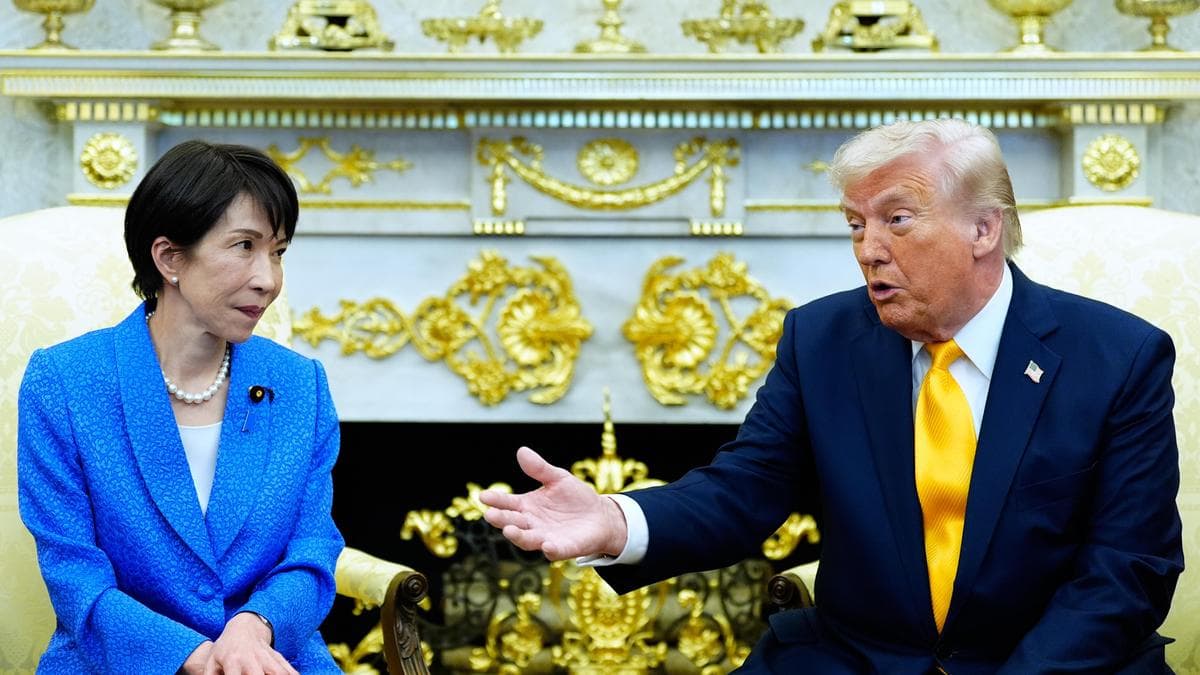
GlipzoIn a surprising turn of events during a meeting with Japan's Prime Minister Sanae Takaichi on March 19, 2026, President Donald Trump made a bold comparison between the U.S. military operations against Iran and Japan's infamous attack on Pearl Harbor. This statement, delivered in the Oval Office, has sparked a flurry of reactions and raised eyebrows among political analysts and historians alike.
Trump's analogy came to light when a journalist questioned him about his decision to not inform allies about the military strategy targeting Iran. With a provocative tone, Trump stated, "We wanted surprise. Who knows better about surprise than Japan? Why didn’t you tell me about Pearl Harbor?" This comment drew a notable reaction from Takaichi, who appeared visibly taken aback by the historical reference to such a pivotal moment in U.S. history.
The Japanese attack on Pearl Harbor on December 7, 1941, marked a significant turning point in history, leading the United States to enter World War II. The assault resulted in the loss of 2,390 American lives and prompted President Franklin D. Roosevelt to declare it "a date which will live in infamy." The aftermath saw the U.S. engaging in a relentless campaign against Japan, culminating in the bombings of Hiroshima and Nagasaki in August 1945, which resulted in devastating civilian casualties.
By drawing this parallel, Trump appears to be invoking a narrative of surprise and strategic warfare, suggesting a justification for his administration's aggressive posture toward Iran. The implications of such a comparison could resonate deeply, given the historical weight of Pearl Harbor and the ongoing tensions in the Middle East.
The relationship between the U.S. and Japan has evolved significantly since World War II, transitioning from adversaries to allies. Today, Japan plays a critical role in the U.S. defense strategy in the Asia-Pacific region, especially amidst rising threats from North Korea and China.
In this context, Takaichi's presence at the meeting underscores Japan's ongoing commitment to its alliance with the United States, despite the controversial remarks made by Trump. This relationship is vital for regional stability, and Trump's comments may complicate diplomatic efforts moving forward.
Trump's remarks in the Oval Office are significant not just for their historical reference but also for the light they shed on current geopolitical dynamics. The comparison suggests a willingness to embrace a confrontational strategy that echoes past military engagements, potentially leading to a new chapter of conflict in the Middle East.
The historical context of both Pearl Harbor and the current U.S. military actions against Iran prompts important questions about the future of U.S. foreign policy. As tensions escalate, the need for diplomatic solutions becomes increasingly urgent. Trump's framing of military strategy as a surprise attack may resonate with a segment of the American public that supports a strong national defense, yet it also raises concerns about the ramifications of such rhetoric on international relations.
Looking ahead, the situation between the U.S. and Iran remains fluid and precarious. The implications of Trump's comments could influence upcoming discussions on military strategy and international diplomacy. Key points to watch include: - Potential Military Engagements: Will the U.S. escalate its military actions in the region following these remarks? - Diplomatic Efforts: How will allies respond to Trump's comments, and what strategies will they employ to mitigate rising tensions? - Public Response: How will American citizens react to the historical comparison and its implications for national security?
In conclusion, President Trump’s controversial remarks linking Pearl Harbor to current military actions against Iran have opened a dialogue on U.S. foreign policy and its historical ramifications. As the geopolitical landscape evolves, the international community will be keenly observing how these dynamics unfold.

Tensions soar as the US and Iran engage in air strikes near the Strait of Hormuz, raising concerns over global oil supply and regional stability.
BBC World
Trump's international interventions face serious stalemates. What will this mean for U.S. foreign policy? Explore the critical challenges ahead.
Indian Express
Tehran denies resignation of President Masoud Pezeshkian amid claims of IRGC influence. What does this mean for Iran's political stability? Click to learn more!
Indian Express