
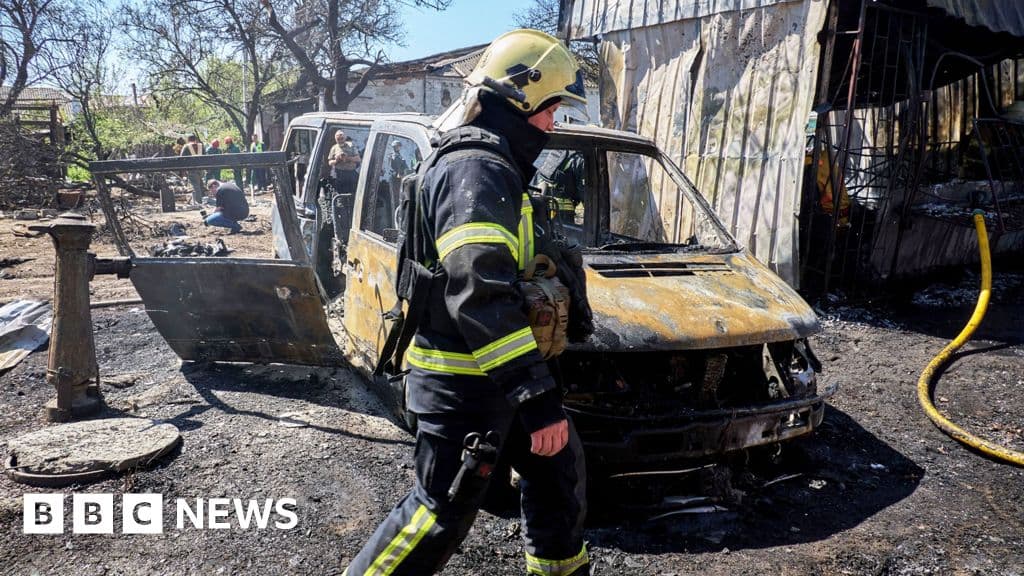
Image: BBC World
Trump's unexpected three-day ceasefire announcement aims to ease tensions between Russia and Ukraine amid ongoing accusations of ceasefire violations.
GlipzoIn a surprising development, Donald Trump has brokered a three-day ceasefire between Russia and Ukraine. This announcement comes as both nations have accused each other of violating previous ceasefires that were intended to coincide with the Soviet Union's Victory Day celebrations over Nazi Germany. The ceasefire, which aims to halt all combat activities, also includes a significant prisoner swap involving 1,000 prisoners from each side.
Shortly after Trump's announcement, Ukrainian President Volodymyr Zelensky confirmed Ukraine’s commitment to the ceasefire, while Russian state media reported that Russia had also agreed to the terms. This agreement marks a crucial moment in the ongoing conflict, which has escalated tensions in the region.
The call for a ceasefire comes after both nations reported continued attacks against each other's positions. Moscow's mayor indicated that the city had been targeted by drone strikes overnight, adding to the atmosphere of distrust. In his post, Trump expressed his gratitude towards both Putin and Zelensky for their agreement to cease hostilities, stating, "I very much appreciate its agreement by President Vladimir Putin and President Volodymyr Zelenskyy."
Previously, Putin declared a ceasefire to be in effect on May 8-9 in honor of Victory Day, while Ukraine had requested a more indefinite truce starting from May 6. The situation remains precarious, with Russia cautioning Ukraine against any attempts to disrupt the Victory Day parade in Moscow. The Russian defense ministry issued a stern warning, threatening a "retaliatory, massive missile strike" if Ukraine were to attack.
In preparation for the Victory Day celebrations, Moscow is on high alert. This year's parade will notably lack military hardware for the first time in nearly two decades, reflecting the heightened security concerns surrounding the event. Citizens in Moscow and St Petersburg have been informed that mobile internet access will be restricted for security purposes during the festivities.
The lineup for the celebrations is also notably diminished, with only a handful of foreign dignitaries, including leaders from Belarus, Malaysia, and Laos, expected to attend. This marks a significant shift from previous years, which often featured a large international presence.
Despite the ceasefire, both sides have accused each other of violations almost immediately. The Russian defense ministry reported that Ukraine targeted civilian areas in the Kursk and Belgorod regions, leading to a "mirror response" from the Russian military. Within hours of the ceasefire, Moscow's mayor reported that approximately 20 drones had been intercepted near the city.
Simultaneously, Ukrainian officials reported over 140 attacks on their positions and claimed that more than 850 drone strikes were carried out. Zelensky stated that Ukraine would respond in kind to these provocations, showcasing the fragility of the ceasefire agreement.
The ongoing conflict has drawn attention from European leaders, including European Council President António Costa, who expressed optimism about the potential for the EU to negotiate with Russia regarding an end to the war. Costa noted that there is a need for dialogue about the future security architecture in Europe, emphasizing the necessity of engaging with Russia as a neighboring nation.
In response, Kremlin spokesman Dmitry Peskov stated that while Russia is open to discussions, they will not initiate contact for negotiations. The United States has played a mediating role in previous discussions between the two nations, but with rising tensions elsewhere, notably in the Middle East, there are concerns that the U.S. may be becoming distracted from the Ukraine crisis.
During a visit to Italy, Secretary of State Marco Rubio reaffirmed the U.S.’s readiness to mediate but cautioned against wasting time if no progress could be made. This highlights the complexities and shifting dynamics of international relations surrounding the conflict.
As the three-day ceasefire unfolds, the world watches closely to see if this temporary truce can lead to more meaningful dialogue and a lasting peace. The situation remains tense, with both sides on high alert and accusations of violations flying back and forth.
The potential for future negotiations hangs in the balance, particularly as European leaders push for discussions with Russia. The international community is keenly aware that the security landscape in Europe depends heavily on the outcome of these negotiations.
As we look towards the next few days, it will be crucial to monitor how both sides adhere to the ceasefire and whether diplomatic efforts can make headway in resolving this ongoing conflict.

Tensions soar as the US and Iran engage in air strikes near the Strait of Hormuz, raising concerns over global oil supply and regional stability.
BBC World
Trump's international interventions face serious stalemates. What will this mean for U.S. foreign policy? Explore the critical challenges ahead.
Indian Express
Tehran denies resignation of President Masoud Pezeshkian amid claims of IRGC influence. What does this mean for Iran's political stability? Click to learn more!
Indian Express