
Image: BBC Business
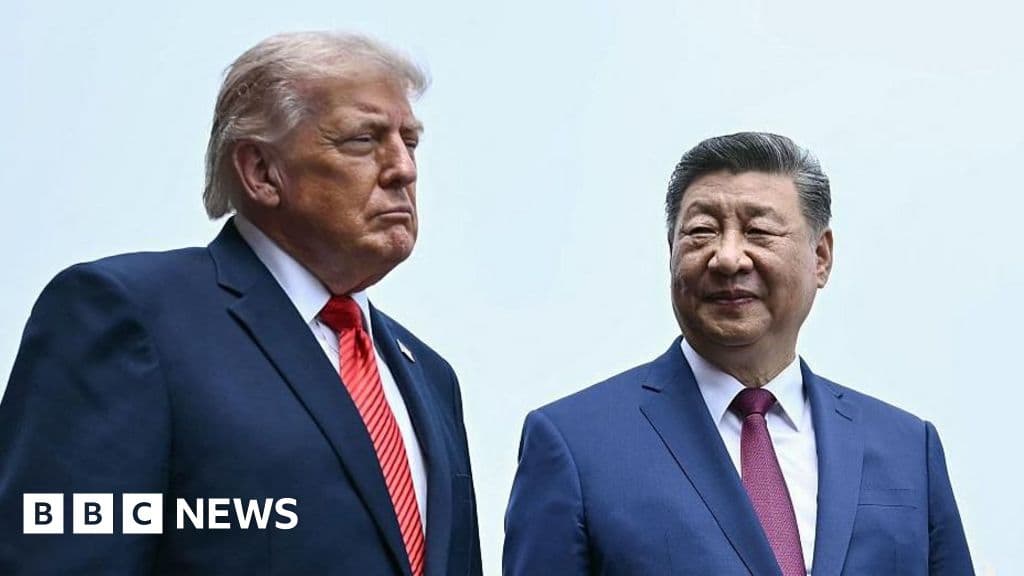
Trump and Xi's Beijing talks yielded no major trade deal, but set the stage for future negotiations amid ongoing geopolitical tensions.
GlipzoOn Thursday, US President Donald Trump and Chinese President Xi Jinping engaged in a significant yet ultimately inconclusive meeting in Beijing, highlighting the complexities of the US-China economic relationship. The discussions lasted over two hours and were framed by the White House as a crucial step in addressing one of the world’s most consequential economic partnerships. However, despite the high expectations and elaborate staging, no substantial trade agreement emerged from the talks.
In the grand setting of the Great Hall of the People, Trump characterized the summit as potentially the most significant meeting ever held between the two nations, underscoring the importance of the relationship. He described the discussions as “highly productive,” setting a tone of optimism despite the lack of concrete outcomes during the visit.
President Xi, while acknowledging some progress from previous negotiations held in South Korea, issued a stark warning concerning Taiwan, indicating that improper handling of the relationship could lead to serious conflict between the two nations. This cautionary note adds a layer of urgency to the ongoing dialogue, which is often overshadowed by trade disputes.
The meeting was notable not only for its discussions but also for the symbolism surrounding the attendees. Among those who greeted Trump upon his arrival was Elon Musk, alongside other prominent figures such as Nvidia CEO Jensen Huang and US Trade Representative Jamieson Greer. Their presence highlighted critical sectors at the intersection of US and Chinese interests, such as electric vehicles, artificial intelligence, and semiconductors.
Musk's close association with Trump during the welcome ceremony was particularly noteworthy, given Tesla's significant operations in Shanghai and its reliance on Chinese consumers. Similarly, Nvidia's positioning in the global AI race puts it at the heart of ongoing tensions over technology access. Huang's unexpected participation fueled speculation that discussions surrounding AI and semiconductor access could be more prominent than previously anticipated.
While the optics of the meeting were carefully curated, the outcomes remained largely consistent with prior agreements. The summit reaffirmed the October trade truce, which involved the suspension of planned tariff increases by the US and a reduction in restrictions on rare earth exports by China. Both nations announced the formation of a new “Board of Trade,” aimed at managing trade relations without reopening contentious tariff negotiations.
Despite these measures, US officials cautioned that significant work remains before this board can operate effectively. US Treasury Secretary Scott Bessent indicated that while large orders from Boeing may be on the horizon, expectations for immediate breakthroughs in agricultural trade were tempered. Although discussions included enhancing Chinese access to US markets, concrete commitments were sparse.
Farmers in the United States have been advocating for increased access to the Chinese market for products like soybeans, beef, and poultry. However, the summit did not yield specific agreements on these fronts, with Bessent suggesting that some commitments had already been addressed in previous arrangements. Notably, there remains potential for China to boost its imports of US energy, particularly liquefied natural gas (LNG).
Xi reiterated to American business leaders that China’s “doors will open wider,” promising broader opportunities for US firms in the Chinese market. He called for enhanced cooperation in various sectors, including trade, agriculture, healthcare, tourism, and law enforcement, depicting bilateral relations as beneficial for both parties. Nonetheless, US companies continue to navigate a complex environment characterized by regulatory challenges and geopolitical uncertainties.
One of the most significant takeaways from this meeting is the emerging connection between Taiwan and the broader economic relationship between the two countries. Xi's emphasis on Taiwan during the discussions illustrates how intertwined geopolitical issues are with trade dynamics. This development may lead to increased scrutiny of future agreements and could influence how both nations approach sensitive topics moving forward.
As the dust settles on this high-profile meeting, the road ahead for US-China relations appears fraught with challenges and opportunities. The establishment of the Board of Trade is a step toward more structured dialogue, but the effectiveness of this initiative remains to be seen. Additionally, the discussions surrounding AI and semiconductor access will likely continue to dominate future negotiations, especially as both nations strive to maintain their competitive edges in technology.
Observers will want to monitor the impact of US agricultural exports to China and the evolving landscape of energy trade as both countries work towards enhancing their economic ties. As global markets remain influenced by the nuances of US-China relations, the coming weeks and months will be critical in shaping the future of this pivotal partnership.
In conclusion, while this summit did not yield the anticipated breakthroughs, it laid the groundwork for continued dialogue and cooperation, albeit within a context of geopolitical tension that will require careful navigation.

Tensions soar as the US and Iran engage in air strikes near the Strait of Hormuz, raising concerns over global oil supply and regional stability.
BBC World
Trump's international interventions face serious stalemates. What will this mean for U.S. foreign policy? Explore the critical challenges ahead.
Indian Express
Tehran denies resignation of President Masoud Pezeshkian amid claims of IRGC influence. What does this mean for Iran's political stability? Click to learn more!
Indian Express