
Image: Ars Technica
Trump and FCC Chairman Carr demand positive coverage of the Iran war, threatening broadcasters with license revocation. What does this mean for press freedom?
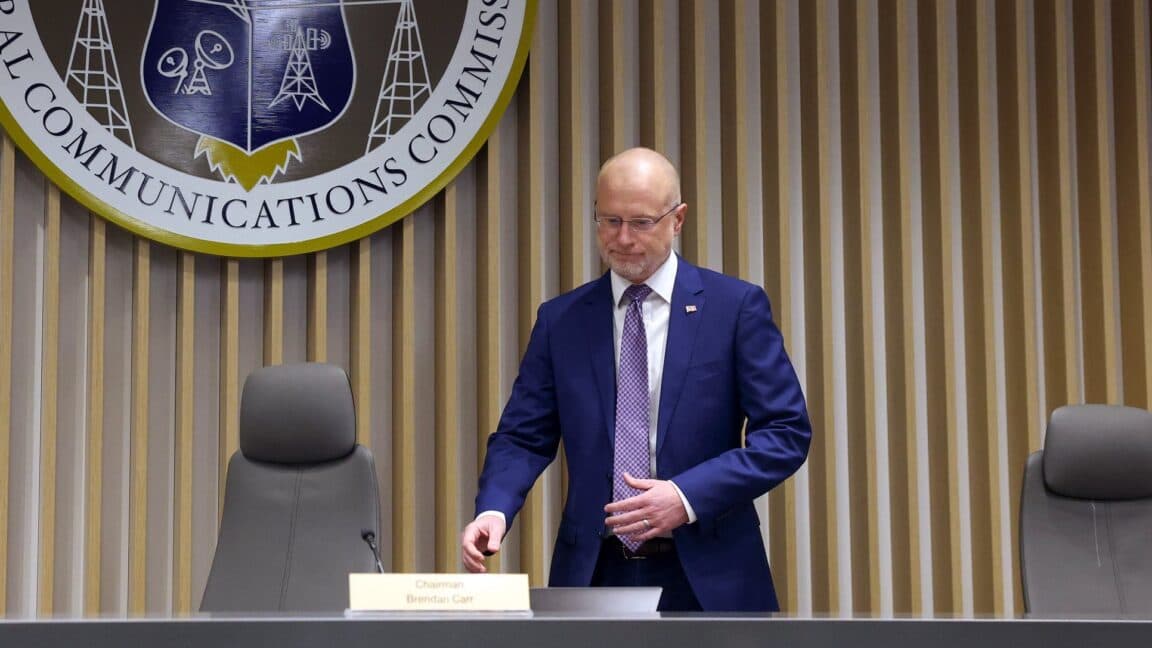
GlipzoIn a surprising twist in media relations, President Donald Trump and FCC Chairman Brendan Carr have recently called for more favorable news coverage regarding the ongoing conflict in Iran. This unusual demand came to light over the weekend, as Carr made a pointed assertion about the responsibility of broadcasters to provide accurate and positive information about the war.
On Saturday, Carr criticized media outlets for what he described as “hoaxes and news distortions” related to the Iran war. He threatened to revoke broadcasting licenses from stations that fail to comply with his expectations. Carr voiced his frustrations in a post on X, where he highlighted a complaint from Trump regarding a headline from The Wall Street Journal. He stated, “Broadcasters that are running hoaxes and news distortions—also known as the fake news—have a chance now to correct course before their license renewals come up.” This assertion raises questions about the implications for press freedom and the responsibilities of media outlets.
Carr's threats to revoke licenses are not entirely new, but they present a significant concern for news organizations. The process of revoking a broadcast license is notoriously intricate, and no station licenses are slated for renewal until 2028. This fact signals that Carr's remarks may be more about intimidation than an imminent threat. Furthermore, the latest comments appear to stem not from a broadcast news story, but rather from a newspaper article, which adds an additional layer of complexity to Carr's demands.
Trump's complaint specifically addressed a headline that suggested five tanker planes had been struck down at a Saudi Arabian airport. According to his post on Truth Social, Trump claimed that the media misrepresented the situation, asserting that four of the planes were “back in service” and had not suffered significant damage. He characterized the coverage as misleading and indicative of the “Fake News Media” narrative.
In his post, Trump specifically referenced a Wall Street Journal article, while also mentioning other outlets like The New York Times. However, his core argument seemed to hinge on the assertion that the planes were not as severely damaged as reported. The president stated, “None were destroyed, or close to that, as the Fake News said in headlines.”
Despite Trump's claims, the Wall Street Journal article clearly stated that five US Air Force refueling planes were indeed “struck and damaged” during an Iranian missile attack at Prince Sultan Air Base in Saudi Arabia. The article confirmed that while the planes were hit, they were not completely destroyed and would undergo repairs. This discrepancy raises questions about the validity of Trump's accusations against the media and whether they constitute a hoax or distortion of the truth.
Carr has positioned his argument around the idea that broadcasters are obligated to serve the public interest, given their access to public airwaves. He argued, “The American people have subsidized broadcasters to the tune of billions of dollars by providing free access to the nation’s airwaves.” However, the only specific example he provided was Trump's post, which did not focus on any particular broadcast reports. This raises concerns about how the FCC interprets its mandate and the potential for overreach into editorial decisions.
Given the lack of concrete evidence supporting Carr’s claims of media distortion, many analysts believe that these threats could be perceived as an attempt to stifle dissenting voices in the media landscape. By exerting pressure on broadcasters, the FCC risks undermining the critical role that journalism plays in informing the public about important issues, particularly those related to national security and international affairs.
The interaction between Trump, Carr, and the media highlights a critical moment for press freedom in the United States. The implications of threatening broadcasting licenses on the basis of perceived inaccuracies can have a chilling effect on journalistic integrity and independence. As the situation unfolds, it raises vital questions about the balance of power between government officials and the media.
The broader stakes involve the public's right to receive accurate and comprehensive information about conflicts that may impact national and global stability. In a time when misinformation can spread rapidly, ensuring that credible news organizations can operate without the fear of retribution is more crucial than ever.
As this situation develops, observers should keep an eye on several key areas: - Media Responses: How will news organizations react to Carr's threats? Will they push back against perceived censorship? - FCC Actions: Will the FCC take any concrete steps to revoke licenses based on vague claims of media distortion? - Public Reaction: How will the American public perceive these threats? Will they rally in support of press freedom?
The future of media coverage regarding the Iran war—and potentially other sensitive topics—hangs in the balance, as the interplay between government authority and journalistic freedom continues to evolve. This moment serves as a reminder of the ongoing struggles to maintain an independent press in the face of political pressures.

Tensions soar as the US and Iran engage in air strikes near the Strait of Hormuz, raising concerns over global oil supply and regional stability.
BBC World
Trump's international interventions face serious stalemates. What will this mean for U.S. foreign policy? Explore the critical challenges ahead.
Indian Express
Tehran denies resignation of President Masoud Pezeshkian amid claims of IRGC influence. What does this mean for Iran's political stability? Click to learn more!
Indian Express