
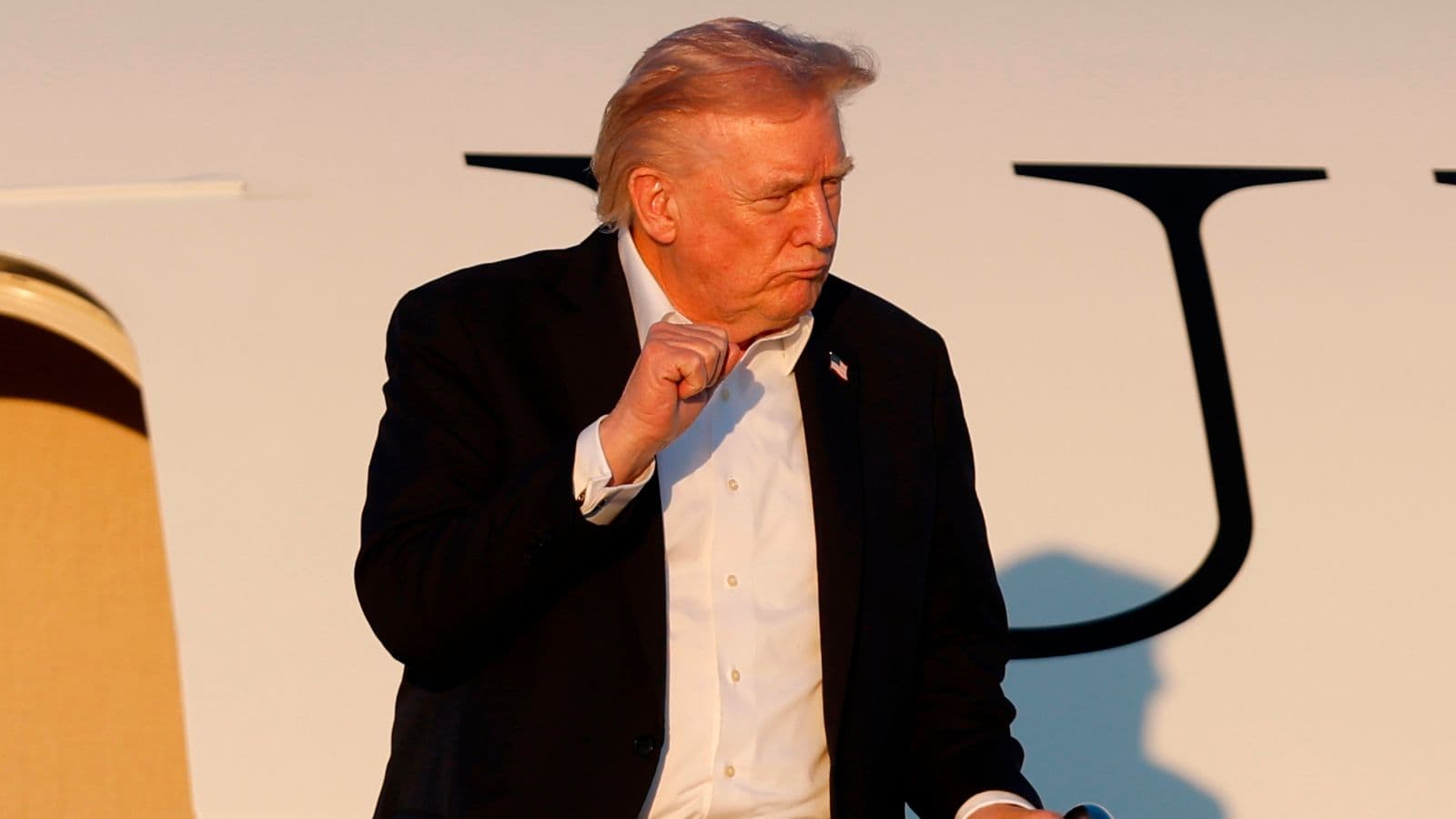
Image: Indian Express
Trump accuses Iran of decades of deception while Iran's Ghana mission fires back. Tensions escalate as diplomacy stalls. What’s next?
GlipzoIn a startling revelation on Truth Social, former U.S. President Donald Trump has accused Iran of playing ongoing games with the U.S. for an astonishing 47 years. This statement comes amid rising tensions between Washington and Tehran, which have seen diplomatic negotiations stall, prompting a war of words between the two nations.
Trump’s comments were aimed at illustrating his belief that Iran has taken advantage of U.S. policies throughout the years. He stated, "Iran has been playing games with the United States… for 47 years (delay, delay, delay!)." This assertion underscores the longstanding frustrations many in the U.S. have regarding Iran’s approach to international negotiations and its regional ambitions.
In his post, Trump did not shy away from criticizing former President Barack Obama either. He claimed that the Obama administration had offered Iran significant financial relief, including $1.7 billion in cash and “hundreds of billions of dollars” which, in Trump's view, allowed Iran to bolster its military and aggressive strategies. He argued that these actions had detrimental effects, leading to targeting Americans and suppressing protests within Iran.
In response to Trump’s accusations, an account associated with Iran's mission in Ghana quickly fired back. The post criticized Trump's record and highlighted his perceived failures, stating, "Every regional base reduced to smoldering ash… gas prices soaring… and every remaining move on the board is a loss."
This sharp commentary serves to illustrate the broader narrative that Iran is attempting to push back against U.S. criticisms, particularly regarding American influence in the Strait of Hormuz, a crucial shipping lane that has become a flashpoint in U.S.-Iran relations.
The account further pointed out that under Trump's leadership, U.S. military assets in the region have faced severe challenges, suggesting that the U.S. has lost control over critical dynamics in the area. This exchange highlights the palpable tension and ongoing conflict of narratives as both nations attempt to assert their positions on the global stage.
This exchange comes at a time when diplomatic efforts aimed at achieving a breakthrough in negotiations between the U.S. and Iran have been stalled. Despite ongoing talks mediated by intermediaries, both sides continue to exchange accusations, raising concerns about potential miscalculations or escalations in the future.
The ongoing tensions are particularly significant given Iran's contentious nuclear program, which has been a focal point of U.S. foreign policy for years. As the U.S. continues to impose sanctions and military pressures, Iran has increasingly pushed back through both military posturing and diplomatic counter-attacks.
The current state of affairs raises critical questions about what might happen next. With both nations seemingly entrenched in their positions, the likelihood of rapprochement appears slim without substantial changes in approach from either side.
Understanding the dynamics between the U.S. and Iran is crucial not just for these two nations but for global stability. The Strait of Hormuz is vital for the world’s oil supply, with a significant percentage of global oil passing through this narrow waterway. Any escalation in military tensions or conflict could lead to severe disruptions in energy markets, affecting economies worldwide.
Moreover, the U.S.-Iran relationship serves as a litmus test for broader Middle Eastern geopolitical stability. The ramifications of a breakdown in relations could lead to increased conflict in the region, impacting U.S. allies and potentially drawing in other global powers.
As the diplomatic dialogue remains stagnant, several key developments will be essential to monitor in the coming weeks: - Negotiation Outcomes: Will there be any substantial movement in peace talks, or will the rhetoric continue to escalate? - Military Movements: Both nations' military strategies in the region are crucial indicators of potential conflict. - Economic Impact: Global oil markets remain sensitive to any change in U.S.-Iran relations, so fluctuations in prices may serve as a barometer for escalating tensions.
In conclusion, the back-and-forth between Trump and Iran's mission in Ghana encapsulates the complexities of U.S.-Iran relations. With both sides entrenched in their narratives, the coming months will be critical in determining whether diplomacy can pave the way for a more stable future or if the cycle of accusations and military posturing will continue unabated.

Tensions soar as the US and Iran engage in air strikes near the Strait of Hormuz, raising concerns over global oil supply and regional stability.
BBC World
Trump's international interventions face serious stalemates. What will this mean for U.S. foreign policy? Explore the critical challenges ahead.
Indian Express
Tehran denies resignation of President Masoud Pezeshkian amid claims of IRGC influence. What does this mean for Iran's political stability? Click to learn more!
Indian Express