
Image: BBC World
Tragic protests in Kenya lead to four deaths amid nationwide strikes over fuel price hikes. Will the government respond to citizens' demands for relief?
GlipzoKenya is grappling with rising tensions as protests erupt nationwide in response to soaring fuel prices, resulting in the tragic deaths of four individuals and more than 30 injuries. The unrest, which has left thousands of commuters stranded, centers around a nationwide transport strike that coincided with a recent spike in petroleum costs by over 20%. Interior Minister Kipchumba Murkomen confirmed that authorities have detained 348 people amid escalating confrontations between protesters and police.
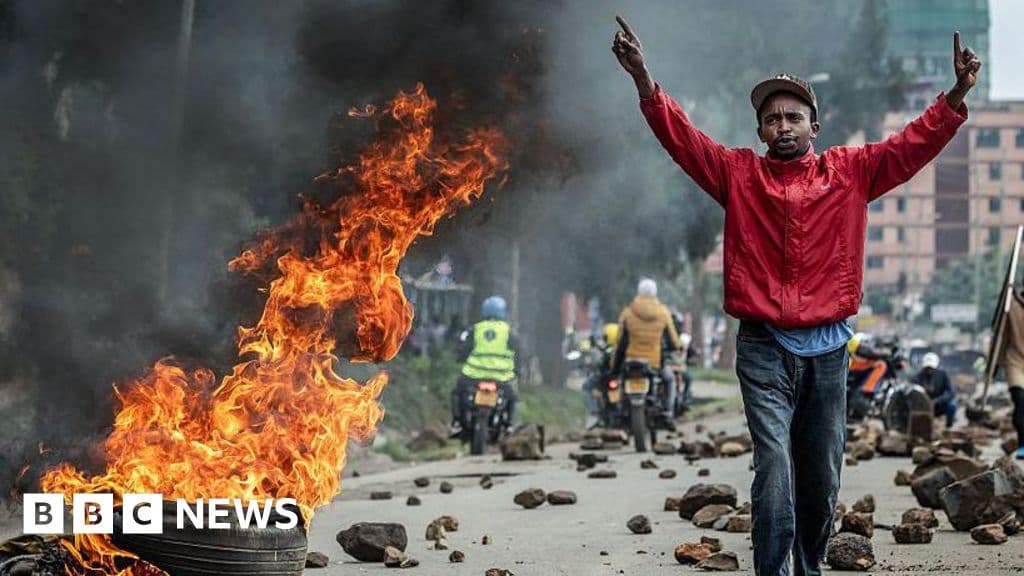
In the capital city of Nairobi, many roads lay deserted as a significant number of businesses closed their doors and schools advised students to remain at home. Protesters took to the streets, erecting barricades and igniting fires to block traffic. The government has responded with police presence and crowd control measures, including the deployment of tear gas in various neighborhoods.
The striking transport operators have urged all motorists, public transport buses (known locally as matatus), and truckers to refrain from using the roads. The Transport Sector Alliance (TSA), representing transport operators, stated, “This action is not only for transport operators, but for every Kenyan citizen.” They argue that the government has failed to protect citizens from the financial burdens caused by escalating fuel prices amid a broader cost-of-living crisis.
The recent fuel price hike is attributed to Kenya’s heavy reliance on fuel imports from the Gulf, a supply route significantly affected by ongoing geopolitical tensions, particularly the US-Israel conflict with Iran that began on February 28. Despite a ceasefire, the blockage of the Strait of Hormuz, through which a significant portion of the world’s oil is transported, continues to exert pressure on fuel prices. As a result, the Energy and Petroleum Regulatory Authority (Epra) announced that petrol and diesel prices have surged to 242 shillings (approximately $1.8) per liter for diesel and $1.65 for petrol.
Residents have expressed their frustration, with one commuter from Kitengela, identified as Charles, lamenting, “There is no matatu anywhere... Life is becoming so unbearable. So please, [President William] Ruto, if you can hear us, lower those fuel prices.” This sentiment echoes across the capital, where many find themselves unable to afford basic transport due to the increased fares.
As the protests intensified, confrontations between demonstrators and law enforcement escalated, leading to injuries on both sides. Police reported that six officers were injured, and several vehicles, including police cars and civilian property, sustained damage during the clashes. Nairobi's police commander, Issa Mohamud, emphasized that measures were taken to restore order to the streets following the protests.
Amid these developments, Murkomen condemned the violent actions of some protesters, stating, “It is unfortunate that today's protests have once again been hijacked by political actors for political ends.” He further urged citizens to refrain from vandalism, asserting that such actions would only exacerbate the hardships faced by many Kenyans.
The ongoing crisis has prompted widespread calls for the government to reassess its energy policies. The TSA demands immediate action to reduce fuel prices by approximately 35%, arguing that current rates are unsustainable for the average Kenyan. Treasury Minister John Mbadi acknowledged the public's distress but described the price hike as an “unfortunate necessity” in light of global market conditions.
The protests underscore a broader dissatisfaction among citizens, as the cost of living crisis continues to affect many households across Kenya. As the unrest continues, there are rising concerns about the potential for further violence if the government fails to address the root causes of these grievances.
As the situation unfolds, all eyes will be on the Kenyan government’s response to the protests and the rising unrest. The TSA has made it clear that they will continue to advocate for immediate relief from the high fuel prices, urging the government to take decisive action. With security forces on high alert and the public's patience wearing thin, the potential for further protests remains high.
Why It Matters: The outcome of these protests could set a precedent for how the Kenyan government handles economic grievances in the future. As citizens demand accountability and action, the implications for political stability and economic policy in Kenya will be significant.
In the coming weeks, observers should monitor the government's moves regarding fuel prices and potential reforms to address the broader economic challenges faced by its citizens. Will the government respond with tangible solutions, or will the protests escalate? The answer to this question will likely shape the socio-economic landscape of Kenya in the months to come.

Tensions soar as the US and Iran engage in air strikes near the Strait of Hormuz, raising concerns over global oil supply and regional stability.
BBC World
Trump's international interventions face serious stalemates. What will this mean for U.S. foreign policy? Explore the critical challenges ahead.
Indian Express
Tehran denies resignation of President Masoud Pezeshkian amid claims of IRGC influence. What does this mean for Iran's political stability? Click to learn more!
Indian Express