Glipzo
WorldTechnologyBusinessSportsEntertainmentScienceHealthPolitics
Glipzo
WorldTechnologyBusinessSportsEntertainmentScienceHealthPolitics
  1. Home
  2. /
  3. Technology
  4. /
  5. Tinder and Zoom Introduce Eye-Scans to Verify Humanity
Tinder and Zoom Introduce Eye-Scans to Verify Humanity

Image: BBC Business

Technology
Saturday, April 18, 20264 min read

Tinder and Zoom Introduce Eye-Scans to Verify Humanity

Tinder and Zoom partner with World to implement eye-scanning tech for user verification. Discover how this innovation combats AI impersonation.

Glipzo News Desk|Source: BBC Business
Share
Glipzo

Key Highlights

  • Tinder and Zoom introduce eye-scanning tech for user verification.
  • AI impersonation scams cost Americans over $1 billion last year.
  • World ID offers a unique solution to prove online humanity.
  • Biometric verification could reshape online interactions.
  • Deepfake fraud predicted to reach $40 billion by 2027.

In this article

  • Eye-Scanning Technology: A New Defense Against AI Impersonation In a groundbreaking move to combat the rise of artificial intelligence impersonation, popular dating platform **Tinder** and video conferencing giant **Zoom** have announced their collaboration with **World** to implement advanced eye-scanning technology. This initiative will allow users to prove their humanity through iris scans, a vital response to growing concerns over AI-generated fake identities. The announcement was made in a live event held in **San Francisco** on Friday, where it was revealed that users could earn a "proof of humanity" badge on their profiles.
  • The Rise of AI and Its Implications As AI technology evolves rapidly, the capacity for creating convincing fake identities has surged, leading to a significant increase in fraudulent activities across platforms. **Altman** highlighted the staggering reality that “there will soon be more stuff made by AI than is made by humans” online. This growing trend presents pressing challenges for social media and communication platforms, which have seen a rise in fake accounts and scams over the past couple of years.
  • Enhancing Security on Tinder and Zoom To tackle these challenges, Tinder has already initiated measures requiring users to submit video selfies for identity verification. The integration of **World ID** will build upon these efforts, offering users an additional avenue to confirm their authenticity. **Yoel Roth**, who oversees trust and safety at **Match Group**, Tinder's parent company, noted that this partnership with World is a “natural next step” to enhance user safety and trust within the platform.
  • Understanding World ID and Its Functionality World, formerly known as **Worldcoin** and **World Network**, has rebranded multiple times since its launch in **2022**. The core of its technology lies in iris recognition, which is touted as the most unique biometric identifier, surpassing even fingerprints in individuality. The iris scanning process is designed to be anonymous, ensuring user privacy while providing a reliable method of authentication.
  • Why This Matters: The Future of Online Interaction The collaboration between Tinder, Zoom, and World signifies an essential shift in how platforms will address the challenges posed by AI technology. As increasingly sophisticated AI tools emerge, distinguishing human users from AI-generated profiles becomes paramount. This initiative not only aims to protect individuals from scams but also fosters a safer online environment where genuine connections can flourish.

Eye-Scanning Technology: A New Defense Against AI Impersonation In a groundbreaking move to combat the rise of artificial intelligence impersonation, popular dating platform **Tinder** and video conferencing giant **Zoom** have announced their collaboration with **World** to implement advanced eye-scanning technology. This initiative will allow users to prove their humanity through iris scans, a vital response to growing concerns over AI-generated fake identities. The announcement was made in a live event held in **San Francisco** on Friday, where it was revealed that users could earn a "proof of humanity" badge on their profiles.

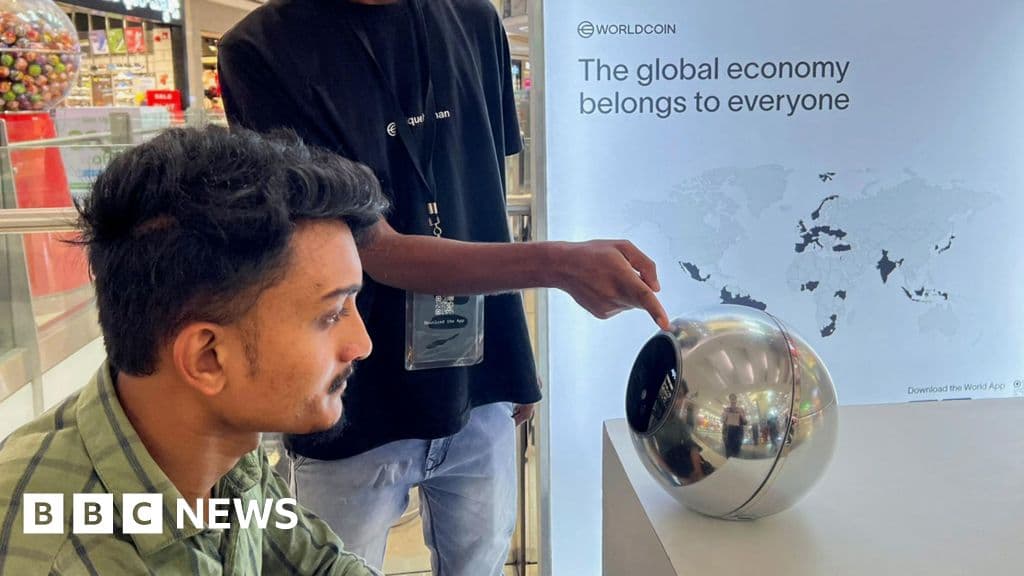
The eye-scanning capability will be facilitated by either a specialized orb-shaped device or an online app, allowing individuals to scan their irises to receive a unique identification code, termed World ID. This code will be stored securely on users' smartphones and will serve as a digital verification tool. Sam Altman, co-founder of the startup Tools for Humanity and head of OpenAI, played a crucial role in this initiative, underscoring the importance of distinguishing real users from AI bots in today's digital landscape.

The Rise of AI and Its Implications As AI technology evolves rapidly, the capacity for creating convincing fake identities has surged, leading to a significant increase in fraudulent activities across platforms. **Altman** highlighted the staggering reality that “there will soon be more stuff made by AI than is made by humans” online. This growing trend presents pressing challenges for social media and communication platforms, which have seen a rise in fake accounts and scams over the past couple of years.

According to reports, Tinder has been particularly affected, with Victoria Brooks, a user, estimating that nearly 30% of the profiles she encountered were bots, often exploiting vulnerable individuals for financial gain. The Federal Trade Commission reported that romance scams alone cost Americans over $1 billion last year, emphasizing the urgent need for robust verification systems.

Enhancing Security on Tinder and Zoom To tackle these challenges, Tinder has already initiated measures requiring users to submit video selfies for identity verification. The integration of **World ID** will build upon these efforts, offering users an additional avenue to confirm their authenticity. **Yoel Roth**, who oversees trust and safety at **Match Group**, Tinder's parent company, noted that this partnership with World is a “natural next step” to enhance user safety and trust within the platform.

On the Zoom front, the stakes are equally high, especially in light of recent incidents involving sophisticated deepfake technology. In a notable case from 2024, a Hong Kong employee fell victim to deepfakes impersonating high-ranking company officials, resulting in a staggering $25 million loss. With predictions suggesting that financial fraud via deepfakes might escalate to $40 billion in the U.S. by 2027, the push for identity verification on platforms like Zoom has never been more critical.

Understanding World ID and Its Functionality World, formerly known as **Worldcoin** and **World Network**, has rebranded multiple times since its launch in **2022**. The core of its technology lies in iris recognition, which is touted as the most unique biometric identifier, surpassing even fingerprints in individuality. The iris scanning process is designed to be anonymous, ensuring user privacy while providing a reliable method of authentication.

With the debut of the World ID app, users can seamlessly integrate this verification method into their online interactions across various platforms, including Tinder and Zoom. This development marks a significant leap towards curbing the negative impact of AI on personal safety and digital integrity.

Why This Matters: The Future of Online Interaction The collaboration between Tinder, Zoom, and World signifies an essential shift in how platforms will address the challenges posed by AI technology. As increasingly sophisticated AI tools emerge, distinguishing human users from AI-generated profiles becomes paramount. This initiative not only aims to protect individuals from scams but also fosters a safer online environment where genuine connections can flourish.

Looking ahead, it will be interesting to see how widespread adoption of the World ID system becomes across various sectors. As more platforms embrace biometric verification, the landscape of online interaction may change dramatically. Users can expect enhanced security measures that not only secure their identity but also promote trust and authenticity in an era where AI is becoming ubiquitous.

The implications for the future are profound, as companies strive to protect users from the ever-evolving threats of AI. Users and stakeholders alike should watch for further developments in biometric verification technology and the broader application of these methods in various industries. As we move forward, the balance between convenience and security will remain at the forefront of discussions around AI and user safety in the digital age.

Did you find this article useful? Share it!

Share

Related Articles

How the METR Chart Is Shaping the AI Boom's Future
Technology
Apr 19, 2026

How the METR Chart Is Shaping the AI Boom's Future

Discover how the METR time-horizon chart is reshaping the AI boom and influencing investments, public discourse, and technology development.

Indian Express
Shocking Humanoid Robots Outrun Humans in Beijing Marathon
Technology
Apr 19, 2026

Shocking Humanoid Robots Outrun Humans in Beijing Marathon

Humanoid robots outrun human athletes in Beijing's half-marathon, showcasing China's advanced robotics and AI capabilities. Discover what’s next for this technology!

Indian Express
Breaking: Anthropic Meets White House Amid AI Controversy
Technology
Apr 18, 2026

Breaking: Anthropic Meets White House Amid AI Controversy

Discover the implications of the White House's meeting with Anthropic amid ongoing legal battles and concerns surrounding the AI tool Claude Mythos.

BBC Technology

Categories

  • World
  • Technology
  • Business
  • Sports

More

  • Entertainment
  • Science
  • Health
  • Politics

Explore

  • Web Stories
  • About Us
  • Contact

Legal

  • Privacy Policy
  • Terms of Service

© 2026 Glipzo. All rights reserved.