
Image: Mint (Business)
Explore Subhas Chandra Bose's powerful quote on ideas and sacrifice and discover why his legacy continues to inspire movements for justice today.
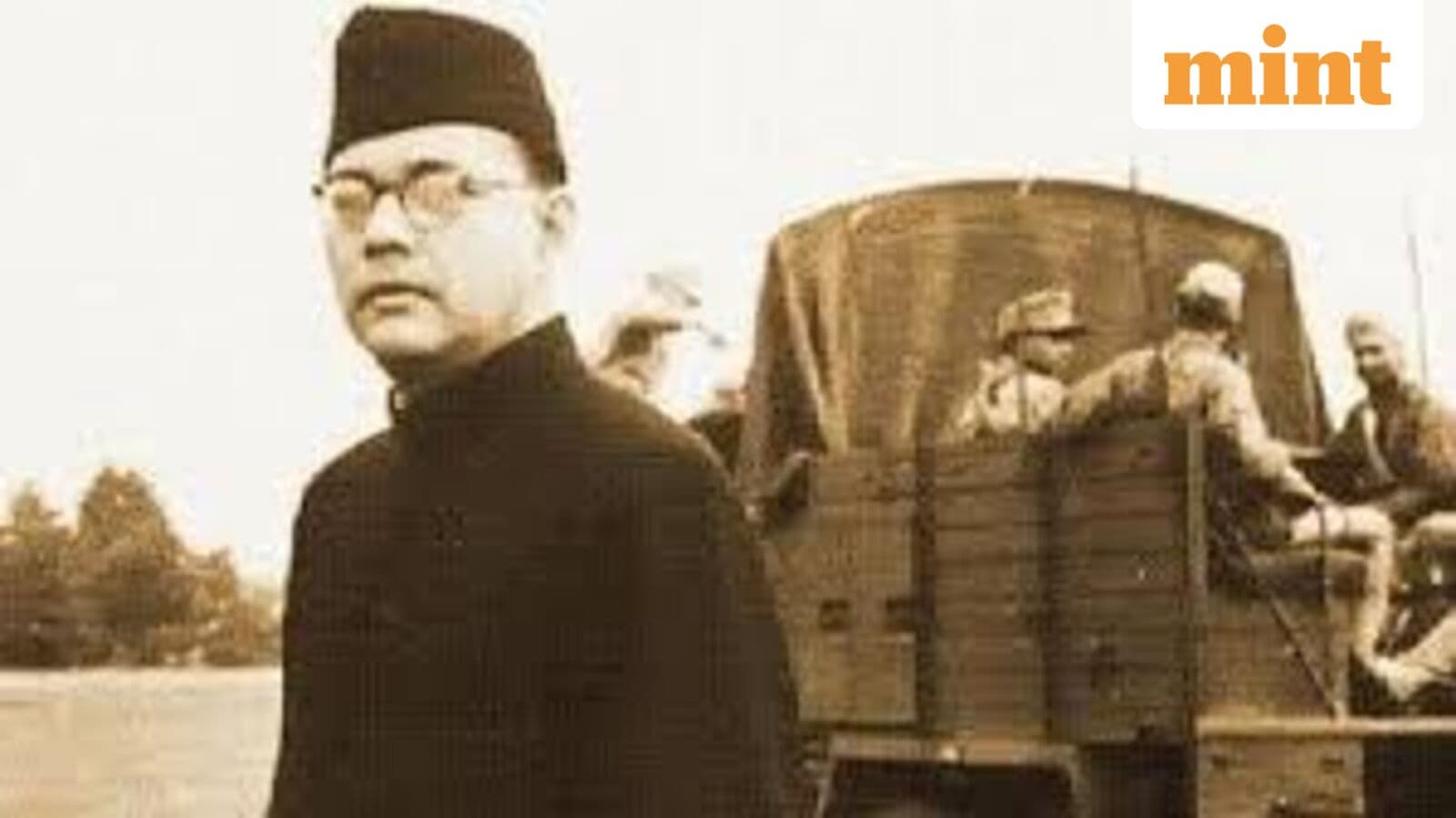
GlipzoSubhas Chandra Bose, an iconic figure in India's fight for independence, left behind a profound statement that resonates deeply with those who value sacrifice and conviction: "One individual may die for an idea, but that idea will, after his death, incarnate itself in a thousand lives." This quote encapsulates the essence of Bose's philosophy, emphasizing that the power of an idea transcends individual existence.
Born on January 23, 1897, Bose was not just a nationalist; he was a visionary who understood that history is shaped not by comfort but by fervent beliefs. His reflections on sacrifice and the enduring nature of ideas remind us that while individuals may pass away, their convictions can ignite a movement that inspires future generations.
Bose viewed ideas as living entities that propel societies forward. During India's struggle against British colonial rule, countless individuals faced incarceration, exile, and even death, yet the aspiration for independence only intensified. This notion—that a person can be silenced, yet a powerful idea remains resilient—lies at the heart of Bose's quote. When an idea resonates with the aspirations of the masses, it transcends individual lifetimes, multiplying its impact across generations.
The implications of this message extend beyond Bose's time. Throughout history, figures such as Martin Luther King Jr., Mahatma Gandhi, and Nelson Mandela have endured suffering for their beliefs, yet their ideas have thrived, inspiring countless others. Key points to consider include: - Ideas often outlive their champions, as they connect deeply with the human experience. - Sacrifice can amplify the significance of a cause, demonstrating its importance to the individual and society. - Change is often initiated by a singular voice, but true transformation occurs when many rally behind it.
Bose's words also pose a challenge to each of us: What ideals are we prepared to advocate for? Are we willing to defend, nurture, and propagate ideas that resonate deeply within us? This quote is not merely about becoming martyrs; it emphasizes the importance of continuity in the fight for justice and equality. Each generation inherits the responsibility of carrying forward the legacy of unfinished ideals.
This perspective sheds light on why Bose's thoughts remain relevant today. They serve as a reminder that while lives may end, the essence of a meaningful idea can carry on indefinitely. A courageous life may conclude, yet its mission can reverberate within countless others, inspiring action and change.
While Bose is celebrated for his fierce resistance to colonial rule, his alliances during World War II with Nazi Germany and Imperial Japan complicate his legacy. Known as Netaji, or “Respected Leader,” a title first used in Germany in 1942, he remains a polarizing figure within Indian history. His dedication to India's independence is clear, yet his involvement with authoritarian regimes raises questions about the means used to achieve his ends.
Bose’s philosophical roots were deeply influenced by the Bhagavad Gita, which he regarded as a spiritual guide in his struggle against British colonialism. He also drew inspiration from Swami Vivekananda, whose teachings on universalism, nationalism, and social reform shaped Bose's vision for India.
Subhas Chandra Bose's legacy is celebrated across India, with his image appearing on postage stamps issued multiple times since 1964. Additionally, he has been honored on various coins, including ₹2 coins in 1996 and 1997, a ₹75 coin in 2018, and a ₹125 coin in 2021. Numerous public landmarks are named in his memory, serving as constant reminders of his contributions to India's freedom struggle.
As we reflect on Bose's impactful quote, it becomes clear that his message is more than historical rhetoric; it is a call to action for future generations. The struggle for freedom, justice, and equality requires constant vigilance and commitment. As we navigate contemporary challenges, we must remember that the fight for meaningful ideas and ideals never truly ends. Instead, it is passed down like a torch, inspiring those willing to take up the cause.
In conclusion, Subhas Chandra Bose's belief that ideas can outlive their originators serves as a beacon of hope. It challenges us to consider the ideals we hold dear and to recognize our role in perpetuating them. As we face new struggles for justice and equality, let us be inspired by Bose's legacy and the idea that one person's sacrifice can ignite a flame that lights the way for many.
What Comes Next? The ongoing relevance of Bose's ideas urges us to reflect on our values, advocate for justice, and ensure that the spirit of sacrifice lives on in our actions. As we continue to confront global challenges, let us remember that the ideas we champion today can shape the future and inspire countless others to join the fight for a better world.

Tensions soar as the US and Iran engage in air strikes near the Strait of Hormuz, raising concerns over global oil supply and regional stability.
BBC World
Trump's international interventions face serious stalemates. What will this mean for U.S. foreign policy? Explore the critical challenges ahead.
Indian Express
Tehran denies resignation of President Masoud Pezeshkian amid claims of IRGC influence. What does this mean for Iran's political stability? Click to learn more!
Indian Express