Glipzo
WorldTechnologyBusinessSportsEntertainmentScienceHealthPolitics
Glipzo
WorldTechnologyBusinessSportsEntertainmentScienceHealthPolitics
  1. Home
  2. /
  3. Entertainment
  4. /
  5. The Rise and Fall of India’s Legendary Stage Queen Chapal Rani
The Rise and Fall of India’s Legendary Stage Queen Chapal Rani

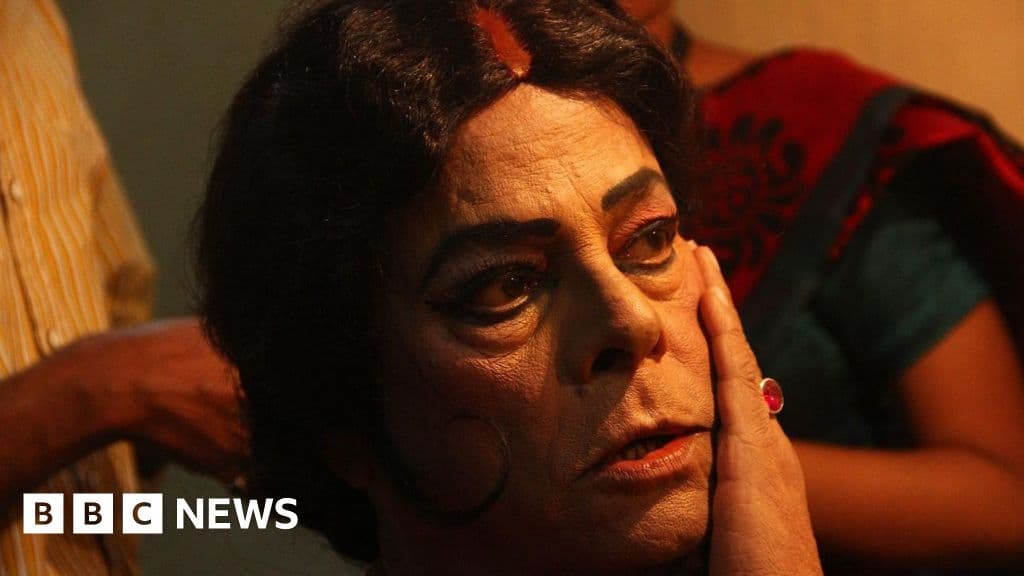
Image: BBC World

Entertainment
Sunday, April 5, 20265 min read

The Rise and Fall of India’s Legendary Stage Queen Chapal Rani

Discover the remarkable journey of Chapal Rani, Bengal's legendary stage queen, and the cultural shifts that shaped his iconic career in jatra.

Glipzo News Desk|Source: BBC World
Share
Glipzo

Key Highlights

  • Chapal Rani redefined femininity on stage in mid-20th century Bengal.
  • Jatra, Bengal's traditional theatre, faced stigma yet thrived with male performers.
  • Bhaduri's performances were immersive, breaking stereotypes of queer representation.
  • The evolution of female roles ultimately led to Bhaduri's decline in popularity.
  • Chapal Rani's legacy continues to inspire conversations on gender and identity.

In this article

  • The Enigmatic Chapal Rani: A Star is Born In the mid-20th century, **Bengal** witnessed a unique phenomenon in its theatrical scene, where male actors like **Chapal Bhaduri**, famously known as **Chapal Rani**, dominated the stage in female roles. This captivating figure became synonymous with **jatra**, a traditional form of traveling theatre that drew huge audiences with its vibrant blend of music, myth, and melodrama. As an art form, jatra was not just entertainment; it was a cultural staple that rivaled cinema in popularity, though it often lacked the financial rewards that came with film.
  • The Tradition of Female Impersonation in Jatra Historically, the role of women in jatra was filled by male performers known as **purush ranis**, or male queens. These actors brought to life a range of female characters, from **courtesans** to **goddesses**, captivating audiences with their artistry. However, even at its peak, jatra faced significant stigma. Many from the colonial-era elite in **Calcutta** dismissed it as a trivial or unsophisticated form of entertainment. An Anglo-Indian publication from the 19th century disparaged the voices of young boys playing female roles, likening them to “howling jackals.”
  • Chapal Bhaduri's Transformative Journey Born in **1939** in **North Kolkata** to the actress **Prabha Devi**, Bhaduri was immersed in the world of performance from a young age. He began acting at the tender age of **16**, embracing his **feminine traits** and developing a unique stage presence. “I had girlish manners, a girlish voice,” Bhaduri recounted, emphasizing the authenticity he brought to his roles.
  • Breaking Stereotypes in Performance Art Unlike many performers in Indian theatre, Bhaduri’s portrayals were not mere caricatures meant for comedic relief. Instead, his performances were immersive experiences that exuded depth and sincerity. In a culture often characterized by **queer-coded** characters relegated to ridicule, Bhaduri's work stood out for its honesty and emotional weight. Sandip Roy notes, “In Indian performing art where playing gay or queer was in the form of characters who are ridiculed, Chapal morphed into a woman and played his roles with honesty and an act of bravery.”
  • The Decline of a Stage Legend As the theatrical landscape evolved, Bhaduri's career began to wane. The increasing presence of female actors on stage led to a gradual rejection of male performers in women's roles. The conventions that had once upheld jatra started to crumble, and the once-celebrated “moustachioed queens of jatra” found themselves sidelined.
  • Legacy and Cultural Significance Despite the challenges he faced, Bhaduri's legacy is significant. His contributions to jatra and the representation of gender fluidity in Indian theatre remain vital to understanding the art form's evolution. As society continues to grapple with issues of gender and identity, the story of Chapal Rani serves as a reminder of the complexities of performance and the fluidity of human expression.

The Enigmatic Chapal Rani: A Star is Born In the mid-20th century, **Bengal** witnessed a unique phenomenon in its theatrical scene, where male actors like **Chapal Bhaduri**, famously known as **Chapal Rani**, dominated the stage in female roles. This captivating figure became synonymous with **jatra**, a traditional form of traveling theatre that drew huge audiences with its vibrant blend of music, myth, and melodrama. As an art form, jatra was not just entertainment; it was a cultural staple that rivaled cinema in popularity, though it often lacked the financial rewards that came with film.

Chapal Rani's journey is not just a tale of theatrical success but also a reflection of gender dynamics and the cultural shifts occurring in Bengal. In a new book titled Chapal Rani: The Last Queen of Bengal, author Sandip Roy chronicles Bhaduri’s rise to fame and subsequent fall into obscurity, shedding light on a world where gender expression was as much an art as the performances themselves.

The Tradition of Female Impersonation in Jatra Historically, the role of women in jatra was filled by male performers known as **purush ranis**, or male queens. These actors brought to life a range of female characters, from **courtesans** to **goddesses**, captivating audiences with their artistry. However, even at its peak, jatra faced significant stigma. Many from the colonial-era elite in **Calcutta** dismissed it as a trivial or unsophisticated form of entertainment. An Anglo-Indian publication from the 19th century disparaged the voices of young boys playing female roles, likening them to “howling jackals.”

By the time Bhaduri entered this theatrical landscape in the 1950s, changes were afoot. The inclusion of women in acting roles began to challenge the space traditionally occupied by male impersonators. Despite this shift, Bhaduri managed to distinguish himself with a performance style that was both authentic and emotionally resonant.

Chapal Bhaduri's Transformative Journey Born in **1939** in **North Kolkata** to the actress **Prabha Devi**, Bhaduri was immersed in the world of performance from a young age. He began acting at the tender age of **16**, embracing his **feminine traits** and developing a unique stage presence. “I had girlish manners, a girlish voice,” Bhaduri recounted, emphasizing the authenticity he brought to his roles.

As he graced the stage, Bhaduri morphed into diverse characters, portraying queens, goddesses, and even brothel madams with remarkable grace. His attention to detail in costuming—sometimes utilizing rags or sponges to create the illusion of a feminine silhouette—highlighted his commitment to the craft. Bhaduri’s beauty routine was a serious affair, involving creams and rituals that allowed him to embody his roles fully. “Femininity was always a part of me,” he once said, highlighting the deep connection he felt to his characters.

Breaking Stereotypes in Performance Art Unlike many performers in Indian theatre, Bhaduri’s portrayals were not mere caricatures meant for comedic relief. Instead, his performances were immersive experiences that exuded depth and sincerity. In a culture often characterized by **queer-coded** characters relegated to ridicule, Bhaduri's work stood out for its honesty and emotional weight. Sandip Roy notes, “In Indian performing art where playing gay or queer was in the form of characters who are ridiculed, Chapal morphed into a woman and played his roles with honesty and an act of bravery.”

However, off stage, Bhaduri's life was fraught with complexity. He navigated a societal landscape where openly identifying as gay was laden with challenges. Despite receiving love letters and proposals from admirers, he remained discreet about his personal life, famously declaring, “I refuse to apologise for love.” His longest relationship lasted over three decades, even as his partner chose to marry and start a family, leaving Bhaduri to grapple with his position in the margins of societal acceptance.

The Decline of a Stage Legend As the theatrical landscape evolved, Bhaduri's career began to wane. The increasing presence of female actors on stage led to a gradual rejection of male performers in women's roles. The conventions that had once upheld jatra started to crumble, and the once-celebrated “moustachioed queens of jatra” found themselves sidelined.

In the late 1960s and early 1970s, this shift became painfully evident. Bhaduri faced public rejection when he was booed off stage during a performance, an experience that encapsulated the changing attitudes of the audience now accustomed to female performers in roles he once embodied with pride. Many of his contemporaries fell into poverty, with some becoming seamstresses or running tea stalls, and tragically, one even took their own life. Their stories of decline remained largely untold, lost to time.

Legacy and Cultural Significance Despite the challenges he faced, Bhaduri's legacy is significant. His contributions to jatra and the representation of gender fluidity in Indian theatre remain vital to understanding the art form's evolution. As society continues to grapple with issues of gender and identity, the story of Chapal Rani serves as a reminder of the complexities of performance and the fluidity of human expression.

Looking ahead, the future of traditional forms like jatra seems uncertain, yet the narratives of performers like Chapal Bhaduri highlight the need for inclusivity and representation in the arts. As new generations of artists emerge, their stories will continue to inspire discussions around gender, identity, and the transformative power of theatre.

Did you find this article useful? Share it!

Share

Related Articles

Shocking: Akshay Kumar's Son Aarav Lived in Fear of Vidya Balan
Entertainment
Apr 14, 2026

Shocking: Akshay Kumar's Son Aarav Lived in Fear of Vidya Balan

Akshay Kumar reveals his son Aarav was terrified of Vidya Balan for six years after watching Bhool Bhulaiyaa. Discover the surprising story now!

Bollywood Hungama
Adivi Sesh Unveils 'Dacoit': A Modern Love Story Redefined
Entertainment
Apr 14, 2026

Adivi Sesh Unveils 'Dacoit': A Modern Love Story Redefined

Discover Adivi Sesh's 'Dacoit', a modern love story reimagining Romeo and Juliet against rural India, exploring how love transforms over time.

Bollywood Hungama
Pulkit Samrat Makes History with Live Boxing Match Debut
Entertainment
Apr 14, 2026

Pulkit Samrat Makes History with Live Boxing Match Debut

Pulkit Samrat is making history as the first Indian actor to fight in a live boxing match, showcasing a new trend in Bollywood's approach to authenticity.

Bollywood Hungama

Categories

  • World
  • Technology
  • Business
  • Sports

More

  • Entertainment
  • Science
  • Health
  • Politics

Explore

  • Web Stories
  • About Us
  • Contact

Legal

  • Privacy Policy
  • Terms of Service

© 2026 Glipzo. All rights reserved.